Evaluating 10-Pack MicroSD Bundles: When Bulk Storage Makes Financial Sense
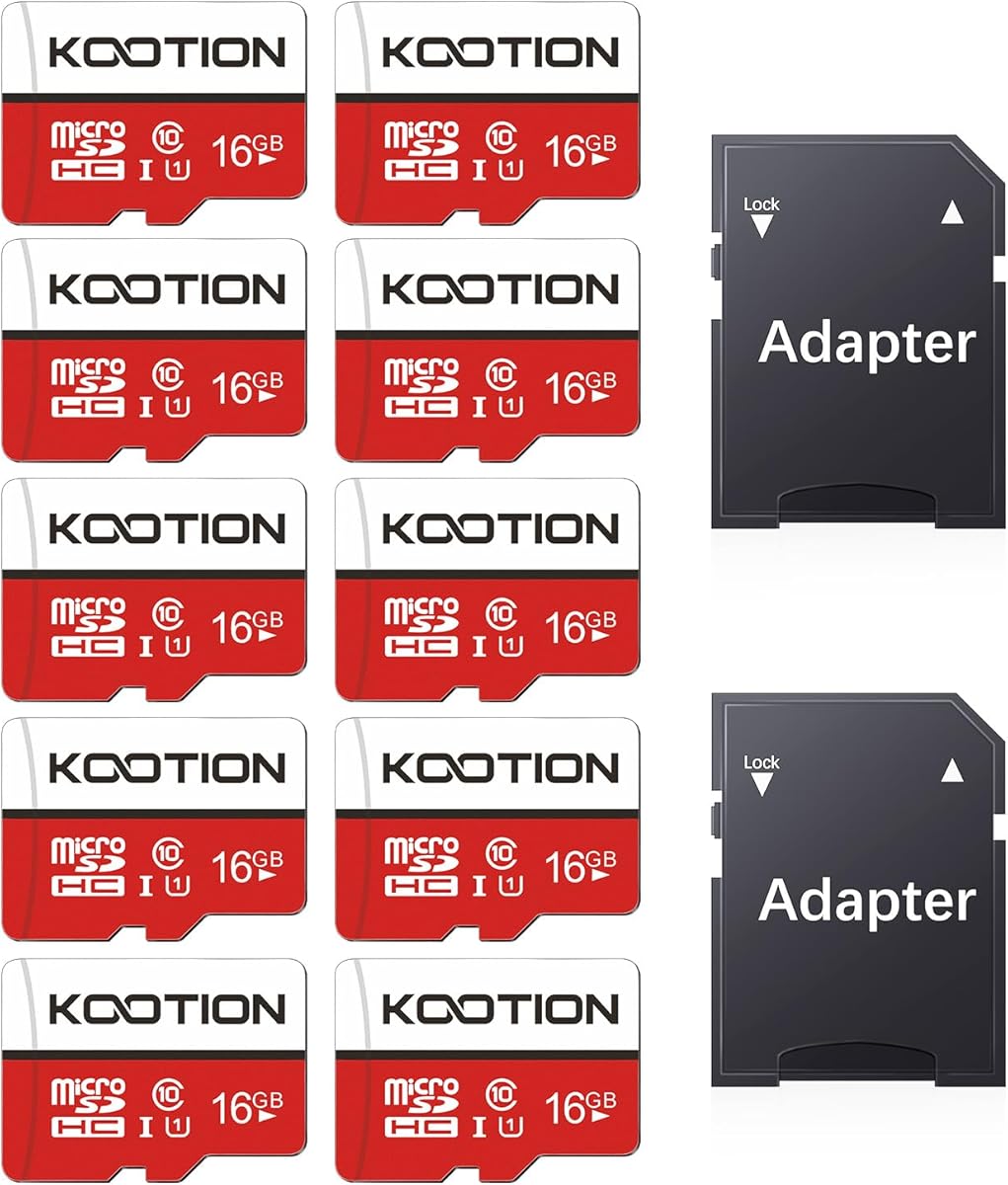
The KOOTION 10-pack represents a specific value proposition in the microSD market: high-quantity, moderate-capacity storage for distributed use. With Class 10 and UHS-I U1 ratings, these cards prioritize consistent minimum write speeds over maximum burst performance, making them suitable for basic media storage across multiple devices rather than intensive 4K recording.
Key Considerations Before Buying
- The 16GB capacity per card is ideal for distributing storage across security cameras, basic Android phones, or MP3 players, but insufficient for modern high-resolution smartphone photography or extensive app data.
- A U1 speed rating guarantees a minimum 10MB/s write speed, adequate for standard 1080p video recording but potentially limiting for rapid file transfers or burst photo capture.
- Bulk packaging inherently increases the risk of receiving a defective unit; verify each card individually upon arrival using tools like H2testw or F3 to check actual capacity and speed.
What Our Analysts Recommend
Genuine cards will display consistent performance across the batch, with no significant outliers in benchmark tests. Check for proper labeling of the SDHC (2GB-32GB) specification and the U1 logo, which is a more relevant speed indicator than the older Class 10 designation alone. Physical build quality, including a snug fit in adapters and clear, laser-etched labeling, often correlates with better internal construction.
Micro SD Cards Market Context
Market Overview
The microSD market is saturated with value-oriented multi-packs, particularly in the 16-32GB range, where economies of scale allow aggressive pricing. These bundles compete primarily on cost-per-card reliability rather than cutting-edge speed, targeting users who need functional storage for legacy devices or distributed systems.
Common Issues
The most frequent complaints with bulk packs involve capacity fraud (cards reporting 16GB but holding far less), inconsistent performance between cards in the same package, and higher failure rates over time compared to single, premium-brand cards. Adapter quality is also a common pain point, with flimsy SD adapters failing to make proper contact.
Quality Indicators
Look for consistent user reports of cards passing validation software. Reviews mentioning specific, real-world use cases—like dash cams looping over old footage or Raspberry Pi projects—are stronger indicators of functional reliability than generic 'works great' statements. A lack of reviews complaining about dead-on-arrival cards is a positive signal for bulk packaging quality control.
Review Authenticity Insights
Grade B Interpretation
A Grade B with an 11% estimated fake review rate suggests a mostly authentic review pool with some incentivized or low-quality feedback. For a high-volume, low-cost item like this, a small percentage of questionable reviews is common, but the strong adjusted rating of 4.50/5 indicates genuine satisfaction outweighs any manipulation.
Trust Recommendation
Focus on the 1-3 star reviews for this product. At this price point, dissatisfied customers typically report specific failures—cards dying after months, one dud in the pack, or speeds not meeting U1 standards. These detailed critical reviews provide more actionable risk assessment than the abundant 5-star ratings.
Tips for Reading Reviews
Prioritize reviews that mention long-term use (6+ months) and technical verification. Be skeptical of reviews that only praise packaging or delivery speed. For bulk packs, reviews stating 'tested all 10 cards' are particularly valuable, as they confirm the consistency of the batch.
Expert Perspective
The KOOTION 10-pack sits in a pragmatic niche. Its 4.50 adjusted rating from thousands of reviews suggests it reliably delivers on its core promise: providing multiple functional, low-capacity storage cards. The value proposition is clear for users needing to equip several low-demand devices simultaneously. However, this is a commodity product where performance margins are thin; it serves a need for distributed, disposable storage rather than primary, high-performance use.
Purchase Considerations
Purchase this bundle if your primary need is quantity and cost-effectiveness for basic storage tasks across multiple endpoints. Avoid it if you require high sustained write speeds for action cameras, need large capacity for a primary device, or cannot accept the reliability variance inherent in any 10-unit batch. The financial risk is low, but the time cost of managing a potential defective card is the real trade-off.
Comparing Alternatives
Shoppers should compare the per-card cost and speed ratings (U1 vs U3) with similar bundles from brands like Sandisk Ultra or Samsung EVO Select, which may offer better long-term reliability at a higher per-unit price.