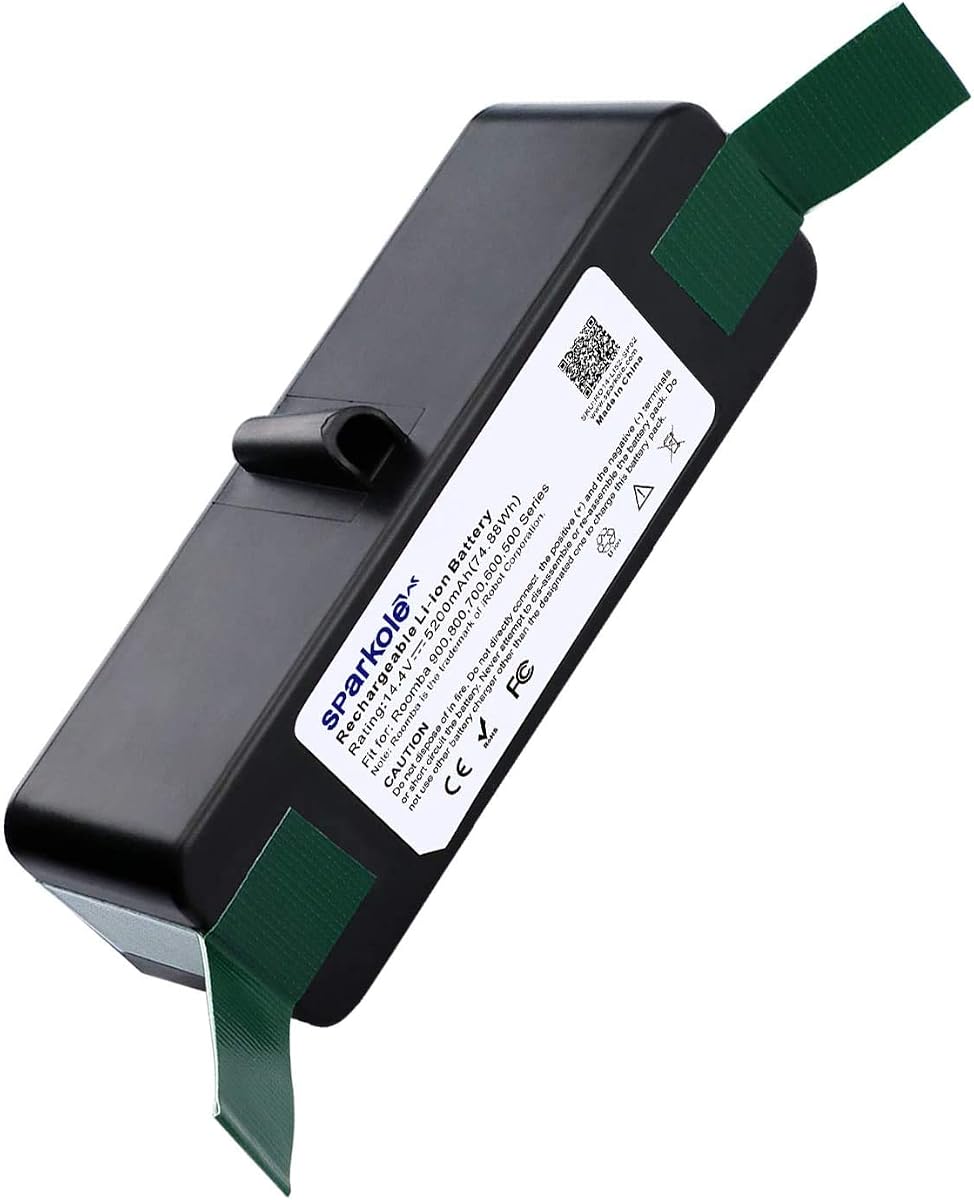
Choose the Right 5200mAh Li-Ion Battery for Your Roomba 600-900 Series
When your iRobot Roomba starts losing power mid-clean or fails to hold a charge, a replacement battery is often the most cost-effective fix. For 600, 700, 800, and 900 series models (including the 980 and 690), the 5200mAh lithium-ion option offers longer runtimes than standard NiMH packs, but compatibility and capacity claims require careful scrutiny.
Key Considerations Before Buying
- Ensure your Roomba model is explicitly listed as compatible—this 14.4V battery covers over 20 models, but older 600-series units may need a firmware update for lithium-ion batteries to charge correctly.
- A 5200mAh capacity typically delivers 90-120 minutes of runtime, but actual performance depends on the battery's age, your Roomba's usage history, and cleaning mode (e.g., carpet vs. hard floors).
- Lithium-ion batteries are lighter and have no memory effect, but they require proper storage (avoid extreme heat or full discharge) to maintain lifespan, which is usually 12-18 months with regular use.
What Our Analysts Recommend
Look for batteries with built-in protection circuits (PCM) to prevent overcharge, over-discharge, and short circuits—critical for lithium-ion safety. Also check for UL or CE certification marks, and ensure the connector type matches your Roomba's original battery (usually a 2-pin or 3-pin JST connector).
Batteries Market Context
Market Overview
The replacement battery market for Roomba is dominated by third-party manufacturers offering higher capacities than OEM packs. With iRobot discontinuing many original batteries, aftermarket options have become the primary choice, but quality varies widely between brands—some use lower-grade cells that degrade quickly.
Common Issues
Users frequently report battery swelling, reduced runtime after a few months, or failure to charge due to incompatible charging circuits. Counterfeit or poorly assembled batteries may also lack safety certifications, posing fire risks. Another common complaint is that advertised capacities (like 5200mAh) are often overestimated in real-world tests.
Quality Indicators
High-quality replacement batteries use branded cells (e.g., Samsung, LG, or Panasonic) and include a PCB with balancing circuitry. Look for warranties of at least 12 months and customer reviews that mention consistent runtime after 6+ months of use. Third-party certifications like RoHS and CE are positive signals.
Review Authenticity Insights
Grade B Interpretation
A Grade B with 15% estimated fake reviews suggests a majority of feedback is genuine, but roughly 1 in 7 reviews may be unreliable. This is common for high-volume Roomba batteries, as some sellers incentivize reviews or post fabricated ratings to boost visibility.
Trust Recommendation
You can generally trust the 4.11-star average, but focus on reviews from verified purchasers that describe specific experiences—like runtime on carpet vs. hard floors or charging behavior. Be wary of reviews with vague praise or identical phrasing across multiple listings.
Tips for Reading Reviews
For Roomba batteries, prioritize reviews from users with similar models (e.g., 980 vs. 690) to gauge compatibility. Look for detailed complaints about battery life after 3-6 months, as early failures are a key red flag. Also check if any reviews mention swelling or overheating, as those are safety concerns.
Expert Perspective
This 5200mAh lithium-ion battery is a solid mid-tier option for Roomba owners, offering higher capacity than OEM packs at a competitive price. The adjusted rating of 3.80/5 indicates that while most users are satisfied, a notable minority experience issues—likely related to cell quality or compatibility with specific models. Given the 15% fake review rate, the genuine feedback skews slightly negative, so treat the raw 4.11 rating with caution.
Purchase Considerations
If you need maximum runtime for a large home, this battery is a good pick, but verify your Roomba model's compatibility with lithium-ion (some 600-series units may need a software update). For users with older Roombas or those on a tight budget, a lower-cost NiMH alternative might be more reliable despite shorter runtimes.
Comparing Alternatives
Shoppers should compare this with OEM iRobot batteries (if still available for their model) and other third-party options from brands like OSREN or Yeedi, focusing on warranty length and cell brand guarantees.