
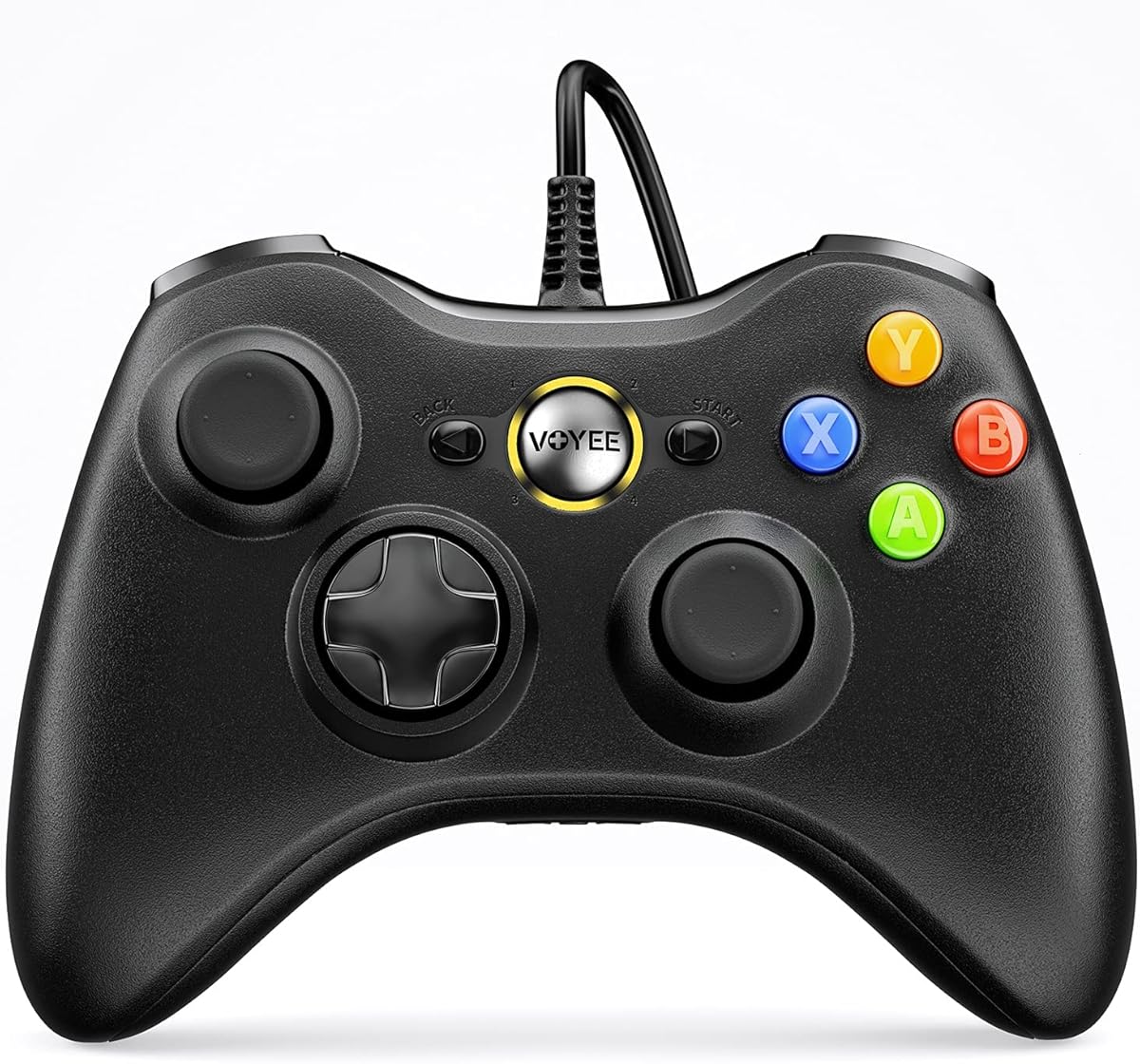
Choosing a Wired Xbox 360 Controller: What the VOYEE Model Offers Over OEM
When selecting a third-party Xbox 360 controller like the VOYEE model, buyers should focus on compatibility, durability, and how its 'Enhanced' features compare to Microsoft's original. This specific controller markets upgraded joysticks and double shock functionality, which are key differentiators from basic replacements.
Key Considerations Before Buying
- Verify your specific Windows OS compatibility, as this model lists Windows 10/8/7 but may require manual driver installation unlike plug-and-play Xbox 360 Slim use.
- Assess the value of a permanently wired connection versus wireless OEM controllers, considering desk setup and potential cable strain relief on the VOYEE's build.
- Determine if the 'Upgraded Joystick' and 'Double Shock' features materially improve your gaming experience for titles requiring precise analog input or sustained rumble feedback.
What Our Analysts Recommend
For wired third-party controllers, inspect the cable entry point for reinforcement and feel the joystick tension—it should offer resistance without stickiness. Genuine reviews often mention the tactile quality of the face buttons (A, B, X, Y) and D-pad responsiveness, which are common failure points in clones.
Gamepads & Standard Controllers Market Context
Market Overview
The market for Xbox 360-compatible controllers is bifurcated between scarce, often expensive OEM units and numerous third-party alternatives like VOYEE, which aim to fill the gap for legacy system support and PC gaming. Wired models dominate the third-party segment due to simpler manufacturing and reliable connectivity.
Common Issues
Common issues include analog stick drift developing within months, mushy trigger buttons, and non-standardized vibration motors that feel unbalanced or weak. Many third-party controllers also use thinner cables and cheaper plastic shells than Microsoft's original design.
Quality Indicators
Look for mentions of weight and material density in reviews; a heavier controller often indicates better internal components. Consistent praise for the rumble motors' intensity and smoothness across different game genres is a strong positive signal for the 'Double Shock' claim.
Review Authenticity Insights
Grade A Interpretation
A Grade B with an 11% estimated fake review rate suggests the vast majority of feedback is authentic, but a small portion may be incentivized. The high adjusted rating of 4.60/5 from authentic reviews indicates strong genuine satisfaction, though slightly below the raw 4.89 average.
Trust Recommendation
Prioritize reviews that detail long-term use (6+ months) and mention specific games like racing sims or platformers that test joystick precision and durability. Be slightly skeptical of reviews focusing solely on unboxing or very short-term impressions.
Tips for Reading Reviews
Search for reviews discussing driver installation on Windows 11 (not officially listed) and direct comparisons to a worn-out original Xbox 360 controller. These provide concrete, scenario-specific insights beyond general praise.
Expert Perspective
The VOYEE controller's exceptionally high authentic rating (4.60) for a third-party accessory indicates it successfully addresses common pain points like joystick longevity and plug-and-play compatibility. Its positioning as an 'Enhanced' model with specific upgrades suggests targeted improvements over generic clones. The wired design eliminates battery concerns and latency, making it a pragmatic choice for PC gamers or those with a stationary 360 setup, though it forfeits the convenience of wireless play.
Purchase Considerations
Weigh the cost savings against the potential lack of long-term spare parts support compared to OEM. Consider if your primary use is on a Windows PC, where its wired nature is an advantage, versus on an Xbox 360 console where cable length may be a constraint.
Comparing Alternatives
Shoppers should compare the VOYEE's specific 'upgraded joystick' claims against other third-party brands like PowerA or PDP, which may offer different ergonomic or feature trade-offs.


