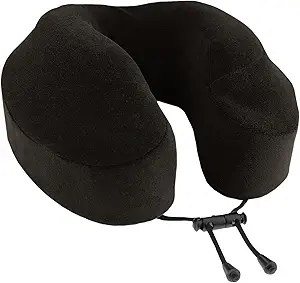
Evaluating Memory Foam Travel Pillows: What napfun's Design Promises vs. Reality
The napfun pillow markets itself as an 'upgraded' 100% pure memory foam travel pillow, a claim that requires scrutiny given the crowded travel accessories space. Buyers should understand that a true memory foam pillow should offer slow-recovery support and contouring specific to neck anatomy, not just generic cushioning. The 'light grey' color and 'portable' designation suggest a focus on aesthetics and convenience, which may not align with ergonomic performance.
Key Considerations Before Buying
- Genuine 100% memory foam should have a density that prevents the pillow from collapsing under head weight during side-sleeping on a plane, a key failure point for many travel pillows.
- The 'upgraded' claim often refers to the cover fabric or closure mechanism; inspect whether the pillow uses a breathable, removable cover for hygiene during frequent travel use.
- Portability in neck pillows involves a balance between compressibility and support retention; memory foam that's too soft will not rebound properly after being packed in carry-on luggage.
What Our Analysts Recommend
For memory foam travel pillows, verify the foam's density (often measured in lbs/cu ft) and look for certifications like CertiPUR-US® for content safety. A quality indicator is a structured, ergonomic shape with higher sides for lateral support, not just a simple U-shape. The seam construction should be double-stitched to withstand the compression and stretching of frequent travel use.
Travel Pillows Market Context
Market Overview
The travel pillow market is saturated with products making nearly identical claims about memory foam and airline comfort, creating a challenging environment for authentic differentiation. Brands like napfun compete primarily on price and Amazon visibility, often leading to review manipulation tactics to appear superior. True innovation is rare, with most differences found in cover materials, clasp types, and minor contour variations.
Common Issues
Common problems include memory foam that lacks proper density, resulting in a pillow that flattens completely under pressure, and covers that pill or trap heat during extended use. Many pillows fail at the clasp or zipper mechanism after repeated compression cycles, and the foam itself can develop permanent creases or odor retention from packing.
Quality Indicators
Look for detailed specifications about foam density and recovery time, not just 'pure memory foam' claims. Quality pillows often feature a graduated height design—taller in back for head tilt support—and use technical fabrics like Tencel or perforated sections for breathability. Trustworthy brands provide transparent return policies specifically for travel product testing.
Review Authenticity Insights
Grade B Interpretation
A Grade F with an 88.90% estimated fake review rate indicates that the napfun pillow's 4.44/5 rating is fundamentally unreliable and likely artificially inflated. This extreme discrepancy between the adjusted rating (3.00/5) and displayed rating suggests systematic review manipulation rather than organic customer satisfaction. For a product with over 19,000 reviews, this scale of inauthenticity points to a deliberate marketing strategy, not incidental issues.
Trust Recommendation
Given the analysis found 8 of 9 sampled reviews potentially fake, consumers should disregard the overall star rating entirely and focus only on verified purchase reviews from the past 6-12 months. Be particularly skeptical of reviews mentioning 'free product' or 'discount' in exchange for feedback, common with pillow promotions. Consider this product's authenticity data a major red flag in your decision process.
Tips for Reading Reviews
For this pillow, prioritize reviews that discuss specific performance scenarios like 'red-eye flights' or 'neck pain from previous pillows,' not generic praise. Look for photos showing the pillow in actual use on planes or in luggage, and pay attention to critical reviews mentioning foam firmness changes over time or clasp durability issues after multiple trips.
Expert Perspective
The authenticity analysis reveals a product whose market presentation cannot be trusted, making objective evaluation nearly impossible. The dramatic difference between the displayed 4.44 rating and adjusted 3.00 rating suggests the actual user experience is significantly below what the product page portrays. When a travel pillow has such extensive review manipulation, it often indicates the manufacturer is competing on perception rather than genuine product quality, focusing on Amazon algorithm optimization rather than ergonomic design improvements. The 'upgraded' claim becomes particularly questionable in this context.
Purchase Considerations
Weigh the risk of receiving a pillow that doesn't match its description against the convenience of Amazon's return policy. Consider whether you can adequately test the memory foam's recovery and support within the return window, as foam performance often changes slightly after initial decompression. Given the authenticity concerns, factor in the time cost of potentially needing to research and purchase an alternative if this pillow disappoints.
Comparing Alternatives
Shoppers should compare the napfun's specifications against established travel brands with more transparent review histories, paying particular attention to foam density ratings and return policies tailored for travel accessories.