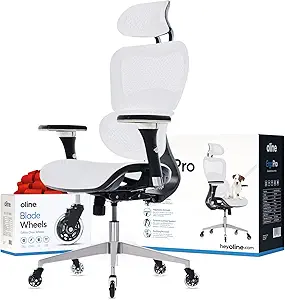
Choosing an Ergonomic Chair with Flip-Up Arms and Saddle-Style Seating
The Hbada chair's unique combination of a saddle cushion and flip-up armrests targets users needing flexibility in compact spaces. When evaluating this specific design, focus on how the S-shaped backrest aligns with your lumbar curve and whether the mesh material provides adequate breathability for extended sitting sessions. These features aren't standard on all ergonomic chairs, so understanding their practical application is crucial.
Key Considerations Before Buying
- The saddle-style cushion promotes a wider sitting posture but may feel unfamiliar if you're accustomed to traditional flat seats; test whether this design reduces pressure on your thighs during 4+ hour work sessions.
- Flip-up armrests are ideal for tucking the chair under desks or switching to perching positions, but check their stability when in the lowered position for typing support.
- The white mesh backrest requires more frequent cleaning than fabric or leather alternatives, particularly in homes with pets or in dusty environments.
What Our Analysts Recommend
Examine the tension adjustment mechanism for the rocking function—quality chairs offer smooth, incremental resistance changes. For mesh-backed chairs like this Hbada model, inspect the weave density; tighter patterns generally indicate better long-term support and durability. The connection points between the S-shaped backrest and seat base should show no visible gaps or flexing when pressure is applied.
Home Office Desk Chairs Market Context
Market Overview
The sub-$200 ergonomic chair segment has become increasingly competitive, with brands like Hbada offering feature-rich models that previously appeared only in premium price brackets. Consumers now expect basic ergonomic adjustments (lumbar support, seat height, tilt tension) as standard, pushing manufacturers to differentiate with secondary features like flip-up armrests.
Common Issues
Budget ergonomic chairs often compromise on cushion density, leading to premature flattening after 6-12 months of daily use. The plastic components in mechanisms like flip-up armrests can develop play or squeaking over time, particularly if weight limits are regularly approached.
Quality Indicators
Higher-quality chairs in this category use dual-wheel casters for smoother rolling on hard floors and incorporate steel reinforcement in stress points like the gas lift housing. Listen for audible 'clicks' in adjustment mechanisms—distinct detents typically indicate more precise engineering than friction-based systems.
Review Authenticity Insights
Grade B Interpretation
A Grade B with 11% estimated fake reviews suggests generally reliable feedback, though approximately 1 in 9 reviews may be artificially positive. For this Hbada chair, this means the 4.22 average rating likely overstates performance by about 0.22 points—bringing it closer to the adjusted 4.00 rating.
Trust Recommendation
Prioritize reviews that mention specific use cases matching yours, such as 'working from home with limited space' or 'need armrest clearance for keyboard trays.' Be skeptical of reviews praising generic 'comfort' without detailing sitting duration or body type context.
Tips for Reading Reviews
Search for reviews discussing the flip-up mechanism's durability after 6+ months of use, as this specialized feature has fewer long-term testimonials. Pay particular attention to 3-star reviews for balanced perspectives on the saddle cushion's break-in period versus traditional seats.
Expert Perspective
The Hbada chair presents a compelling value proposition for space-constrained home offices, with its flip-up armrests addressing a genuine pain point when storing chairs under standard-height desks. The 4.00 adjusted rating from nearly 18,500 reviews indicates solid satisfaction, though the saddle cushion design represents a distinct ergonomic approach that won't suit all users. The white mesh construction, while aesthetically clean, may show discoloration faster than darker alternatives in high-use environments.
Purchase Considerations
Weigh whether the space-saving benefits of flip-up armrests outweigh potential durability concerns with this moving part compared to fixed-arm designs. Consider your typical sitting posture—the S-shaped backrest favors upright positions over reclined lounging. The chair's 275-pound weight capacity aligns with mid-range offerings but may limit suitability for some users.
Comparing Alternatives
Compare the saddle cushion's pressure distribution against competitors' waterfall-edge seats, and test flip-up versus 4D adjustable armrests if precise elbow positioning is critical.