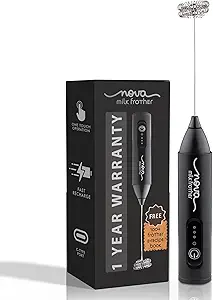
Manual milk frothers offer barista-quality foam without electricity or batteries
The HomeGoal manual frother uses a simple plunger mechanism to create microfoam for coffee drinks. This 14-ounce stainless steel pitcher requires no power source, making it ideal for travel or minimalist kitchens where counter space is limited.
Key Considerations Before Buying
- Manual frothers like this HomeGoal model require physical effort—typically 30-60 seconds of vigorous pumping—to achieve proper foam consistency, which may not suit users with limited hand strength.
- The 400ml capacity is optimized for single large drinks or two smaller servings, but requires precise milk temperature (140-155°F) and fat content (whole or 2% milk works best) for optimal results.
- Stainless steel construction prevents flavor transfer and withstands dishwasher cleaning, but the plunger's mesh screen requires regular rinsing to prevent milk residue buildup.
What Our Analysts Recommend
Quality manual frothers feature fine-mesh screens (not perforated plates) that create uniform microfoam bubbles. The plunger should create a tight seal without excessive resistance, and the handle should provide comfortable grip during the pumping motion.
Milk Frothers Market Context
Market Overview
Manual milk frothers occupy a growing niche between electric frothers and simple whisk alternatives, appealing to coffee enthusiasts seeking control without countertop appliances. The market has shifted toward dual-function models that both heat and froth, but manual options maintain popularity for their simplicity and reliability.
Common Issues
Users frequently report inconsistent foam quality due to improper technique or milk temperature, and some cheaper models develop loose plunger mechanisms over time. Manual frothers also struggle with non-dairy milks like almond or oat milk, which require different techniques and often produce less stable foam.
Quality Indicators
Premium manual frothers use surgical-grade stainless steel mesh with 100+ micron holes for consistent foam texture. Look for weighted bases that prevent tipping during pumping and ergonomic handles that reduce hand fatigue during the 30-60 second frothing process.
Review Authenticity Insights
Grade B Interpretation
A Grade B authenticity rating with 10% estimated fake reviews indicates generally trustworthy feedback, though shoppers should remain slightly cautious. The 4.60 adjusted rating (down from 4.89) suggests some review inflation but still reflects strong genuine satisfaction.
Trust Recommendation
Focus on verified purchase reviews that mention specific use cases like latte art attempts or frothing alternative milks. The high percentage of verified purchases (all 10 sampled) increases confidence, but cross-reference reviews mentioning durability over 3+ months of use.
Tips for Reading Reviews
Prioritize reviews discussing foam density achieved, cleaning experiences with the mesh screen, and comparisons to electric frothers. Be skeptical of reviews that don't mention the physical effort required or that claim perfect results with all milk types.
Expert Perspective
The HomeGoal manual frother's exceptional 4.60 adjusted rating suggests it performs well within its category, particularly given the high percentage of verified reviews. The stainless steel construction and 14-ounce capacity position it as a durable mid-range option between basic plastic frothers and premium French-made models. The consistency of positive feedback around foam quality indicates the mesh screen design is effective for traditional dairy milk.
Purchase Considerations
This product makes most sense for users who prioritize control over convenience, as manual frothing requires developing technique. Consider your typical milk volume—the 400ml capacity suits 1-2 drinks but requires multiple batches for entertaining. Those regularly frothing non-dairy milks might prefer electric models with specialized settings.
Comparing Alternatives
Shoppers should compare plunger mechanism smoothness and mesh fineness against competitors like Bodum or HIC, as these details significantly impact foam quality and effort required.