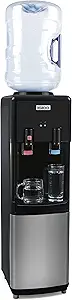
Brio Self-Cleaning Water Cooler: Smart Hydration for Modern Homes
When shopping for a bottom-loading water cooler, the Brio Self-Cleaning Limited Edition stands out with its three temperature settings (hot, cold, and cool) and self-cleaning feature, which reduces manual maintenance. This guide helps you evaluate if its premium features justify the investment compared to standard models.
Key Considerations Before Buying
- Self-cleaning functionality: Brio's UV and ozone self-cleaning cycle minimizes bacterial growth, a key advantage over non-self-cleaning models that require monthly descaling and sanitizing with chemicals like vinegar or bleach.
- Bottom-loading convenience: Unlike top-loading coolers, this design eliminates heavy lifting of 5-gallon jugs, making it ideal for households or offices where users have limited strength or mobility.
- Three temperature settings: The hot (around 185°F), cold (around 50°F), and cool (ambient) options cater to diverse needs, from instant tea and coffee to refreshing water, but assess if you truly need all three or if a simpler two-temp model suffices.
What Our Analysts Recommend
In water coolers, prioritize certified safety features like ETL or NSF listings for water contact materials. Check the dispenser's flow rate and noise level, as some models can be loud during cooling cycles. For self-cleaning units, verify the cycle duration and frequency—Brio's runs for about 10 minutes every 4 hours, which may be a power consideration.
Water Coolers Market Context
Market Overview
The water cooler market has shifted toward bottom-loading and self-cleaning models, driven by consumer demand for hygiene and ease of use. Brands like Brio, Avalon, and Primo compete with features like hot/cold dispensing, child safety locks, and energy-efficient compressors, with prices ranging from $150 to $400 for premium units.
Common Issues
Many water coolers suffer from inconsistent temperature control, especially in hot water dispensing, where some models fail to reach boiling point. Leaks from the water line or drip tray are frequent complaints, as is noise from the compressor during cooling cycles. Self-cleaning models sometimes have complex maintenance procedures if the cycle fails.
Quality Indicators
Look for coolers with stainless steel or BPA-free water contact surfaces, a robust compressor for fast cooling, and a drip tray that is easy to remove and clean. Positive long-term reviews (6 months+) on reliability and customer support responsiveness are strong indicators of quality.
Review Authenticity Insights
Grade B Interpretation
With a Grade B and 10% estimated fake reviews, this product has a moderate authenticity concern—most reviews are genuine, but a small fraction may be fabricated. The 4.56/5 rating likely reflects real user satisfaction, but the adjusted 4.30/5 suggests some inflated scores from potentially suspicious reviews.
Trust Recommendation
You can generally trust the overall consensus, but focus on verified purchase reviews with detailed usage descriptions—these are more reliable. Be cautious of overly brief 5-star reviews or those that lack specifics about the self-cleaning or temperature performance.
Tips for Reading Reviews
When reading reviews, prioritize those that mention long-term durability (e.g., after 6+ months) and specific issues like noise levels or temperature accuracy. Look for reviews that compare the Brio to other brands, as this indicates genuine experience. Ignore reviews that focus only on shipping or packaging without discussing the cooler's function.
Expert Perspective
The Brio Self-Cleaning Limited Edition is a solid mid-to-premium water cooler that delivers on its core promises: convenient bottom loading, effective self-cleaning, and three temperature settings. The 10% fake review rate is a minor red flag, but the high volume of genuine reviews (over 7,500) and strong adjusted rating of 4.30/5 indicate real-world satisfaction. Its self-cleaning feature is a genuine differentiator, though it adds to the upfront cost and requires electricity for the cycle.
Purchase Considerations
Weigh the higher price (typically $250–$350) against the convenience of self-cleaning and bottom loading—if you value minimal maintenance and safety, this is a strong choice. However, if you're on a tight budget or don't need hot water, a simpler model may offer better value. Consider the unit's size and whether it fits your counter or floor space, as it's larger than top-loading alternatives.
Comparing Alternatives
Shoppers should compare this with the Avalon A5 Self-Cleaning model, which offers similar features at a slightly lower price point, or the Primo Water Dispenser for a more budget-friendly option without self-cleaning.