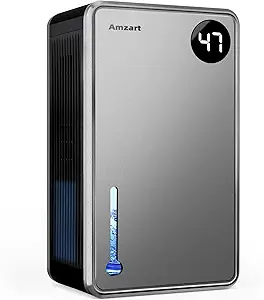
Choosing a 50-pint dehumidifier requires balancing capacity claims with real-world performance
The Midea 4,500 sq. ft. dehumidifier's 50-pint capacity and reusable filter position it for basement and large room applications, but understanding how manufacturers calculate coverage areas is crucial. Buyers should note that the 4,500 sq. ft. rating represents ideal laboratory conditions, not typical damp basements where actual effective coverage may be significantly less.
Key Considerations Before Buying
- Verify your actual square footage against the product's 4,500 sq. ft. claim, understanding this rating assumes 8-foot ceilings and moderate humidity levels in open spaces.
- Consider the reusable air filter's maintenance requirements versus disposable filters, as washable filters need regular cleaning to maintain efficiency in damp environments.
- Evaluate the unit's 50-pint capacity against your specific moisture levels, as basements with standing water or extreme dampness may require more frequent emptying than the product specifications suggest.
What Our Analysts Recommend
Quality dehumidifiers in this category should offer clear moisture removal data in pints per day at specific humidity/temperature conditions, not just maximum capacity claims. Look for units with automatic humidity sensors and shut-off features, which the Midea includes, to prevent over-drying and energy waste in basement applications.
Dehumidifiers Market Context
Market Overview
The 40-50 pint residential dehumidifier segment has become increasingly competitive, with brands like Midea challenging traditional leaders by offering feature-rich units at lower price points. These mid-capacity units now commonly target basements and large rooms, though actual performance often varies significantly from marketing claims.
Common Issues
Consumers frequently report discrepancies between advertised coverage areas and real-world effectiveness, particularly in challenging environments like unfinished basements. Another common complaint involves compressor reliability in units operating continuously in damp conditions, with some models struggling with consistent moisture removal over time.
Quality Indicators
Look for Energy Star certification (which this Midea model lacks), detailed performance data across different temperature/humidity ranges, and robust construction suitable for basement environments. Quality units typically feature corrosion-resistant components and reliable humidity sensors that maintain setpoints within 5% accuracy.
Review Authenticity Insights
Grade B Interpretation
The Grade B authenticity rating with 11% estimated fake reviews indicates mostly reliable feedback, though shoppers should be aware that approximately 1 in 9 reviews may be inauthentic. The adjusted rating dropping from 3.56 to 3.40 suggests some positive reviews were likely artificial, making the true customer satisfaction slightly lower than initially appears.
Trust Recommendation
Focus on reviews that mention specific basement conditions, moisture levels, or long-term performance over several seasons, as these details indicate genuine usage. Be particularly skeptical of reviews that only praise the 4,500 sq. ft. coverage without describing their actual space dimensions or humidity challenges.
Tips for Reading Reviews
Prioritize reviews discussing actual pint collection in 24-hour periods, filter maintenance experiences, and performance in temperatures below 65°F where many dehumidifiers struggle. Look for patterns in complaints about compressor noise or inconsistent humidity control, as these often indicate design limitations rather than isolated defects.
Expert Perspective
The Midea 50-pint dehumidifier presents a value-oriented option for moderate basement moisture control, but its 3.40 adjusted rating suggests performance inconsistencies that buyers should carefully consider. The unit's 4,500 sq. ft. coverage claim appears optimistic for most real-world applications, particularly in poorly insulated basements or spaces with extreme humidity. While the reusable filter offers cost savings, its effectiveness in musty basement environments depends on regular maintenance that some users may neglect.
Purchase Considerations
This unit makes most sense for medium-sized basements (1,500-2,500 sq. ft. realistically) with moderate humidity issues, where users can regularly empty the 50-pint reservoir and clean the filter monthly. Those with severe moisture problems, very large spaces, or extremely damp conditions should consider higher-capacity units or professional-grade dehumidifiers despite the higher cost.
Comparing Alternatives
Shoppers should compare this Midea model against similarly priced 50-pint units from Frigidaire and hOmeLabs, paying particular attention to energy efficiency ratings and warranty terms for basement applications.