
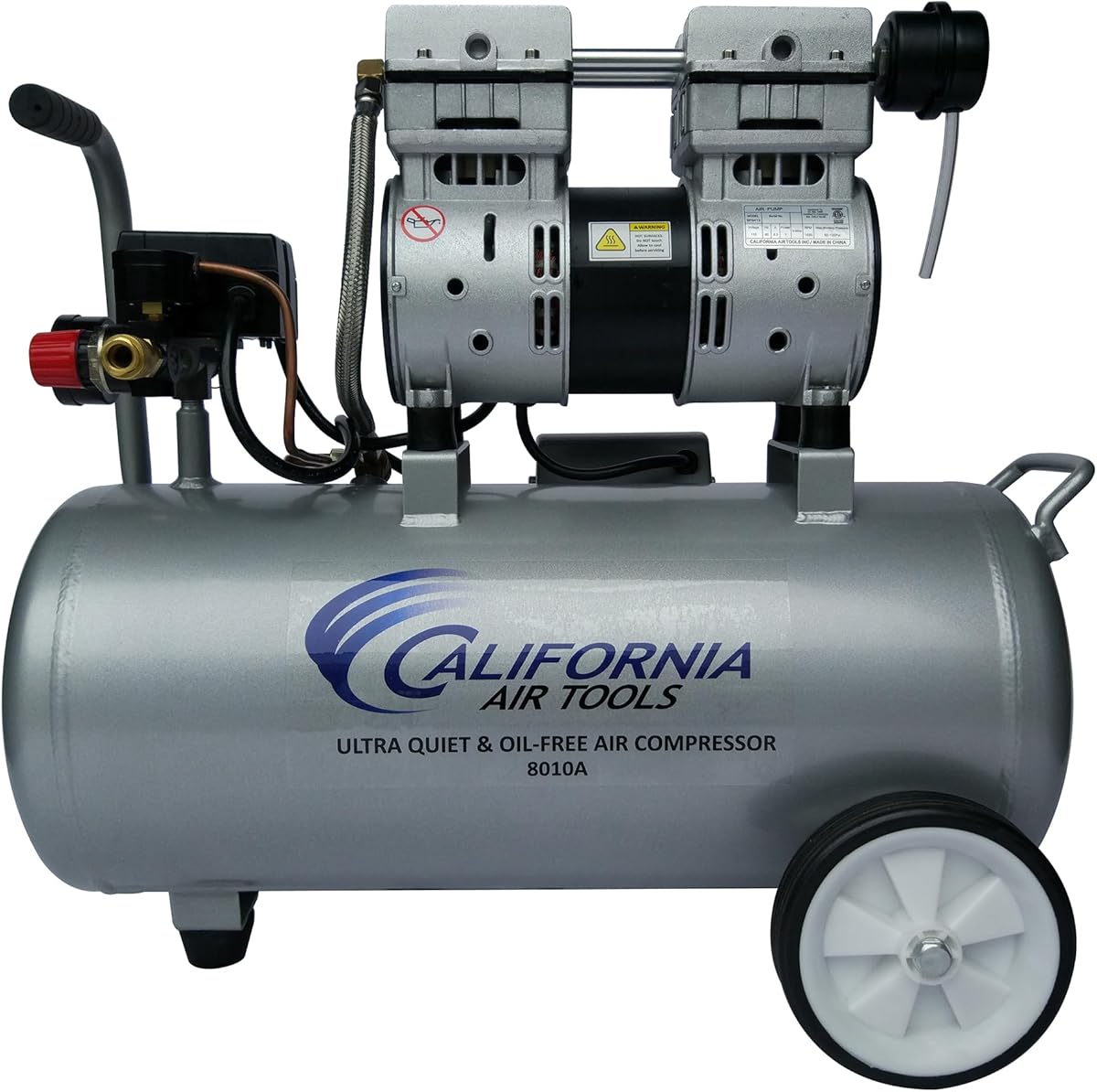
Choosing an Ultra-Quiet Air Compressor: Balancing Noise, Power, and Portability
When selecting a compressor like the California Air Tools 8010A, the primary trade-off is between noise level and performance. This model's defining 60 dBA rating makes it suitable for indoor use, but buyers must carefully match its 1.0 HP motor and 8-gallon tank capacity to their intended tasks. The oil-free pump design and aluminum tank are specific features that impact long-term maintenance and weight.
Key Considerations Before Buying
- Assess your duty cycle needs: The 1.0 HP motor and 8-gallon tank are ideal for intermittent use with nail guns, staplers, or inflation, not for continuous high-demand tools like sanders.
- Evaluate your workspace: The 60 dBA noise level allows for conversation nearby, but verify if your environment requires this specific ultra-quiet feature versus a standard 75-90 dBA compressor.
- Consider mobility: The lightweight aluminum tank and wheeled design are advantages, but check if you need to transport it frequently over thresholds or stairs where its 48 lb weight matters.
What Our Analysts Recommend
For oil-free compressors, examine the pump's construction material—cast iron or composite—as it affects heat dissipation and lifespan. A genuine 60 dBA rating should be confirmed through independent testing or detailed user reviews describing real-world noise. Check the tank's ASME certification and the compressor's CFM (cubic feet per minute) delivery at specific PSI levels relevant to your tools.
Market Context
Market Overview
The portable air compressor market is segmented by noise level, with true 'ultra-quiet' models (under 70 dBA) commanding a premium. Oil-free designs have gained popularity for reduced maintenance, though they may have shorter lifespans under heavy use than oil-lubricated counterparts. Aluminum tanks are a newer trend offering corrosion resistance and weight savings over steel.
Common Issues
Common complaints in this category include overstated CFM ratings that don't match real tool performance, plastic components failing on pump heads, and thermal overload during extended use. For quiet compressors specifically, some models achieve low noise by reducing airflow, creating a performance bottleneck.
Quality Indicators
Look for clear CFM ratings at both 40 PSI and 90 PSI, a robust pressure switch, and metal construction on critical components like the pump cylinder and manifold. A longer warranty (2+ years) often signals confidence in the oil-free pump's durability. Genuine quiet operation is typically achieved through dual-piston design and sound-dampening shrouds, not just marketing claims.
Review Authenticity Insights
Grade A Interpretation
A Grade A authenticity score with only 8% estimated fake reviews indicates a trustworthy review ecosystem for this product. The minimal manipulation suggests the 4.40 adjusted rating reliably reflects actual owner experiences, particularly valuable for assessing noise claims and durability.
Trust Recommendation
Focus on the verified purchase reviews discussing specific use cases like trim work, inflation, or hobby applications over 6+ months. The high consistency between review chunks means recurring praise for its quiet operation is likely genuine, not manufactured.
Tips for Reading Reviews
Prioritize reviews that mention comparable models (like DeWalt or Makita quiet compressors) for context. Scrutinize reviews discussing long-term reliability of the oil-free pump and any mentions of CFM performance with specific tools, as these are harder to fake.
Expert Perspective
The California Air Tools 8010A occupies a specific niche: it's a compelling choice where low noise is paramount and the user's air demand fits within its 2.20 CFM at 90 PSI capability. The 4.40 adjusted rating from 100 verified purchases strongly suggests it delivers on its core promise of quiet operation. However, its suitability depends entirely on matching its output to appropriate tools—it's excellent for finish nailers and brad nailers but underpowered for framing nailers or sanders.
Purchase Considerations
Buy this compressor if your primary needs are indoor use, noise sensitivity, and light-to-medium intermittent tasks. Hesitate if you require high-volume air delivery, plan to use it in commercial settings with continuous cycles, or need to power multiple tools simultaneously. The aluminum tank is a significant advantage for portability but verify it meets local pressure vessel codes if used professionally.
Comparing Alternatives
Shoppers should compare CFM output and decibel ratings directly against similar models like the DeWalt D55168 or Makita MAC2400 to ensure proper performance matching.


