
How to Choose a Benchtop Belt and Disc Sander That Lasts
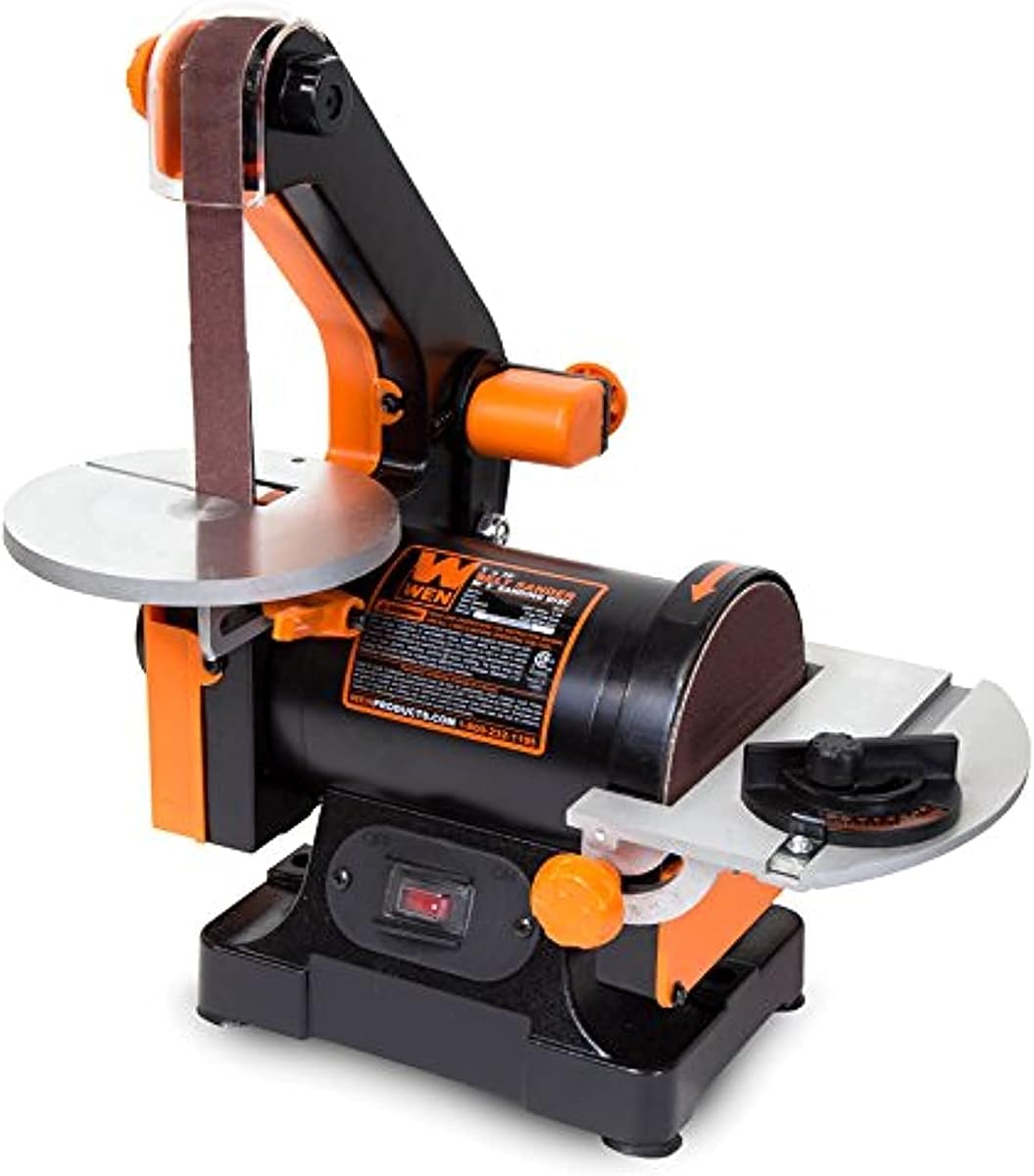
The WEN 6515T combines a 1-inch by 30-inch belt with a 5-inch sanding disc, offering two essential sanding functions in one compact benchtop unit. Before buying, understand the trade-offs between this budget-friendly design and heavier-duty alternatives.
Key Considerations Before Buying
- Motor power and speed: The 6515T runs on a 1/3 HP motor with a belt speed of 1,900 SFM and disc speed of 3,450 RPM. This is adequate for light to medium-duty tasks like sharpening chisels or sanding small parts, but it will bog down on large hardwood surfaces if you push too hard.
- Table adjustability: The belt table tilts 0–45 degrees and the disc table tilts 0–45 degrees, giving you flexibility for beveled edges. However, the tables are made of cast aluminum, so they may flex under heavy pressure—check for flatness if precision is critical.
- Dust collection and port size: The 6515T includes a 1-1/4-inch dust port, which fits most shop vacs. Without a vacuum, fine dust will quickly coat your workspace, so budget for a hose adapter if needed.
What Our Analysts Recommend
Look for a cast aluminum or steel frame (not plastic) to minimize vibration, and verify that the belt tracking adjustment is tool-free for quick corrections. Also check that the drive drum is balanced—cheap units often have wobble that ruins finish quality.
Combination Disc & Belt Sanders Market Context
Market Overview
Combination disc and belt sanders are a staple in small woodworking and metalworking shops, with prices ranging from $80 to over $500. The WEN 6515T sits at the entry-level end, competing with similar benchtop models from Grizzly, Rikon, and Harbor Freight.
Common Issues
Frequent complaints in this category include belt slipping or tracking problems, underpowered motors that stall under load, and disc tables that are not square to the disc. Vibration and noise are also common, especially in lower-priced units with stamped steel bases.
Quality Indicators
A quality benchtop sander should have a solid cast iron or heavy-gauge steel base, sealed bearings (not bushings), and a belt tensioning system that stays put. Look for models with a miter gauge slot and a work support that locks firmly at any angle.
Review Authenticity Insights
Grade B Interpretation
An A grade with an estimated 8% fake reviews means the vast majority of the 2,706 ratings are trustworthy. This is unusually high for a budget tool, suggesting genuine customer satisfaction rather than manipulated feedback.
Trust Recommendation
You can rely on the 4.6 adjusted rating as a solid indicator of real-world performance. Focus on reviews that mention long-term durability and specific tasks like sharpening or squaring edges, as these are harder to fake.
Tips for Reading Reviews
Look for reviews that mention belt tracking adjustments, motor bog-down, or dust collection—these are the pain points that separate a good unit from a frustrating one. Ignore vague five-star reviews that only say 'great value' without details.
Expert Perspective
The WEN 6515T is a standout value for hobbyists and DIYers who need occasional sanding, sharpening, or deburring. Its dual-function design saves bench space, and the 4.6 adjusted rating reflects that most buyers find it reliable for light tasks. However, it is not a production machine—if you routinely sand large panels or hardwoods, you will want more horsepower and a heavier base.
Purchase Considerations
Weigh your workload: if you sand less than an hour a week and work with small pieces, the 6515T is a smart buy. If you need to remove material quickly or sand long edges, consider stepping up to a 4x36-inch belt sander with a 1 HP motor. Also factor in the cost of a shop vac and quality sanding belts, which can add $50–$100.
Comparing Alternatives
Compare the WEN 6515T with similar 1x30 models from Rikon and Grizzly, as well as 4x36 combination sanders if you need more surface area. Read side-by-side reviews to see which fits your typical projects.


