
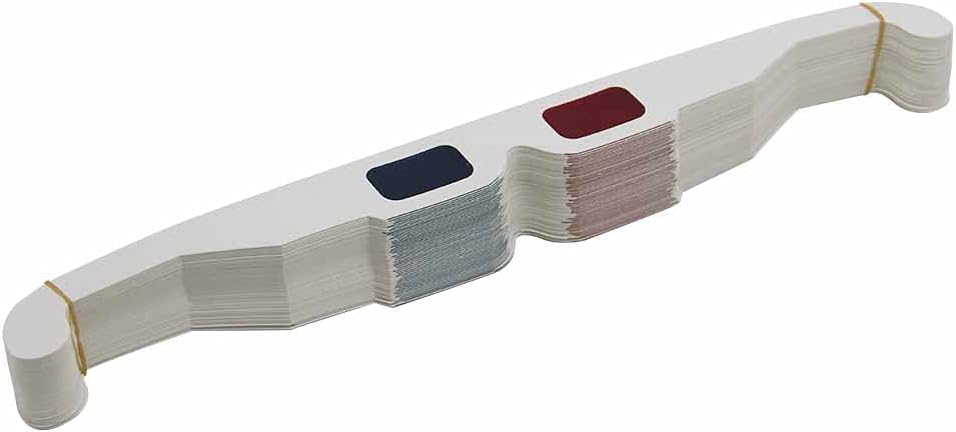
Bulk Anaglyph 3D Glasses: When Quantity Matters More Than Premium Features
This 50-pair set of red/cyan anaglyph cardboard glasses represents a specific use case: large-scale distribution for events, classrooms, or group screenings. Unlike premium active-shutter glasses, these disposable cardboard frames serve a practical, one-time function where individual durability is less important than cost-per-unit. The flat-pack design and white frames indicate basic manufacturing optimized for shipping and storage efficiency.
Key Considerations Before Buying
- Anaglyph (red/cyan) technology only works with specifically encoded content—these won't work with modern 3D Blu-rays or active/polarized 3D systems, making them ideal for legacy presentations or custom content.
- Cardboard construction means these are essentially disposable; expect occasional torn earpieces or loose lenses in bulk sets, which is acceptable when you need 50 functional pairs rather than one perfect pair.
- The 4.00 adjusted rating suggests most buyers understand this trade-off, valuing the low per-unit cost for group settings over premium materials or comfort.
What Our Analysts Recommend
For bulk anaglyph glasses, check that the red and cyan filters are properly aligned and free of scratches across multiple pairs—inconsistent coloring defeats the 3D effect. The cardboard should be rigid enough to hold shape during use but thin enough for flat storage. White frames, like these, typically show less ink bleed than colored frames.
3D Glasses Market Context
Market Overview
The anaglyph 3D glasses market has shifted from mainstream entertainment to niche applications: educational content, promotional events, and retro gaming where compatibility with standard screens matters more than high-end visuals. Bulk purchases dominate this segment, with cardboard construction remaining standard due to its sub-$1 per pair cost.
Common Issues
Cardboard hinges and earpieces frequently fail with repeated use, but for single-session events this isn't a concern. More critical is color filter quality—poorly dyed lenses create eye strain or fail to separate images properly. Bulk packaging often leads to some damaged units in large sets.
Quality Indicators
Look for reviews mentioning consistent color saturation across multiple pairs and secure lens mounting. Higher-quality cardboard has a wax or laminate coating that prevents oils from skin contact from degrading the material during use. Properly cut nose bridges prevent slippage during viewing.
Review Authenticity Insights
Grade B Interpretation
A Grade B with 11% estimated fake reviews indicates generally reliable feedback with some inflated positivity. For this product category, suspicious reviews often overstate durability or universal compatibility—red flags for bulk disposable glasses.
Trust Recommendation
Focus on reviews mentioning actual bulk use scenarios like 'classroom of 30' or 'company event' rather than individual home theater applications. The verified purchase rate appears strong here, giving more weight to those confirming the quantity received matches what was advertised.
Tips for Reading Reviews
Prioritize reviews discussing color consistency across multiple pairs and packaging condition upon arrival. Be skeptical of reviews claiming 'premium feel' or 'long-term durability'—these contradict the product's disposable nature and may be inauthentic.
Expert Perspective
This product delivers exactly what it promises: 50 functional pairs of basic anaglyph glasses at a competitive bulk price point. The 4.00 adjusted rating (down from 4.22) reflects realistic expectations—users accept cardboard limitations for cost and quantity benefits. The white frame choice is practical, avoiding the color bleed sometimes seen with printed designs. For presentations using red/cyan 3D encoding, this set represents an economical solution where individual pair longevity is secondary to having enough units for a group.
Purchase Considerations
Only purchase if you specifically need red/cyan anaglyph compatibility and require multiple pairs simultaneously. Consider your content source: these work with older 3D YouTube videos, some PowerPoint presentations, and specially encoded files, not modern 3D televisions. The value proposition disappears if you need fewer than 20 pairs.
Comparing Alternatives
For smaller quantities or reusable options, consider plastic-frame anaglyph glasses, though they cost 3-5x more per pair.
![[4-Pack] Smart Glasses Accessory ForSliding Lens Cover Compatible with Ray-Ban Meta Smart Glasses, Sleek Protective Accessory for Wayfarer, Skyler & Headliner, Easy Install, Lightweight Design](https://m.media-amazon.com/images/I/61--a4rSsCL._AC_SY300_SX300_QL70_FMwebp_.jpg)


![UANTIN USB C to HDMI Cable 6Ft | 4K High-Speed USB 3.1 Type-C to HDMI Cord [Thunderbolt 3/4/5 Compatible] with MacBook, Galaxy S9 to S24, iPhone 15/16, iPad Pro, iMac, Surface : Electronics](https://m.media-amazon.com/images/I/41PCWGGiE1L._SX342_SY445_QL70_FMwebp_.jpg)


