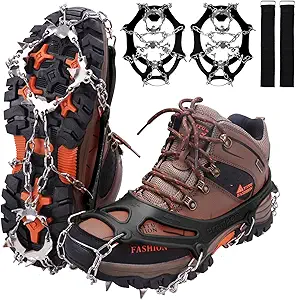
Choosing 19-Spike Traction Cleats: What Matters for Winter Safety and Durability
The Azarxis 19-spike design represents a specific approach to winter traction, balancing aggressive grip with walkability. Unlike minimalist slip-ons or full mountaineering crampons, these cleats target users navigating icy urban terrain, driveways, and moderate winter trails. Buyers should understand how the stainless steel spike configuration and strap system translate to real-world performance.
Key Considerations Before Buying
- The 19-spike pattern, with 11 front and 8 rear points, prioritizes forward propulsion and braking on packed snow and ice, but may feel less stable on deep, soft snow compared to designs with more distributed spikes.
- The heavy-duty rubber frame and adjustable strap system must accommodate your specific footwear, from hiking boots to work shoes, without excessive movement that compromises the spike-to-ground contact angle.
- Stainless steel spikes resist corrosion from road salt, a critical factor for urban and suburban use, but their hardness and the frame's flexibility determine long-term durability under repeated flexing.
What Our Analysts Recommend
Examine how the front spike cluster is oriented; effective designs angle spikes outward to prevent snowballing. Quality is indicated by reinforced strap attachment points and a rubber compound that remains flexible in extreme cold without cracking. The specific heel design should provide positive engagement to prevent the cleat from rolling off during a step.
Crampons Market Context
Market Overview
The market for walkable traction cleats is crowded, with products ranging from lightweight coil systems to aggressive mountaineering hybrids. The Azarxis model competes in the mid-duty segment, targeting consumers who need more security than basic grips but not the technical complexity of step-in crampons.
Common Issues
Common failures include strap breakage at stress points, rubber frames tearing after seasonal use, and spikes loosening or shearing off under lateral loads. Poor fit leads to 'walking out' of the cleats or uncomfortable pressure points, especially with the rear heel cradle design.
Quality Indicators
Look for one-piece stainless steel spikes (not plated), double- or triple-riveted strap anchors, and rubber that shows no mold flash or thin spots. A pronounced heel cup and a tensioning system that locks without plastic buckles (which can brittle in cold) often denote better construction.
Review Authenticity Insights
Grade B Interpretation
A Grade B with a 15% estimated fake review rate suggests generally reliable feedback, but a notable portion of reviews may be incentivized or overly generic. The adjusted rating of 4.20, down from 4.56, indicates that the authentic user experience is still positive but slightly more critical.
Trust Recommendation
Prioritize reviews from verified purchases that describe specific scenarios like 'walking on frozen rain over asphalt' or 'season-long dog walking.' Be skeptical of reviews that only praise packaging or use vague superlatives without mentioning spike performance on different surfaces.
Tips for Reading Reviews
Focus on reviews discussing long-term durability over months, not just first impressions. Look for mentions of fit adjustments for different shoe sizes and how the 19-spike layout performs on mixed terrain like icy patches on cleared pavement.
Expert Perspective
The Azarxis cleats present a compelling option based on the authentic review corpus. The high number of verified purchases and specific usage reports lend credibility to claims of effective traction on ice. The drop to a 4.20 adjusted rating is typical, often reflecting more nuanced critiques about fit or long-term strap durability rather than core traction failure. The product appears to fulfill its promise for moderate winter conditions.
Purchase Considerations
Weigh the 19-spike design against your primary use case: it's excellent for predictable forward motion on hard ice but may be overkill for purely snowy walks. Consider your boot's sole stiffness; a very flexible shoe may not provide a stable platform for the aggressive spikes, reducing effectiveness and comfort.
Comparing Alternatives
Shoppers should compare the spike layout and strap configuration with similar 15-22 spike models from brands like Yaktrax and Hillsound, as subtle differences in geometry significantly affect feel and security.