
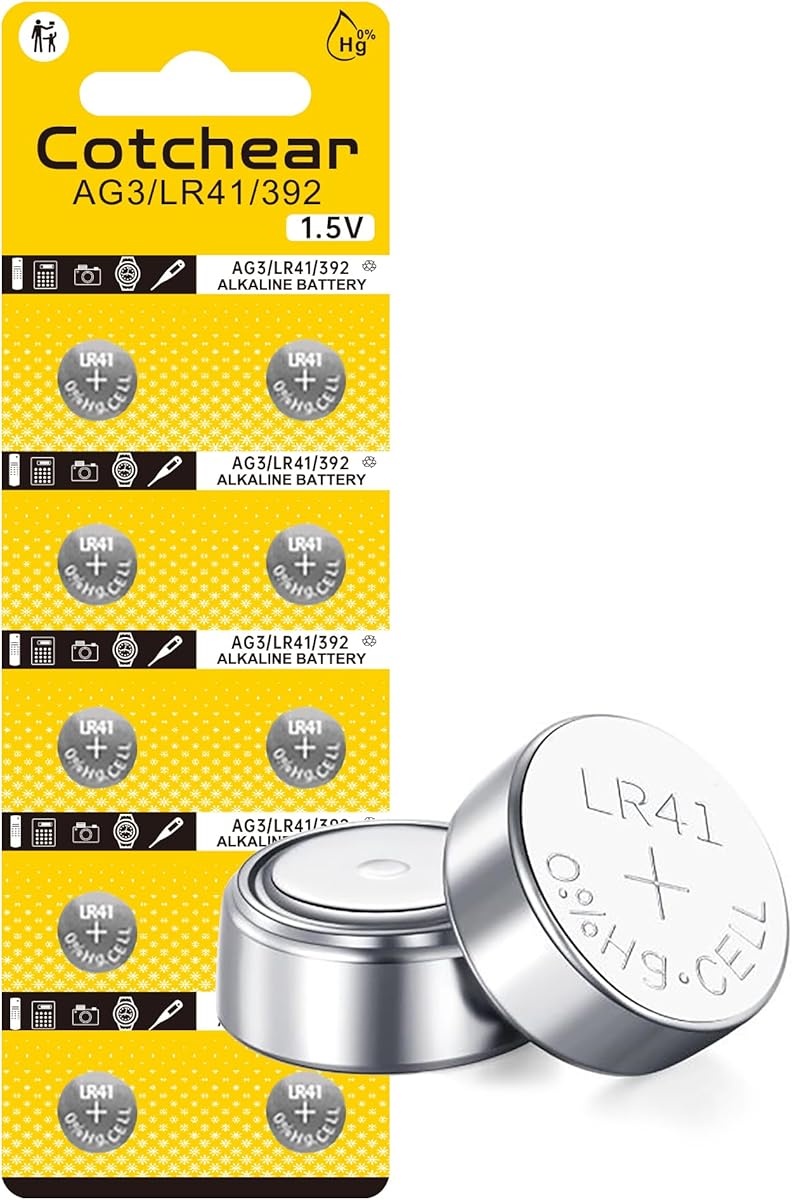
Choosing the Right AG3/LR41 Button Cell: Compatibility, Longevity, and Value
When purchasing button cells like the Cotchear 10-pack, understanding the complex naming conventions (AG3, LR41, 392, SR41SW) is crucial, as these batteries power specific devices from digital thermometers to car key fobs. This product's 1.5V alkaline chemistry offers a balance of shelf life and immediate power delivery, making it suitable for low-drain electronics but less ideal for continuous high-drain applications.
Key Considerations Before Buying
- Verify your device's exact battery compartment marking, as AG3, LR41, 392, and SR41SW are often interchangeable but some sensitive electronics (like certain medical devices) may specify one over another.
- Consider the 10-count packaging for devices you use frequently or in multiples, as button cells have a finite shelf life of 2-3 years, and buying in bulk for infrequent use risks expiration.
- Assess the seal and packaging integrity upon arrival, as improper storage or compromised blister packs can lead to premature discharge or leakage, especially with alkaline chemistry cells.
What Our Analysts Recommend
Quality indicators include clear, consistent branding on each cell's positive terminal, a secure and airtight blister pack that prevents oxidation, and a recent manufacturing date code (often a letter/number stamp). For the Cotchear pack, check that all 10 cells are the same physical size, as slight dimensional variances in cheaper batches can cause fit issues in tight compartments.
Coin & Button Cell Market Context
Market Overview
The LR41/AG3 button cell market is saturated with value-focused multi-packs, where brands like Cotchear compete primarily on price-per-cell and packaging rather than technological innovation. Recent trends show increased consumer confusion over the proliferation of equivalent codes (L736, CX41) listed in product titles to capture search traffic.
Common Issues
Primary complaints in this category involve premature failure (cells dead on arrival or draining within weeks), inconsistent sizing causing jammed battery compartments, and confusion over chemical equivalents—some devices require silver oxide (SR41) rather than alkaline (LR41) for stable voltage, despite physical compatibility.
Quality Indicators
Beyond price, reliable manufacturers provide clear expiration dating, use anti-corrosion seals on the negative terminal, and maintain consistent diameter (7.9mm) and height (3.6mm). Premium brands often vacuum-seal individual cells, while budget packs like Cotchear typically use simpler blister packs.
Review Authenticity Insights
Grade B Interpretation
A Grade B with 11% estimated fake reviews indicates a generally trustworthy review pool, but suggests some incentivized or biased feedback may be present. The 0.27-point drop from the displayed 4.67 to the adjusted 4.40 rating is moderate, signaling that while most reviews are genuine, the overall score is slightly inflated.
Trust Recommendation
Focus on verified purchase reviews that mention specific device compatibility (e.g., 'worked in my 2018 Toyota key fob') rather than generic praise. Be skeptical of reviews emphasizing packaging or delivery speed over actual battery performance, as these are common markers of incentivized feedback.
Tips for Reading Reviews
Prioritize reviews discussing long-term performance (3+ months of use) and check for patterns in negative reviews mentioning DOA rates or size inconsistencies. For this product, note how many reviewers confirm the batteries fit devices requiring the less common SR41SW specification.
Expert Perspective
The Cotchear 10-pack presents a classic value proposition in the button cell market: adequate performance for most standard applications at a competitive price point. The high review count (12,526) and sustained 4.4+ adjusted rating suggest consistent satisfaction for basic uses like watches and simple toys. However, the alkaline chemistry means these cells will experience gradual voltage decline, making them less suitable for precision devices like glucose monitors or luxury watches that require the flat discharge curve of silver oxide equivalents.
Purchase Considerations
This pack makes economic sense if you need multiple LR41 cells within their 2-3 year shelf life and your devices aren't voltage-sensitive. For critical applications or devices used in extreme temperatures, consider investing in name-brand silver oxide (SR41) cells despite the higher per-unit cost.
Comparing Alternatives
Shoppers should compare the Cotchear pack's price-per-cell against established brands like Energizer or Panasonic, weighing whether the savings justify potentially shorter lifespan in high-drain devices.


