How to Choose Slip-On Ice Cleats That Actually Stay Put
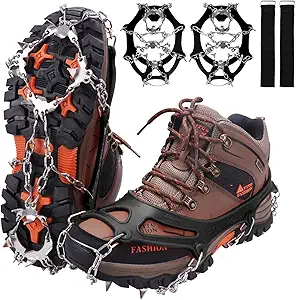
This product is a slip-on traction device with 19 stainless steel spikes, designed to stretch over everyday boots and shoes for winter hiking, fishing, walking, and light climbing. Unlike rigid mountaineering crampons, these are flexible cleats aimed at casual winter use, so matching the spike count and harness design to your terrain matters more than the marketing claims.
Key Considerations Before Buying
- Spike count and length: 19 stainless steel spikes in the 8-12mm range suit packed snow, icy driveways, and groomed trails, but they are not a substitute for steel mountaineering crampons on steep glacier terrain or hard blue ice.
- Harness fit and retention: A rubber or elastomer harness must grip your specific boot without slipping off the heel; check that your footwear has a defined heel welt, because loose-fitting or low-profile shoes are the most common cause of cleats rolling off mid-walk.
- Sizing and boot compatibility: These stretch-on designs run small or large depending on brand, so measure your boot length and check the size chart rather than ordering by shoe size; bulky insulated boots may need a larger size than the chart suggests.
What Our Analysts Recommend
Look for stainless steel spikes rather than painted carbon steel, which rusts quickly with repeated snow exposure, and examine harness thickness at the toe and heel stress points. Quality cleats also include a carry pouch and replacement or warranty support, since elastomer harnesses are the first component to wear out after a season or two of regular use.
Crampons Market Context
Market Overview
The slip-on ice cleat market has exploded on Amazon, with dozens of near-identical 19-spike stainless steel models sold under different brand names at prices from roughly $15 to $40. Most are manufactured in the same overseas factories, so price differences often reflect branding and included accessories rather than meaningful quality gaps.
Common Issues
The most frequent complaints in this category are harnesses that tear at the toe after a few outings, spikes that dull or pull out of the rubber base, and sizing that runs inconsistent between colors or batches. Users also report that cleats can accumulate snow between the spikes, reducing traction on wet, sticky snow.
Quality Indicators
Strong indicators include welded or molded spike bases rather than glued inserts, thick natural or high-grade silicone rubber harnesses, and clear size charts with boot-length measurements. Listings that specify spike length in millimeters and offer a warranty or replacement policy tend to be more reliable than those relying on generic marketing photos.
Review Authenticity Insights
Grade A Interpretation
A Grade B with an estimated 10% fake review rate is typical for high-volume Amazon outdoor accessories and means most reviews are genuine, but you should discount the perfect-score outliers. The adjusted rating of 4.60/5 versus the displayed 4.89/5 suggests some review inflation, likely from incentivized or brief five-star posts.
Trust Recommendation
Trust the product overall, but weight detailed reviews from verified purchasers who mention specific terrain, boot type, and months of use more heavily than short praise. Check the one- and two-star reviews first for patterns like harness tearing or sizing complaints, since those are the most likely to reflect real durability problems.
Tips for Reading Reviews
For ice cleats, prioritize reviews that describe how the product performed on specific surfaces (icy sidewalks versus packed trails) and how long the harness lasted. Be skeptical of reviews that only mention fast shipping or appearance, and look for photos showing spikes after use, which reveal real-world wear.
Expert Perspective
With 10,632 reviews and an adjusted 4.60 rating, this is a well-liked entry-level traction device that performs best for winter walking, icy driveways, and light trail use rather than technical mountaineering. The 19-spike stainless steel design offers more contact points than 10-spike budget models, which generally improves grip on uneven ice, though the flexible harness limits performance on steep or mixed terrain. Buyers should treat it as a seasonal consumable rather than a lifetime investment, since the rubber harness is the likely failure point.
Purchase Considerations
Weigh your actual use case: if you need traction for daily dog walks, commuting on icy sidewalks, or winter fishing access, this class of cleat is appropriate and cost-effective. If you plan steep ascents, glacier travel, or multi-season alpine use, save for steel mountaineering crampons with a rigid frame and strap or bail system.
Comparing Alternatives
Compare this product against other 19-spike stainless steel cleats from established outdoor brands and check whether replacement spikes or a warranty are offered, since those factors often justify a modest price premium.