
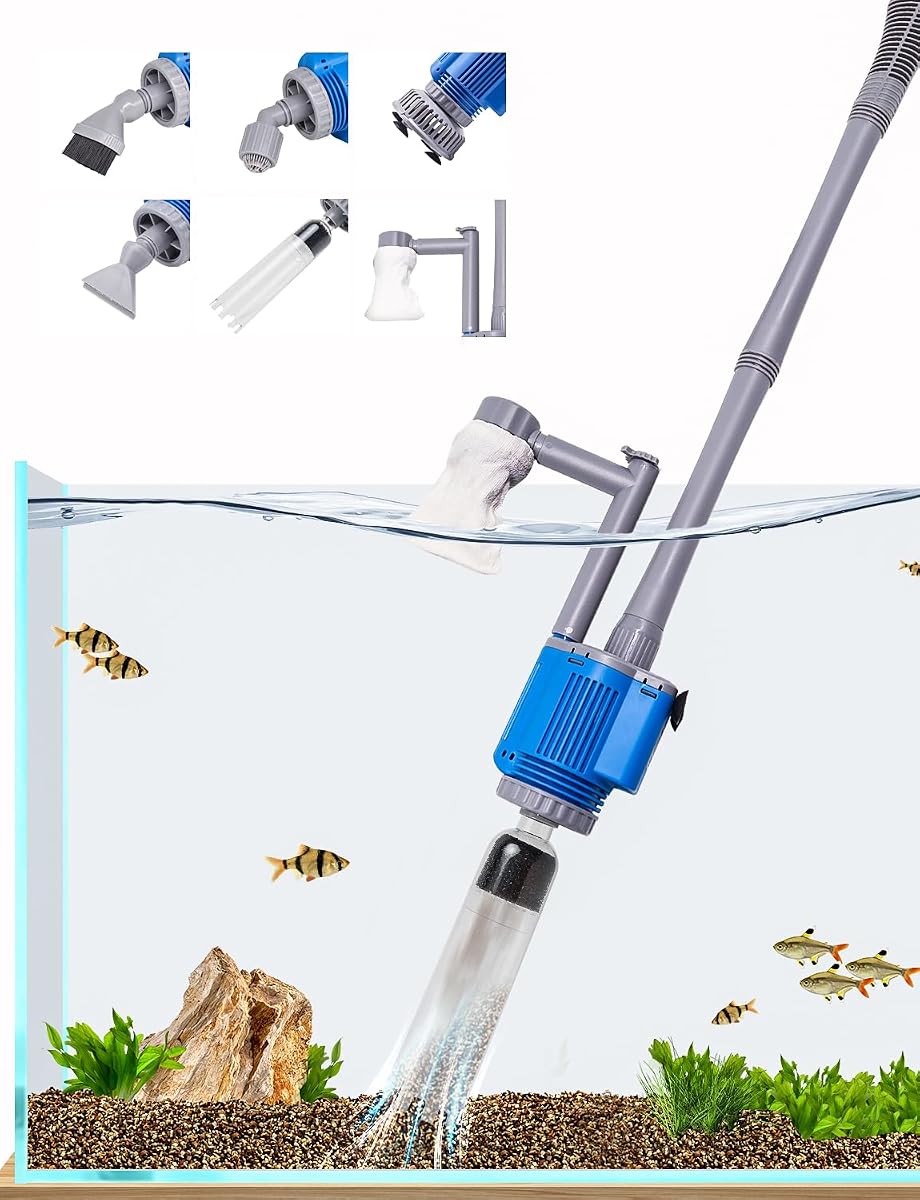
Master Aquarium Maintenance: Electric Gravel Cleaner Buying Guide
When you're eyeing an electric gravel cleaner like the UPETTOOLS 110V/28W model, you're looking at a tool designed to simplify water changes and substrate cleaning. This category blends suction power with debris filtration, but not all units perform equally in real tank conditions.
Key Considerations Before Buying
- Suction power and flow rate: For a 28W motor, expect moderate suction suitable for medium tanks (up to 50 gallons). Stronger motors (40W+) may be needed for deep gravel or larger aquariums, but they can also disturb fine sand.
- Removability and cleaning ease: The UPETTOOLS features a removable design, which is crucial for clearing clogs. Check that the debris compartment and impeller are accessible without tools, as algae and plant matter will accumulate.
- Cord length and reach: With a 110V plug, verify the power cord is long enough to reach your tank from an outlet. Many users find 6-8 feet ideal; shorter cords limit placement and can be a safety hazard near water.
What Our Analysts Recommend
In this category, quality hinges on the pump's ability to separate debris from water without clogging. Look for models with transparent collection chambers to see when to empty, and check for adjustable flow valves to control suction on delicate substrates. Also, consider the build material—ABS plastic is common, but thicker walls resist cracking from drops or pressure.
Gravel Cleaners Market Context
Market Overview
The electric gravel cleaner market has expanded with affordable options like UPETTOOLS, but consumers face a trade-off between price and durability. Many units under $50 promise multi-functionality (water change, sand cleaning, algae removal) but may lack the finesse of premium brands like Python or EHEIM.
Common Issues
Frequent complaints across the category include weak suction after a few uses, impeller failures, and water leakage from seals. Clogging from fine sand or large debris is also a top frustration, especially when the intake tube is too narrow.
Quality Indicators
Look for certifications like UL or CE, which suggest electrical safety. Also, models with replaceable impellers and spare parts indicate better longevity. Positive reviews that mention consistent performance over months, rather than just out-of-box excitement, are a strong signal of reliability.
Review Authenticity Insights
Grade B Interpretation
The Grade B rating with a 12% estimated fake review rate means that while most reviews are genuine, a notable slice (roughly 480 of 4000) may be incentivized or fabricated. This aligns with the adjusted rating drop from 3.89 to 3.70, suggesting real user experiences are slightly less favorable than the raw score implies.
Trust Recommendation
Given the 12% fake rate, you should weigh the lower adjusted rating of 3.70 more heavily. Focus on verified purchase reviews with detailed photos or videos, and be wary of overly glowing 5-star posts with vague language. Cross-check complaints about suction or durability to see if they match your tank size.
Tips for Reading Reviews
For this product type, search for reviews that mention 'gravel', 'sand', 'algae', and 'water change' specifically. Look for users who have had the product for 3-6 months, as long-term reliability issues surface then. Also, pay attention to reviews with specific tank dimensions to gauge if your setup matches the product's sweet spot.
Expert Perspective
The UPETTOOLS gravel cleaner offers a convenient, electric solution for routine aquarium maintenance, but the 3.70 adjusted rating indicates it's a budget-friendly tool with compromises. The 28W motor is adequate for light to medium cleaning, but users with heavy algae or deep substrate may find it underpowered. The removable design is a plus for cleaning, but potential durability issues (as reflected in reviews) suggest it may not be a long-term investment.
Purchase Considerations
Weigh the price against the frequency of your tank maintenance. If you have a small to medium tank and want to reduce manual siphoning effort, this could be a viable choice, but be prepared for possible clogs and moderate suction. If you have a larger tank or heavy bioload, consider investing in a higher-wattage or more robust model.
Comparing Alternatives
Shoppers should compare this with manual siphon kits, which are cheaper and more reliable, or with higher-end electric models that offer adjustable flow and stronger motors. Reading comparisons on maintenance forums can provide real-world performance data beyond Amazon reviews.


