
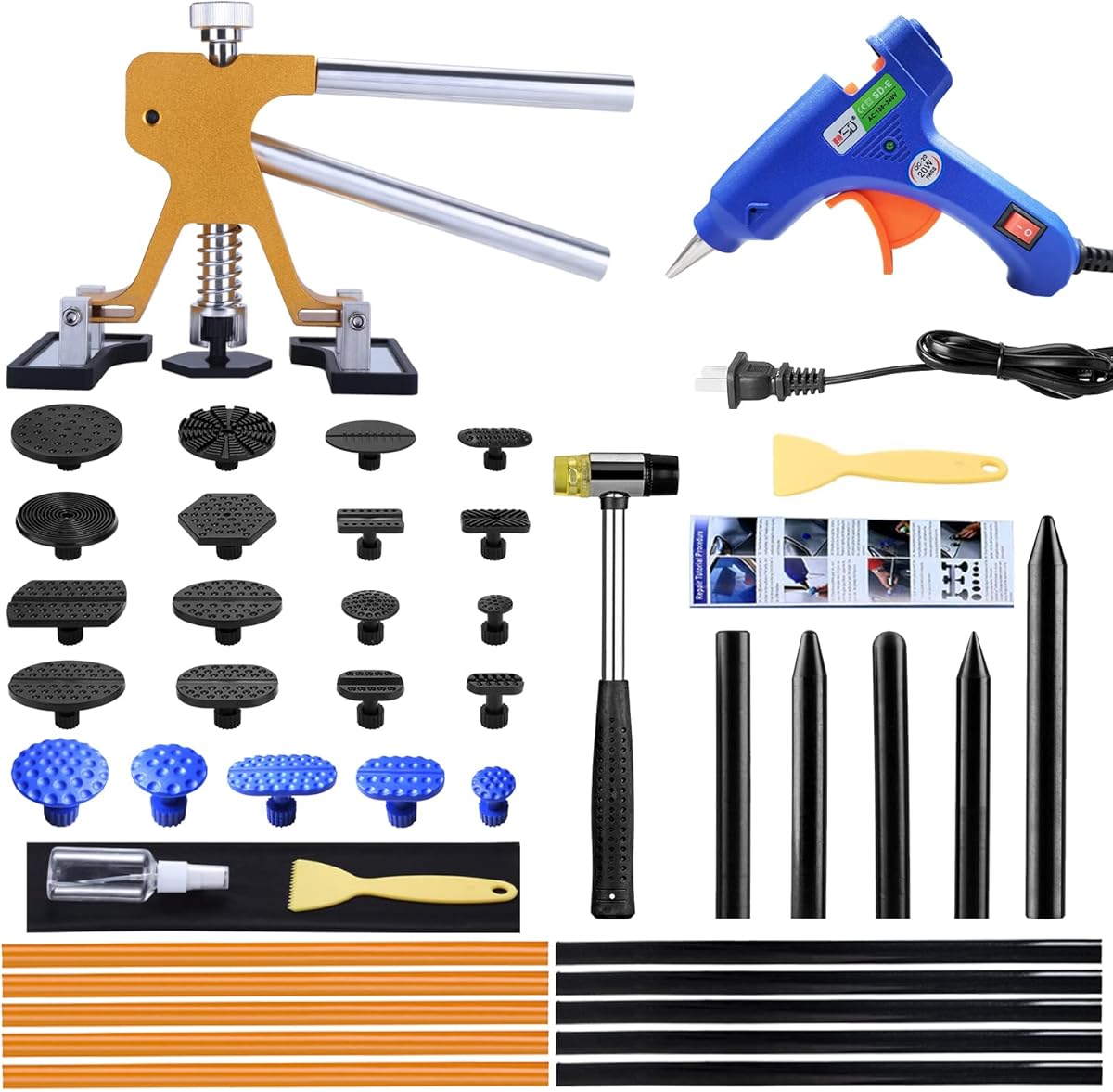
Evaluating Paintless Dent Repair Kits: What the Gliston Kit Reveals About DIY Dent Removal
The Gliston Auto Dent Puller Kit represents a specific type of consumer-grade paintless dent repair (PDR) tool designed for shallow dings and hail damage. Unlike professional PDR tools requiring extensive training, this adjustable golden puller kit targets DIY enthusiasts willing to accept moderate results for minor cosmetic repairs. Buyers should understand these tools work best on accessible, rounded dents without sharp creases.
Key Considerations Before Buying
- The 'adjustable' claim refers to the threaded bridge system that allows you to set pulling height, but effectiveness depends heavily on dent depth and panel accessibility—deep dents or those near edges often exceed this kit's capability.
- The included glue tabs and pulling bridge require clean, wax-free surfaces for proper adhesion; failure to thoroughly clean the area is the primary reason for pull failures reported in authentic reviews.
- While marketed for both large and small dings, the 3.6 adjusted rating suggests users achieve better results on smaller, shallow door dings versus larger roof or hood hail damage where professional techniques would be needed.
What Our Analysts Recommend
Quality indicators for these kits include metal bridges with fine threading for precise adjustment, multiple pulling screw sizes for different dent depths, and high-temperature glue sticks that bond firmly without damaging clear coats. The Gliston kit's golden finish suggests corrosion resistance, but check reviews for mentions of thread stripping or glue tab adhesion failures.
Dent Removal Tools Market Context
Market Overview
The consumer dent puller market is flooded with similar-looking kits, most originating from manufacturers using nearly identical casting molds, creating intense competition on price points between $25-$50. Differentiation typically comes through accessory count (more glue tabs, different bridge designs) rather than fundamental tool innovation.
Common Issues
Users frequently underestimate the skill required for proper dent 'walking'—the technique of gradually working a dent out from the edges—and instead attempt direct pulls that can create high spots. Another widespread problem is glue residue removal; cheaper kits include inadequate adhesive removers that risk paint damage.
Quality Indicators
Beyond basic components, superior kits include detailed technique guides addressing common failure points, offer replacement glue tabs for purchase, and use bridge designs that distribute pulling force evenly. Look for mentions in reviews about customer support responsiveness when tools arrive damaged—this separates reputable sellers from drop-shippers.
Review Authenticity Insights
Grade B Interpretation
A Grade B authenticity rating with 10% estimated fake reviews indicates predominantly genuine feedback but suggests some review manipulation common in competitive automotive tool categories. The 0.18-point drop from the displayed 3.78 to the adjusted 3.60 rating reveals slightly inflated positive sentiment.
Trust Recommendation
Focus on mid-range 3-star reviews for this product, as they typically detail specific usage scenarios where the kit succeeded or failed—these often contain the nuanced information missing from polarized 5-star or 1-star evaluations. Be skeptical of reviews claiming 'professional results' without photographic evidence.
Tips for Reading Reviews
For dent puller kits, prioritize reviews mentioning specific vehicle panels (hood, door, quarter panel), dent types (shopping cart, hail, door ding), and preparation steps taken. Authentic reviews often describe learning curves, multiple attempts, or modifications needed for success.
Expert Perspective
The Gliston kit's performance aligns with entry-level PDR tools: capable of improving shallow dents but unlikely to deliver invisible repairs. The 3.6 adjusted rating from verified purchasers accurately reflects the mixed outcomes—success depends heavily on dent characteristics and user patience. Notably, the kit's value lies more in learning basic PDR principles than achieving showroom finishes, a distinction many buyers misunderstand before purchase.
Purchase Considerations
Consider this kit if you have multiple shallow, rounded dings in easily accessible locations and value the learning experience over perfect results. The alternative cost—professional PDR at $75-$150 per dent—justifies the attempt for minor damage. However, avoid if dealing with sharp creases, aluminum panels, or dents near structural reinforcements where improper pulling can worsen damage.
Comparing Alternatives
Compare the Gliston's bridge design and included accessories against competitors like the Ding King or PDR Master kits, noting differences in glue tab quantity and bridge adjustability ranges.


