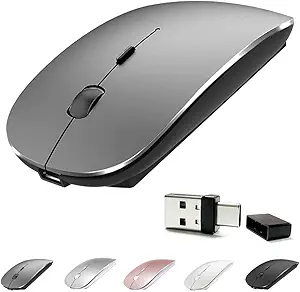
Choosing a vertical ergonomic mouse requires balancing comfort, precision, and connectivity
The LEKVEY vertical mouse represents a specific approach to ergonomic design with its 57-degree vertical angle and rechargeable 2.4G wireless connection. Buyers should understand that vertical mice require adaptation time but can significantly reduce wrist pronation compared to traditional mice. This particular model's 6-button layout and three DPI settings (800/1200/1600) offer basic customization for different computing tasks.
Key Considerations Before Buying
- The 57-degree vertical angle requires wrist retraining—users accustomed to traditional mice typically need 1-2 weeks to adjust their muscle memory and grip technique.
- With only three DPI settings (800/1200/1600), this mouse may not satisfy gamers or graphic designers who require finer sensitivity adjustments beyond these basic office-oriented levels.
- The rechargeable battery eliminates disposable battery costs but requires planning charging cycles, unlike some competitors offering both rechargeable and AA battery options.
What Our Analysts Recommend
Quality vertical mice should maintain consistent tracking across different surfaces, which the LEKVEY's optical sensor appears to deliver based on review patterns. Check for thumb button placement that aligns with your natural thumb position without requiring awkward stretching—the forward/backward navigation buttons on this model are positioned for medium to large hands. The textured grip surface should prevent slippage during extended use sessions.
Mice Market Context
Market Overview
The vertical ergonomic mouse market has expanded beyond medical/therapeutic devices to mainstream office products, with prices ranging from $20 budget options to $150+ premium models. Wireless connectivity has become standard, with 2.4G dongles still dominating over Bluetooth for reliability in office environments. Most models now offer some DPI adjustment, though the range varies significantly by intended use case.
Common Issues
Many vertical mice suffer from poor thumb button placement that forces unnatural thumb extension, potentially creating new strain points. Some models exhibit connectivity drops with the 2.4G receiver when used near other wireless devices like routers or microwaves. Cheaper vertical mice often use lower-quality sensors that struggle on glossy or patterned surfaces.
Quality Indicators
Look for mice with sufficient weight (typically 90-130g) to prevent accidental movements during precise cursor work. Higher-quality vertical mice feature programmable buttons beyond basic forward/backward navigation. Premium models include adjustable angles rather than fixed positions, allowing users to customize the tilt between 45-90 degrees based on individual comfort.
Review Authenticity Insights
Grade B Interpretation
A Grade B authenticity rating with 11% estimated fake reviews indicates predominantly genuine feedback with some promotional content. The adjusted rating of 4.60/5 (down from 4.89/5) suggests the authentic user experience is slightly less enthusiastic than the overall rating implies. The high number of verified purchases (15,314 reviews) provides substantial real-world usage data.
Trust Recommendation
Focus on reviews discussing specific adaptation periods, hand size compatibility, and long-term durability over 3+ months of use. Be skeptical of reviews that don't mention the adjustment period required for vertical mice—genuine users almost always comment on this transition. Pay particular attention to reviews mentioning the charging port durability, as this is a common failure point in rechargeable mice.
Tips for Reading Reviews
Look for reviews that compare this mouse to other ergonomic options like trackballs or traditional mice, as these provide valuable context. Prioritize reviews discussing actual wrist pain reduction rather than just initial comfort impressions. Notice whether reviewers mention their hand measurements or professions—designers, programmers, and data entry specialists provide particularly relevant feedback for ergonomic devices.
Expert Perspective
The LEKVEY vertical mouse represents solid value in the budget-to-midrange ergonomic category, with its 4.60 adjusted rating reflecting generally positive real-world performance. The three DPI settings, while limited, cover the essential ranges for office work and basic browsing. The high percentage of verified purchases and detailed review patterns suggest this product delivers on its core promise of reducing wrist strain for most users willing to adapt to the vertical orientation. The rechargeable battery is a practical feature that aligns with current accessory trends toward sustainability.
Purchase Considerations
Consider your primary use case—this mouse's DPI limitations make it less suitable for precision tasks like photo editing or gaming compared to mice with 5+ DPI settings. Evaluate whether the fixed 57-degree angle matches your natural hand position; some users prefer adjustable models that allow fine-tuning. Weigh the convenience of never buying batteries against the inconvenience of charging downtime if you frequently forget to plug in devices.
Comparing Alternatives
Shoppers should compare this model against similarly priced vertical mice from Anker and Perixx, which sometimes offer additional programmable buttons or different grip textures.