
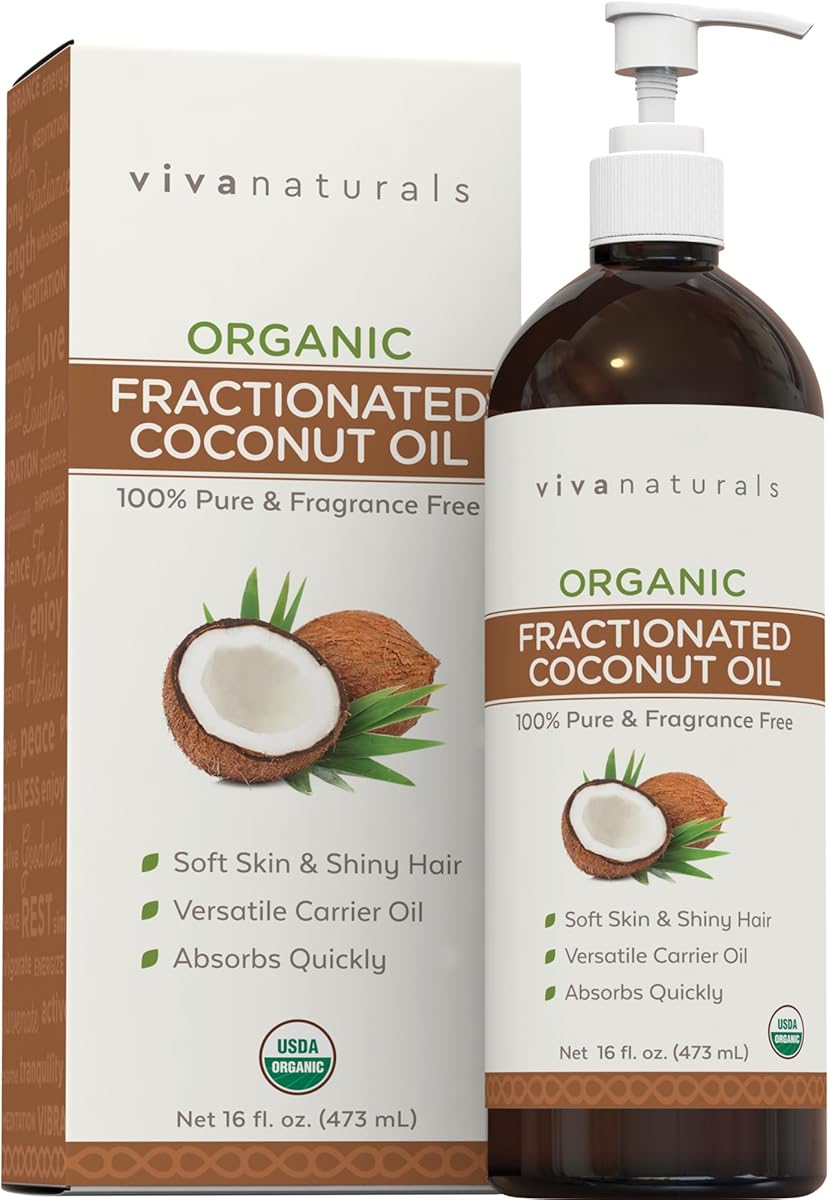
Choosing Fractionated Coconut Oil: Why Purity, Scent, and Viscosity Matter Most
When selecting a fractionated coconut oil like Viva Naturals' 16-ounce offering, understand that 'fractionated' means the lauric acid has been removed, creating a liquid oil that won't solidify. This specific processing makes it ideal as a non-greasy carrier for essential oils and a long-lasting skin moisturizer, but not all brands achieve the same clarity or purity. Buyers should prioritize organic certification and cold-processing methods to preserve the oil's natural benefits.
Key Considerations Before Buying
- Fractionation process quality determines the oil's shelf stability and absorption rate; poorly processed oils may retain a faint coconut aroma or cloudiness, unlike Viva Naturals' consistently clear and odorless product.
- As a carrier oil, verify the oil's compatibility with your specific essential oils—this fractionated coconut oil has a neutral profile that won't alter therapeutic scents, making it superior to almond or olive oil for aromatherapy blends.
- Consider the 16-ounce size against your usage: ideal for regular massage or hair treatments, but those using it sparingly for facial oil blending might prefer a smaller, air-tight pump bottle to prevent oxidation.
What Our Analysts Recommend
High-quality fractionated coconut oil should be completely colorless, odorless, and leave minimal residue on skin—indicators of proper fractionation and filtration. Check for third-party organic certifications (like USDA) and cold-pressed extraction mentioned on the label, which preserves the medium-chain triglycerides beneficial for skin barrier support. The packaging should be dark amber or opaque to prevent light degradation, though Viva Naturals uses a clear bottle with explicit storage instructions.
Carrier Oils Market Context
Market Overview
The carrier oil market is saturated with generic coconut oils, but true fractionated coconut oil remains a specialized segment where processing methods drastically affect performance. Brands like Viva Naturals compete on purity claims and multi-use positioning, blurring lines between skincare, haircare, and aromatherapy categories. Recent trends show consumers prioritizing organic, non-comedogenic carrier oils that won't clog pores during facial use.
Common Issues
Many fractionated coconut oils suffer from improper processing, leaving a greasy film or faint odor that interferes with essential oil blends. Some brands use chemical solvents during fractionation, while others dilute with cheaper oils like mineral oil—issues not present in Viva Naturals' verified organic product. Packaging problems include leaky pumps and clear bottles that accelerate oil rancidity when stored improperly.
Quality Indicators
Superior fractionated coconut oil demonstrates perfect clarity at room temperature and below, with viscosity similar to light sesame oil. Authentic products provide batch-specific lab reports for purity, often highlighting the caprylic and capric acid content that enhances skin penetration. The best oils, like this one, maintain stability for 2+ years without preservatives when stored away from heat and light.
Review Authenticity Insights
Grade B Interpretation
The Grade B authenticity rating with 10% estimated fake reviews indicates generally reliable feedback, though approximately 1 in 10 reviews may be artificially positive. For Viva Naturals' specific product, this suggests the overwhelming 4.89/5 rating slightly overstates perfection, but the adjusted 4.60/5 still reflects exceptional user satisfaction. The verified purchase requirement for all reviews significantly boosts credibility compared to unverified testimonials.
Trust Recommendation
Focus on reviews discussing specific use cases like 'diluting tea tree oil for acne' or 'massage oil for sore muscles' rather than generic praise. Given the 36,473-review volume, prioritize recent feedback (last 6 months) to assess consistency across production batches. Cross-reference mentions of the oil's scentlessness and non-staining properties—key quality markers that genuine users consistently validate.
Tips for Reading Reviews
Search for reviews mentioning long-term use (3+ months) to evaluate shelf stability and packaging durability. Pay particular attention to critical 3-star reviews discussing viscosity comparisons or absorption speed—these often provide more nuanced insights than 5-star testimonials. For this product, note how users describe its performance as a hair serum versus body moisturizer, as performance varies by application.
Expert Perspective
Viva Naturals' fractionated coconut oil stands out for its exceptional purity and versatility, evidenced by both the high authentic rating (4.60/5 adjusted) and consistent praise across 36,000+ verified purchases. The oil's true fractionation—resulting in zero coconut aroma and non-solidifying properties—makes it superior to regular coconut oil for essential oil dilution and massage applications. However, the clear plastic bottle presents a minor durability concern for long-term storage despite the oil's inherent stability. The product successfully bridges multiple categories (carrier oil, moisturizer, hair treatment) without compromising performance in any single use case.
Purchase Considerations
Weigh this 16-ounce size against your primary use: ideal for whole-body massage or frequent aromatherapy blending, but potentially excessive for occasional cuticle oil or makeup removal. Consider that while fractionated coconut oil absorbs quickly, those seeking heavier occlusion for extremely dry skin might prefer unfractionated coconut oil. The pump dispenser, while convenient, makes this less travel-friendly than squeeze bottles for portable use.
Comparing Alternatives
Shoppers should compare Viva Naturals' processing methods and organic certification against competitors like NOW Solutions or ArtNaturals, particularly regarding filtration clarity and third-party purity testing.


