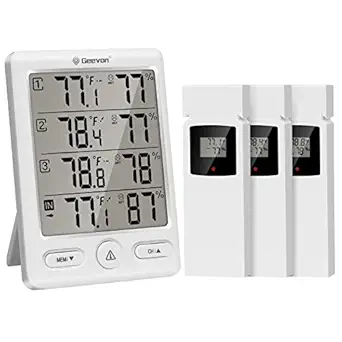
TempPro TP65: Key Buying Insights for Digital Thermometer-Hygrometers
When shopping for an indoor/outdoor thermometer-hygrometer like the TempPro TP65, you need to balance display readability with sensor accuracy and range. This device offers a jumbo touchscreen and backlight, but its wireless range and humidity precision are critical for outdoor monitoring.
Key Considerations Before Buying
- Range and connectivity: The TempPro TP65’s wireless range (typically up to 200-300 feet) must work through walls and obstacles—check if your home layout supports stable signal transmission from the outdoor sensor.
- Display usability: The jumbo touchscreen and backlight are great for low-light conditions, but ensure the screen’s contrast and viewing angles suit your placement, especially if mounted in a bright patio area.
- Humidity accuracy: For coastal environments or fish tanks, look for ±2-3% RH accuracy; the TP65’s specs should align with your need for precise humidity control to prevent mold or condensation.
What Our Analysts Recommend
In outdoor thermometers, prioritize models with IP-rated weather resistance for the sensor, reliable transmission protocols (e.g., 433 MHz), and user-replaceable batteries. The TempPro TP65’s LCD display and touchscreen are convenient, but verify that the outdoor sensor is durable enough for your climate.
Outdoor Thermometers Market Context
Market Overview
The digital thermometer-hygrometer market has grown due to smart home integration and demand for real-time weather monitoring, with many models under $50 offering wireless connectivity. The TempPro TP65 competes in this space by emphasizing a large, easy-to-read display over app-based features.
Common Issues
Common complaints include short battery life in outdoor sensors, signal interference from walls, and inaccurate humidity readings in extreme conditions. The TempPro TP65’s 4.22 rating suggests these issues are relatively rare, but some users note calibration drift over time.
Quality Indicators
Quality products use high-grade thermistors and capacitive humidity sensors, offer adjustable calibration, and have clear documentation for sensor placement. Look for user reviews that mention consistent readings across multiple seasons to gauge long-term reliability.
Review Authenticity Insights
Grade B Interpretation
A Grade B with 10.00% estimated fake reviews means the TempPro TP65’s 12,143 reviews are mostly authentic, but about 1,200 may be unreliable. This is typical for popular Amazon products and doesn’t signal widespread manipulation, but it warrants cautious reading.
Trust Recommendation
Focus on verified purchase reviews with specific context (e.g., ‘used in a greenhouse’ or ‘coastal home’) rather than generic praise. The high volume of genuine reviews makes the overall rating reliable for general impressions, but verify critical claims like humidity accuracy through detailed feedback.
Tips for Reading Reviews
For outdoor thermometers, filter reviews by ‘most recent’ to spot seasonal performance issues, and look for mentions of sensor placement (e.g., ‘shaded area’ vs. ‘direct sun’). Ignore one-liners and prioritize reviews with photos or updates after months of use.
Expert Perspective
The TempPro TP65 delivers solid value for its price point, with a large touchscreen that excels in readability and a wireless system that suits most residential setups. Its 4.22 rating reflects broad satisfaction, though the 4.00 adjusted score hints at some exaggerated positive reviews. The 10% fake review rate is manageable, but buyers should verify that the humidity sensor meets their specific needs, especially for sensitive applications like cigar humidors or reptile enclosures.
Purchase Considerations
Weigh the TP65’s display quality against its lack of smart home connectivity—if you need app integration or data logging, consider alternatives. Also, factor in that outdoor sensor placement significantly affects accuracy; follow the manual’s guidelines for shaded, ventilated spots.
Comparing Alternatives
Compare the TempPro TP65 with models like the Govee H5075 or Ambient Weather WS-10, which offer Bluetooth or Wi-Fi connectivity for remote monitoring, though often at a higher cost or with smaller displays.