
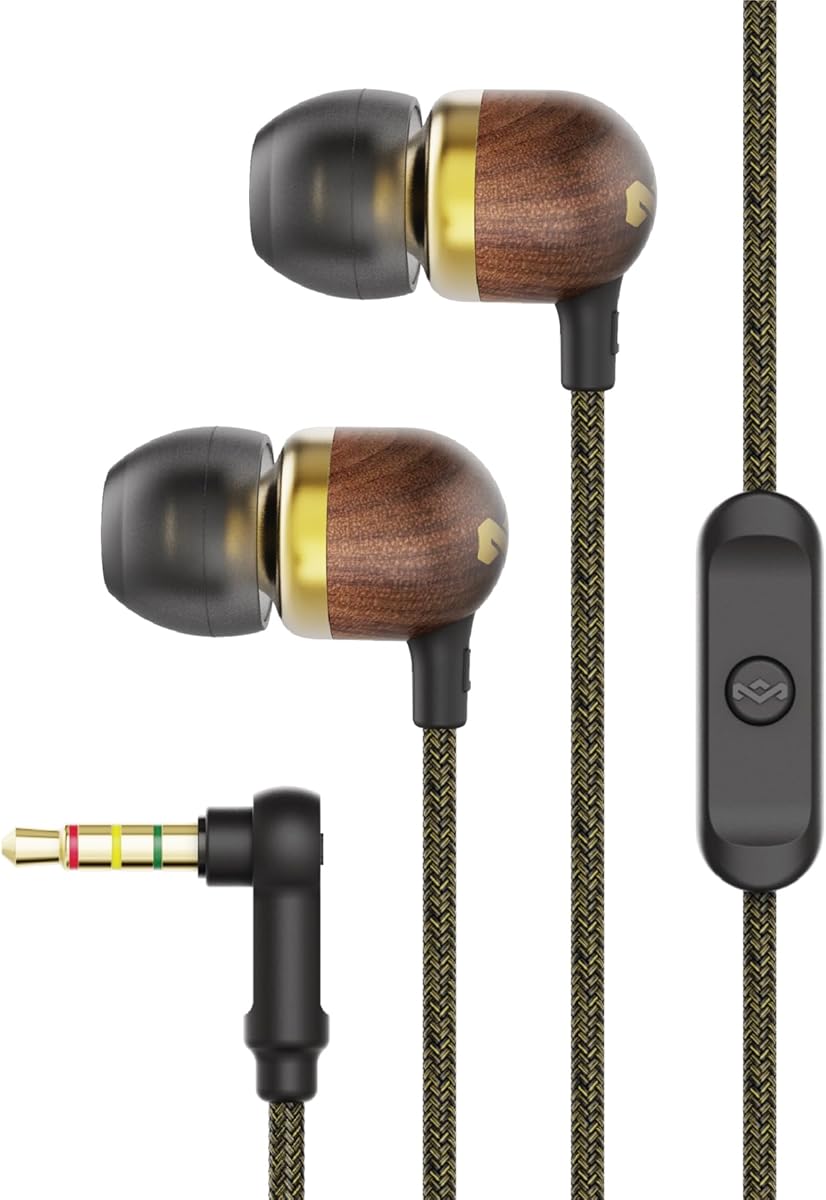
Sustainable wired earbuds balancing eco-materials with brass-accented durability
The House of Marley Smile Jamaica earphones represent a specific niche: wired earbuds that prioritize sustainable construction without sacrificing core functionality. Buyers should evaluate these against three key aspects: the real-world performance of their noise-isolating design, the durability of their fabric-wrapped cable and brass components, and whether their sound signature aligns with your listening preferences.
Key Considerations Before Buying
- Noise isolation vs. cancellation: These use a passive, in-ear seal to block ambient sound, which is effective but requires a proper fit; test different ear tip sizes for optimal performance.
- Sustainable material trade-offs: The use of recycled aluminum, FSC™-certified wood, and Regrind™ silicone is commendable, but assess whether the fabric cable feels robust enough for your daily use compared to standard rubberized options.
- Wired convenience factor: With a built-in microphone and single-button remote, these cater to users who prefer a reliable, no-charge connection for calls and media, but lack wireless freedom.
What Our Analysts Recommend
For wired earbuds in this category, inspect the strain relief at the jack and earpiece connections—critical failure points. Quality is often indicated by a secure, comfortable fit with multiple tip sizes provided and a tangle-resistant cable design. The 3.5mm plug's build, especially the brass detailing here, should feel solid, not flimsy.
Earbud Headphones Market Context
Market Overview
The wired earbud market is now dominated by budget-focused durability and niche audiophile models, with sustainable options like House of Marley carving out a distinct segment. Consumers here often choose wired for reliability, zero latency, and to avoid battery degradation.
Common Issues
Common failures include cable fraying, especially near the jack, inconsistent microphone clarity on inline remotes, and eartips that don't maintain a seal, compromising both comfort and noise isolation. Sound quality can vary significantly even within similar price brackets.
Quality Indicators
Look for products specifying driver size (like the 9mm drivers here) and frequency response ranges. A well-implemented in-line remote with a clear mic, high-purity copper wiring, and reinforced, flexible cabling are tangible markers of a thoughtful design beyond marketing claims.
Review Authenticity Insights
Grade B Interpretation
A 'B' grade with an estimated 15% fake review rate suggests a generally trustworthy review pool, but advises healthy skepticism. For this product, it means the strong 4.27/5 average is slightly inflated; the adjusted 3.90/5 rating is a more reliable benchmark of genuine user satisfaction.
Trust Recommendation
Focus on the verified purchase reviews (all marked 'V'), which form the core of the authentic feedback. Pay particular attention to 3- and 4-star reviews for balanced insights on the cable durability and fit, as these often contain the most nuanced pros and cons.
Tips for Reading Reviews
Search for reviews mentioning long-term use (6+ months) to assess the fabric cable's wear. Also, filter for reviews discussing sound profile specifics like bass response or midrange clarity, as these are harder to fake and indicate experienced listeners.
Expert Perspective
The Smile Jamaica earphones present a compelling proposition for the eco-conscious user who hasn't fully transitioned to wireless. The high verification rate on reviews lends credibility to praise for their sound quality and unique aesthetic. However, the gap between the raw and adjusted ratings signals that while many love them, a significant minority have experienced issues, likely related to long-term cable durability or fit. Their value lies in the specific combination of sustainable materials, brass accents, and wired reliability.
Purchase Considerations
Prioritize these if your values align with sustainable electronics and you need a reliable wired option for commutes or workouts. Be prepared to experiment with the included ear tips to achieve the promised noise isolation. Consider them less ideal if you are rough on cables or prioritize a completely neutral sound signature.
Comparing Alternatives
Shoppers should compare these directly with other sustainable audio brands and wired earbuds in the $20-$40 range that offer similar inline microphone functionality.


