
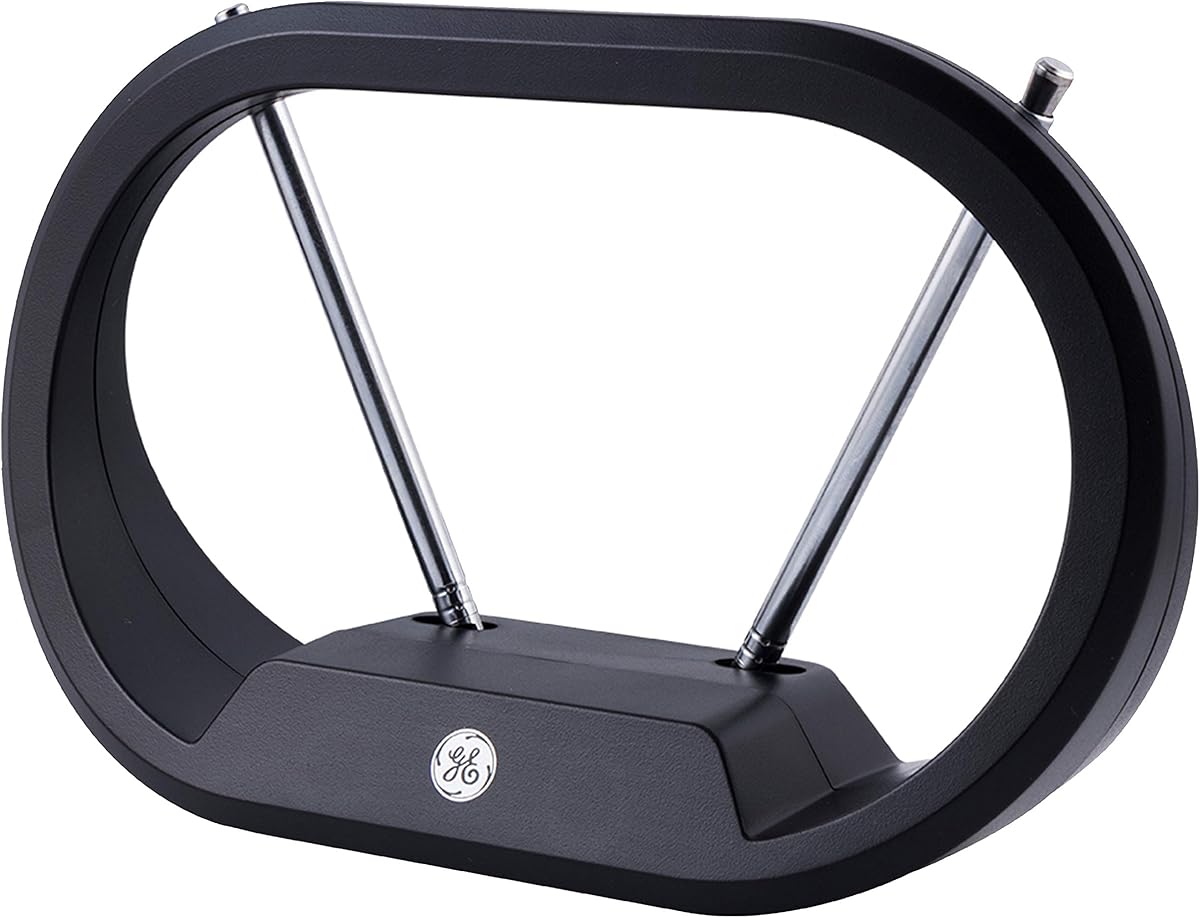
How GE's Extendable Dipole Design Impacts Indoor TV Antenna Performance
The GE 33675's 15-inch extendable rabbit ears with integrated loop antenna represent a hybrid approach to VHF/UHF reception that differs from flat panel or amplified alternatives. Buyers should understand how this specific physical design affects placement flexibility and channel capture compared to other indoor antenna types.
Key Considerations Before Buying
- The 15-inch extendable dipoles are crucial for VHF channels (2-13), which many flat antennas struggle with, but require more physical space than low-profile designs.
- The 4-foot coaxial cable is relatively short; measure your distance from the TV to ensure it reaches without requiring an extension, which can degrade signal.
- This non-amplified design means performance relies entirely on your location's broadcast signal strength—ideal for urban/suburban areas but potentially insufficient in weak signal zones.
What Our Analysts Recommend
For rabbit ear antennas specifically, check for sturdy telescoping rods that extend smoothly and lock securely, as wobbly elements degrade reception. The loop should be rigid and well-connected to the base. A quality 75-ohm coaxial connector (F-type) should be firmly attached to prevent signal loss.
TV Antennas Market Context
Market Overview
The indoor TV antenna market is saturated with flat, amplified panels, making traditional rabbit ear designs like the GE 33675 a distinct choice for consumers prioritizing VHF channel compatibility. GE's brand recognition in this space lends credibility, though performance varies dramatically by household.
Common Issues
Consumers frequently underestimate how location, building materials, and distance from broadcast towers affect unamplified antennas. Many report frustration with inconsistent channel scanning results, often due to improper antenna positioning rather than product defects.
Quality Indicators
Look for clear specifications differentiating VHF (channels 2-13) and UHF (channels 14-51) reception capabilities. Quality antennas provide specific guidance on dipole extension lengths for frequency optimization and use durable materials in moving parts.
Review Authenticity Insights
Grade B Interpretation
A Grade B with 11% estimated fake reviews indicates a generally trustworthy review pool where most feedback reflects genuine experiences. The slight rating drop from 4.67 to 4.40 after adjustment suggests some inflated praise, but the core consensus remains reliable.
Trust Recommendation
Focus on reviews that detail specific channel counts, distances from broadcast towers, or comparisons to previous antennas—these demonstrate authentic testing. Be slightly skeptical of reviews claiming 'perfect reception everywhere' without location context.
Tips for Reading Reviews
Prioritize reviews mentioning VHF channel performance (like CBS or NBC on lower numbers) and those describing precise dipole positioning adjustments, as these reflect real-world usage of this specific rabbit ear design.
Expert Perspective
The GE 33675's strong adjusted rating (4.40/5) from predominantly genuine reviews suggests it reliably performs its core function for most users in areas with decent broadcast strength. Its value lies in the physical adjustability of the dipoles and loop, allowing fine-tuning that fixed antennas cannot match. However, the non-amplified design makes it inherently location-dependent—it's an excellent tool for strong signal areas but not a magic solution for reception deserts.
Purchase Considerations
Consider this antenna if you need VHF reception and have space for a tabletop design, or if you've struggled with flat antennas on local channels. Check your distance from broadcast towers using the FCC DTV Reception Maps; if you're within 25 miles, this antenna is likely sufficient. If you need longer cable runs or have significant signal obstructions, look to amplified alternatives.
Comparing Alternatives
Compare with amplified flat antennas if signal strength is marginal, or with larger outdoor/attic models if you're in a fringe reception area.


