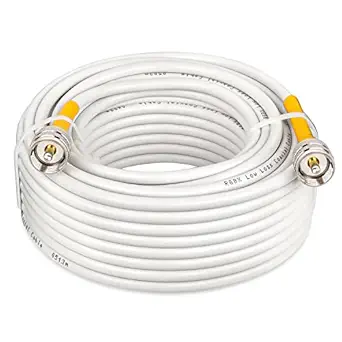
RG6 Coax Cables: What to Know Before You Buy
When shopping for an RG6 coaxial cable like THE CIMPLE CO's 100-foot dual-shielded option, you're balancing signal quality, durability, and length against your specific setup. This guide covers the key factors that separate a reliable cable from one that degrades your TV, antenna, or internet signal.
Key Considerations Before Buying
- Cable length directly affects signal strength: a 100-foot run introduces more attenuation than a shorter cable, so ensure your signal source is strong enough or consider a signal amplifier if you're pushing the limit.
- Shielding quality matters for interference rejection: dual-shielded RG6 uses foil and braid to protect against EMI, which is especially important for antenna and CATV setups where weak signals can be disrupted by nearby electronics.
- Indoor/outdoor rating and jacket material: this cable is rated for both environments, but check that the white PVC jacket resists UV and moisture if you plan to run it outdoors for extended periods.
What Our Analysts Recommend
Look for solid copper or copper-clad steel center conductors (CCS is common in budget cables but has higher resistance), and verify the shielding type—dual-shield is standard, but tri-shield or quad-shield offers better protection in high-interference areas. Also check connector compatibility: F-type connectors are standard for RG6, but pre-attached or compression connectors can save installation time.
Coaxial Cables Market Context
Market Overview
The coaxial cable market is mature, with many generic and house-brand options competing on price. RG6 remains the standard for satellite, cable TV, and antenna installations, while RG59 is thinner and used for shorter runs or older systems. Demand is steady as households upgrade to 4K TVs and outdoor antennas.
Common Issues
Buyers frequently encounter cables with thin or brittle jackets that crack outdoors, or with copper-clad steel conductors that increase signal loss over long runs. Another common problem is inconsistent connector quality—poorly crimped or loose F-connectors cause intermittent signal drops.
Quality Indicators
Quality RG6 cables specify conductor material (solid copper is best), shielding effectiveness (measured in dB), and jacket type (UV-resistant PVC for outdoor). Look for cables that meet or exceed industry standards like SCTE and have clear labeling of impedance (75 ohms) and gauge (18 AWG is standard).
Review Authenticity Insights
Grade B Interpretation
A Grade B authenticity rating with an estimated 15% fake review percentage suggests that while most reviews are genuine, there is a meaningful minority of potentially inauthentic feedback. This is not unusual for high-volume Amazon products, but it means you should weigh the adjusted rating of 4.50/5 more heavily than the raw 4.89/5.
Trust Recommendation
Trust the adjusted rating of 4.50/5 as a more realistic indicator of customer satisfaction. The high review count (16,529) provides a large sample, and the presence of specific use-case details in many reviews supports overall authenticity. Focus on reviews that mention installation experience, signal quality, and durability over time.
Tips for Reading Reviews
When reading reviews for coaxial cables, prioritize those that describe the buyer's specific setup (e.g., antenna type, cable run length) and note performance after weeks or months of use. Be skeptical of reviews that only praise the price or shipping speed without mentioning signal quality or build.
Expert Perspective
THE CIMPLE CO's RG6 cable appears to be a solid mid-range option, with a strong adjusted rating and a large review base that includes detailed user experiences. The 100-foot length and indoor/outdoor rating make it versatile for antenna, TV, and internet setups. However, the 15% estimated fake review rate warrants some caution, and buyers should verify the conductor material and shielding specifications before purchase.
Purchase Considerations
Weigh the convenience of a pre-cut 100-foot length against your actual needs—if your run is shorter, a custom length may reduce signal loss. Also consider whether you need quad-shield for high-interference environments; this dual-shield cable is adequate for most residential use but may not suffice in areas with heavy RF noise.
Comparing Alternatives
Compare this cable with similar RG6 options from brands like Mediabridge or GE, paying attention to conductor material and shielding ratings, as these can significantly affect performance over long runs.