
How to Choose a Boning Knife That Actually Performs
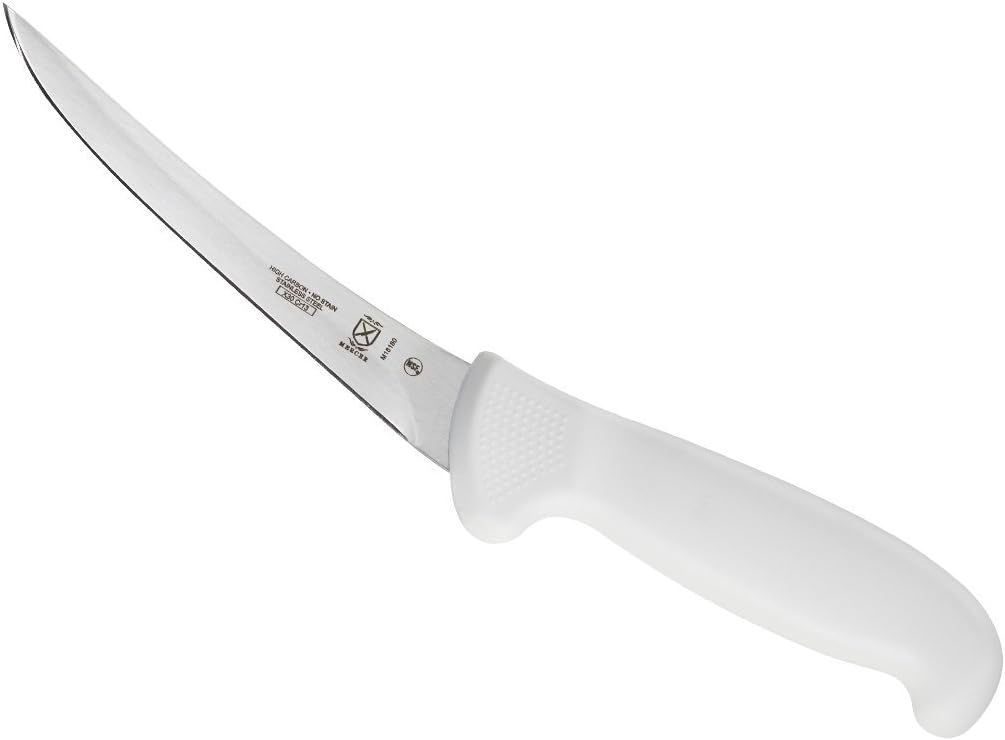
A boning knife is only as good as its blade geometry and handle control, and the Mercer Culinary Ultimate White 6-inch Curved Boning Knife is a case study in getting both right for under $25. This guide covers what matters when selecting a boning knife for breaking down poultry, fish, and primal cuts.
Key Considerations Before Buying
- Blade flexibility and curve: A curved, semi-stiff blade like this Mercer's 6-inch profile is ideal for following the contour of bones in poultry and fish, while a stiffer straight blade suits beef and pork fabrication. Match the curve to the proteins you break down most often.
- Handle material and grip: The Ultimate White's textured, slip-resistant handle is designed for wet, greasy butchering conditions—prioritize a handle that stays secure when your hands are slick, not just one that looks premium.
- Steel and edge retention: This knife uses high-carbon German steel (X50CrMoV15) that balances sharpenability with edge life; cheaper boning knives often use softer steel that rolls or dulls quickly under bone contact.
What Our Analysts Recommend
Inspect the bolster-to-blade transition for a tight, gap-free fit, and check that the blade flexes evenly without a weak point near the tip. A full-tang or well-secured partial-tang construction and a Rockwell hardness in the 54–56 HRC range are reliable indicators of a boning knife built to hold up to daily butchery.
Boning Knives Market Context
Market Overview
The boning knife market splits sharply between sub-$20 stamped blades aimed at home cooks and $80+ forged knives for professionals, with Mercer's Ultimate White line occupying the high-value middle ground trusted by culinary schools and pro kitchens alike. Demand has grown as home butchery and whole-animal cooking have become more popular.
Common Issues
Buyers frequently complain about handles that loosen or crack after dishwasher exposure, blades that arrive with uneven grinds, and 'flexible' knives that are actually flimsy. Another recurring issue is misleading steel claims—many budget boning knives advertise 'German steel' without specifying grade or hardness.
Quality Indicators
Look for a clearly stated steel type (e.g., X50CrMoV15), a consistent factory edge that slices paper cleanly out of the box, and a handle secured with rivets or a molded, void-free bond. NSF certification, common on commercial-oriented lines like Mercer's, is a strong signal of cleanability and build standards.
Review Authenticity Insights
Grade A Interpretation
A Grade B with an estimated 10% fake review rate is solid but not pristine—most reviews here are detailed and specific, consistent with real kitchen use, but a minority may be incentivized or inflated. The adjusted 4.60/5 rating still places this knife well above average for the category.
Trust Recommendation
Treat the 4.89 headline rating as slightly optimistic and the 4.60 adjusted figure as the more realistic benchmark. That adjusted score still supports a confident purchase for most home cooks, but read the critical reviews for recurring complaints before buying.
Tips for Reading Reviews
Prioritize reviews that mention specific tasks—deboning chicken thighs, filleting fish, trimming silver skin—and note how long the reviewer has owned the knife. Be skeptical of short, generic five-star reviews and of any review that praises the knife without mentioning sharpness, handle grip, or edge retention.
Expert Perspective
The Mercer Culinary Ultimate White 6-inch Curved Boning Knife is a rare case where professional-kitchen credibility meets a home-cook price. Its curved, semi-stiff blade and textured handle are purpose-built for poultry and fish fabrication, and the 4.60 adjusted rating across thousands of reviews suggests consistent real-world satisfaction. The main caveat is that this is a commercial-style tool—it rewards hand washing and periodic honing, and it isn't designed as a do-everything knife.
Purchase Considerations
Weigh whether you need a dedicated boning knife versus a flexible fillet knife, since the 6-inch curved profile excels at poultry and fish but is less suited to heavy beef fabrication. Also factor in sharpening: this knife takes a keen edge easily but benefits from a honing steel and occasional whetstone work.
Comparing Alternatives
Compare against Victorinox and Dexter-Russell boning knives in the same price band, and consider whether a straight or flexible blade better matches your cooking.


