What to Know Before Buying a 500A Lithium Jump Starter
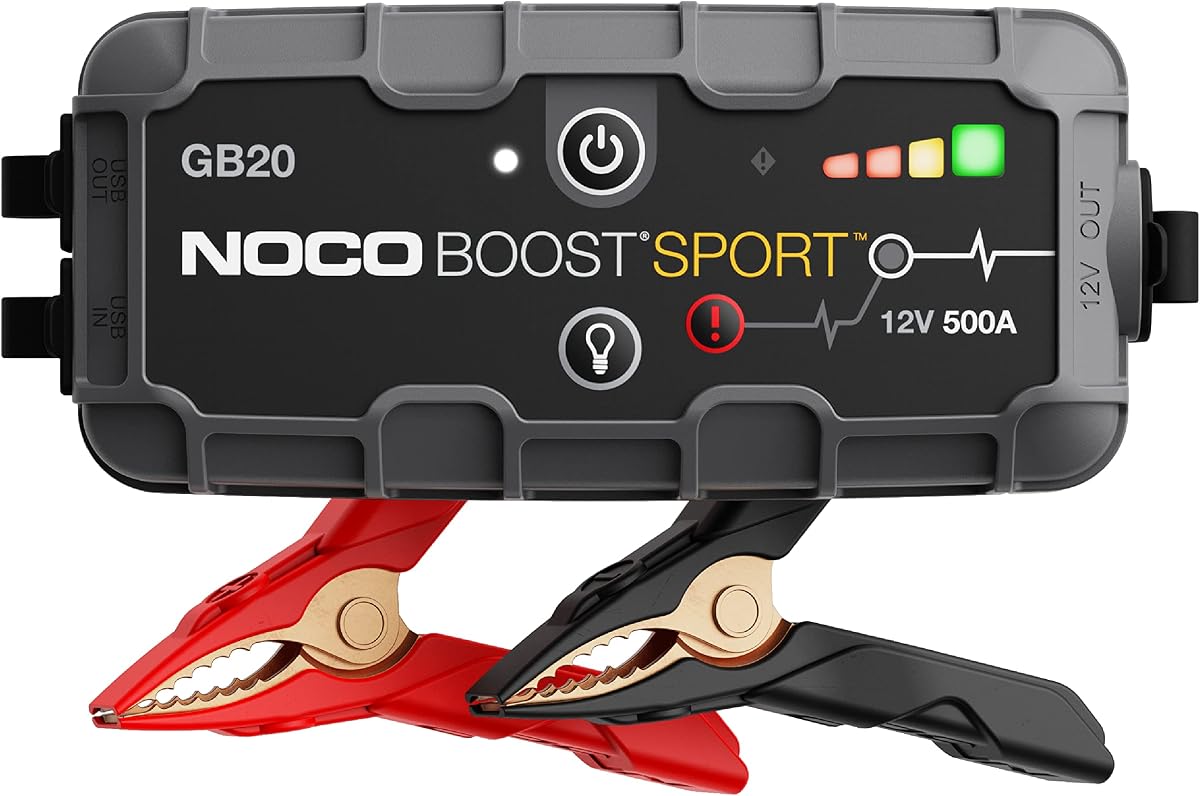
A 500A lithium jump starter like the NOCO Boost GB20 is designed for compact cars, sedans, and small SUVs with gasoline engines up to about 6.0L, but not for large trucks or diesel engines. Unlike traditional lead-acid jump packs, it uses lithium-ion cells, making it far lighter and smaller while still delivering enough cranking amps for most daily drivers.
Key Considerations Before Buying
- Amperage and engine compatibility: The GB20's 500A peak current is sufficient for most 4-cylinder and V6 gasoline engines, but if you drive a V8 truck or diesel, you'll need a higher-amp model like the GB40 or GB70.
- Safety features: Look for spark-proof technology and reverse polarity protection, which the GB20 includes as part of NOCO's UltraSafe design, preventing damage if you accidentally connect the clamps backward.
- Portability and charging: Lithium jump starters are much lighter than lead-acid ones, but they require periodic recharging; the GB20 holds a charge for months, but you should top it off every few months to ensure it's ready when needed.
What Our Analysts Recommend
When evaluating a lithium jump starter, check the peak amp rating, the engine size it supports, and whether it includes built-in safety features like reverse polarity and spark-proof connections. Also consider the number of charge cycles and the warranty; NOCO offers a 1-year limited warranty on the GB20, which is standard for this class.
Jump Starters Market Context
Market Overview
The portable jump starter market has shifted from heavy lead-acid units to compact lithium-ion models, with brands like NOCO, Weego, and Clore Automotive leading the way. Consumers increasingly prefer lithium jump starters for their portability, but they often misunderstand amp ratings and end up with underpowered units for their vehicles.
Common Issues
A frequent complaint is that a jump starter won't start a completely dead battery or a larger engine than advertised. Another issue is that some units lose charge over time if not maintained, leaving users stranded. Additionally, cheap knockoff brands may exaggerate amp ratings, so sticking with reputable brands is crucial.
Quality Indicators
Quality jump starters use high-discharge lithium cells, have robust clamps with good grip, and include safety certifications like UL or CE. They also provide clear instructions and a carrying case. A higher price often reflects better cells and more reliable performance, but not always; reading expert reviews helps separate hype from reality.
Review Authenticity Insights
Grade B Interpretation
A Grade B authenticity rating with an estimated 10% fake reviews means that while most reviews are genuine, there is a notable minority that may be incentivized or fake. This is common for popular automotive products on Amazon, where sellers sometimes solicit positive reviews. The adjusted rating of 4.60/5, down from 4.89, suggests that after removing suspicious reviews, the product is still highly rated but not perfect.
Trust Recommendation
Given the high volume of reviews (over 13,000), you can trust the overall sentiment, but be cautious of overly glowing reviews that lack specific details. Focus on reviews that mention the reviewer's vehicle type and their experience using the jump starter in real emergencies, as these are more likely to be authentic.
Tips for Reading Reviews
When reading reviews for jump starters, look for mentions of engine size, ease of use, and long-term reliability. Pay attention to negative reviews that describe failures or limitations, as they often highlight common issues. Also, check if reviewers have a history of reviewing similar products, which can indicate authenticity.
Expert Perspective
The NOCO Boost GB20 is a well-regarded compact jump starter that balances portability and power for typical passenger cars. Its 500A rating is adequate for most gasoline engines up to 6.0L, and the UltraSafe features add peace of mind. However, the 10% fake review estimate and adjusted rating of 4.60 indicate that while most users are satisfied, some may have unrealistic expectations about its capabilities for larger vehicles.
Purchase Considerations
Before buying, confirm your engine size and whether you need to jump-start diesel or large-displacement engines. Also consider how often you'll use it; if you only need it for emergencies, the GB20 is a solid choice, but if you frequently jump-start vehicles, you might want a higher-capacity model. The price point is mid-range, so compare with similar 500A models from other brands.
Comparing Alternatives
Shoppers should compare the GB20 with other 500A lithium jump starters, such as the Weego 44 or the Audew 1000A, to ensure they get the best value for their specific needs.