
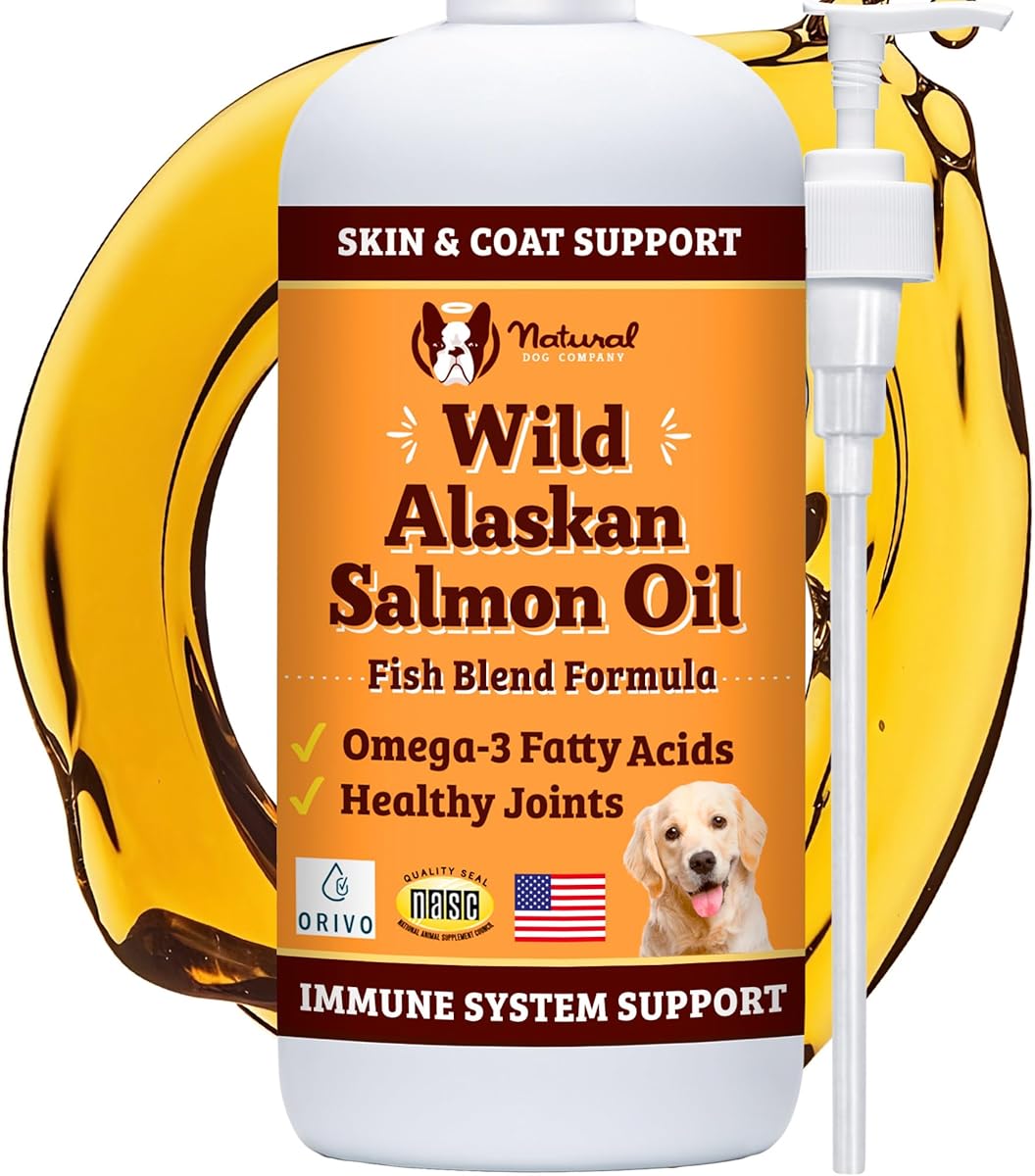
Choosing the Best Fish Oil for Your Dog: Beyond Basic Omega-3s
When selecting a fish oil supplement for your dog, it’s important to look beyond just the omega-3 content. This Wild Alaskan Salmon Oil from Natural Dog Company is a liquid topper that promises EPA and DHA for skin, coat, joint, and immune health, so understanding how to evaluate purity, sourcing, and dosage is key to getting real results.
Key Considerations Before Buying
- Sourcing matters: Wild Alaskan salmon oil is generally considered higher quality than farmed fish oil, as it has a better fatty acid profile and lower risk of contaminants. This product’s wild-caught origin is a strong indicator of quality.
- Check the form: Liquid toppers are easy to mix with food, but they can go rancid if not stored properly. Look for products with added vitamin E as a natural preservative, or store in the fridge after opening to maintain freshness.
- Dosage and potency: The concentration of EPA and DHA per serving directly impacts effectiveness. For a 16 oz bottle, verify the recommended daily dose matches your dog’s weight to avoid under- or over-supplementing.
What Our Analysts Recommend
Quality indicators include a third-party purity seal (e.g., from the National Animal Supplement Council), a clear source (like wild Alaskan salmon), and a manufacturing date to ensure freshness. Also, check the ingredient list for any unnecessary fillers or artificial additives.
Fish Oil Supplements Market Context
Market Overview
The dog fish oil supplement market is saturated with options ranging from cheap, generic oils to premium, wild-caught varieties. Many products claim to improve coat shine and joint health, but actual efficacy varies widely based on the source and processing of the oil.
Common Issues
A frequent concern is rancidity—fish oil can oxidize quickly, leading to a fishy smell and reduced potency. Some products also contain low levels of EPA/DHA despite high label claims, which means owners may not see the promised benefits.
Quality Indicators
To identify a quality product, look for a specific source (like Alaskan salmon), a clear breakdown of EPA and DHA content per serving, and a packaging that protects from light and air (e.g., a dark, airtight bottle). Positive reviews mentioning visible results in skin and coat health are also a good sign.
Review Authenticity Insights
Grade B Interpretation
With a Grade B and an estimated 10% fake review rate, this product’s reviews are largely trustworthy but warrant a cautious eye. The 4.89 Amazon rating is slightly inflated, but the adjusted rating of 4.60 still indicates strong customer satisfaction.
Trust Recommendation
You can generally trust the high volume of positive reviews here—many are from verified purchasers sharing specific improvements in their dogs’ itching or coat health. Still, be selective: focus on reviews that mention the product’s effects over several weeks for a more realistic picture.
Tips for Reading Reviews
When reading reviews for fish oils, prioritize those that detail the dog’s breed, size, and the duration of use, as results can vary. Watch for overly generic praise without specifics, which may be fake, and note any complaints about the pump or oil consistency, as these are common pain points.
Expert Perspective
Based on the analysis, this Natural Dog Company salmon oil is a reliable choice for dog owners seeking a high-quality omega-3 supplement. The wild Alaskan source and strong customer feedback (even after adjusting for fake reviews) suggest it delivers on its promises for skin, coat, and joint support. The 10% fake review rate is relatively low for a product this popular, so the overall sentiment is credible.
Purchase Considerations
Weigh the convenience of the liquid topper against the need for proper storage to avoid rancidity. If your dog has a sensitive stomach, start with a smaller dose to ensure tolerance. Also, compare the price per serving with other reputable brands to confirm value.
Comparing Alternatives
While this product stands out for its sourcing and positive feedback, shoppers should also consider other wild-caught fish oils or krill oil options, which may offer different absorption profiles.


