

Choosing a Disarticulated Skeleton: Medical Accuracy vs. Educational Functionality
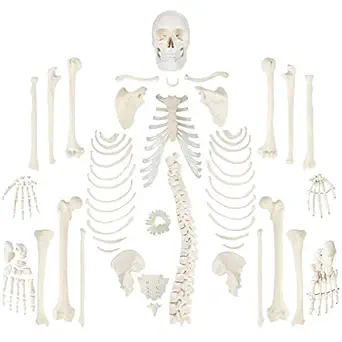
When selecting a disarticulated human skeleton like the hBARSCI 62" model, buyers must balance anatomical precision with practical educational utility. This specific product's 200+ individual bones and 3-part skull with movable jaw represent a mid-tier professional model suitable for detailed study, but its disarticulated nature requires assembly and proper storage considerations that articulated models don't.
Key Considerations Before Buying
- Disarticulated vs. articulated: This hBARSCI model requires assembly, offering superior study of individual bones but demanding more setup time and careful handling than pre-assembled skeletons.
- Bone count accuracy: While advertised as 200+ bones, authentic adult human skeletons typically have 206 bones; verify if this includes common anatomical variations like sesamoid bones or if some are replicated.
- Mounting system quality: The included stand and mounting hardware must securely support approximately 20 pounds of disarticulated bones while allowing easy access for study.
What Our Analysts Recommend
Examine the skull's suture detail and the hand/foot articulation mechanisms—these areas reveal manufacturing quality. For disarticulated models, check that each bone is clearly labeled with anatomical landmarks and that the included storage system protects delicate components like hyoid bones and auditory ossicles.
Anatomical Models Market Context
Market Overview
The anatomical skeleton market has expanded beyond medical schools to include chiropractic offices, physical therapy clinics, and serious home learners, creating demand for models like this hBARSCI that bridge professional and educational use. Recent supply chain issues have affected PVC resin quality in some imported models, making material transparency increasingly important.
Common Issues
Lower-cost disarticulated skeletons often suffer from inconsistent bone sizing, poorly defined muscle attachment points, or fragile dental arches that break during assembly. The movable jaw mechanism—a key feature of this hBARSCI model—frequently develops slack or fails to maintain proper occlusion in budget options.
Quality Indicators
Superior disarticulated models feature color-coded ligament attachment points, accurately proportioned vertebral foramina, and bones that maintain proper anatomical position when assembled. The hBARSCI's articulated hand and foot assemblies should demonstrate realistic range of motion without joint looseness.
Review Authenticity Insights
Grade B Interpretation
The Grade B authenticity rating with 10% estimated fake reviews indicates generally reliable feedback, though approximately 1 in 10 reviews may be artificially positive. The 0.21-point drop from the displayed 4.11 to adjusted 3.90 rating suggests some review inflation but not systematic manipulation.
Trust Recommendation
Focus on reviews discussing specific assembly challenges, bone labeling accuracy, or long-term durability of the mounting stand—these details rarely appear in fake reviews. Be particularly skeptical of reviews that praise generic 'quality' without mentioning specific anatomical features like cranial suture accuracy or vertebral articulation.
Tips for Reading Reviews
Prioritize reviews from verified purchasers in medical or educational fields who mention using the skeleton for specific purposes like osteology study or patient education. Look for mentions of the included bone identification guide's accuracy and the storage case's practicality—authentic users consistently address these functional aspects.
Expert Perspective
The hBARSCI disarticulated skeleton represents a solid mid-market option for serious anatomy students and clinical educators who need individual bone access but don't require museum-grade specimens. Its 3-part skull with movable jaw and articulated extremities provide valuable teaching features, though the 62" height suggests it may use proportional scaling rather than true life-size dimensions for some bones. The adjusted 3.90 rating from 304 reviews indicates consistent satisfaction with minor quality variations, typical in this price segment.
Purchase Considerations
Evaluate whether your use case justifies disarticulation versus a traditional articulated skeleton—the educational benefit of handling individual bones must outweigh the assembly time and storage requirements. Consider the included mounting hardware's durability if you'll frequently reassemble the skeleton, and verify the material composition if odor or chemical sensitivity is a concern.
Comparing Alternatives
Compare this model's bone labeling system and storage solution against similar disarticulated options from Anatomy Warehouse or 3B Scientific, as these functional differences significantly impact daily use.
![McKesson Lubricating Jelly, 5 g [144 Count] Water Based Non-Sticky Lube, Water Soluble Lubricant Gel - for Surgical, Medical, Personal – Sterile Individual Packets](https://m.media-amazon.com/images/I/61iKtTsT28L.__AC_SX300_SY300_QL70_FMwebp_.jpg)


