
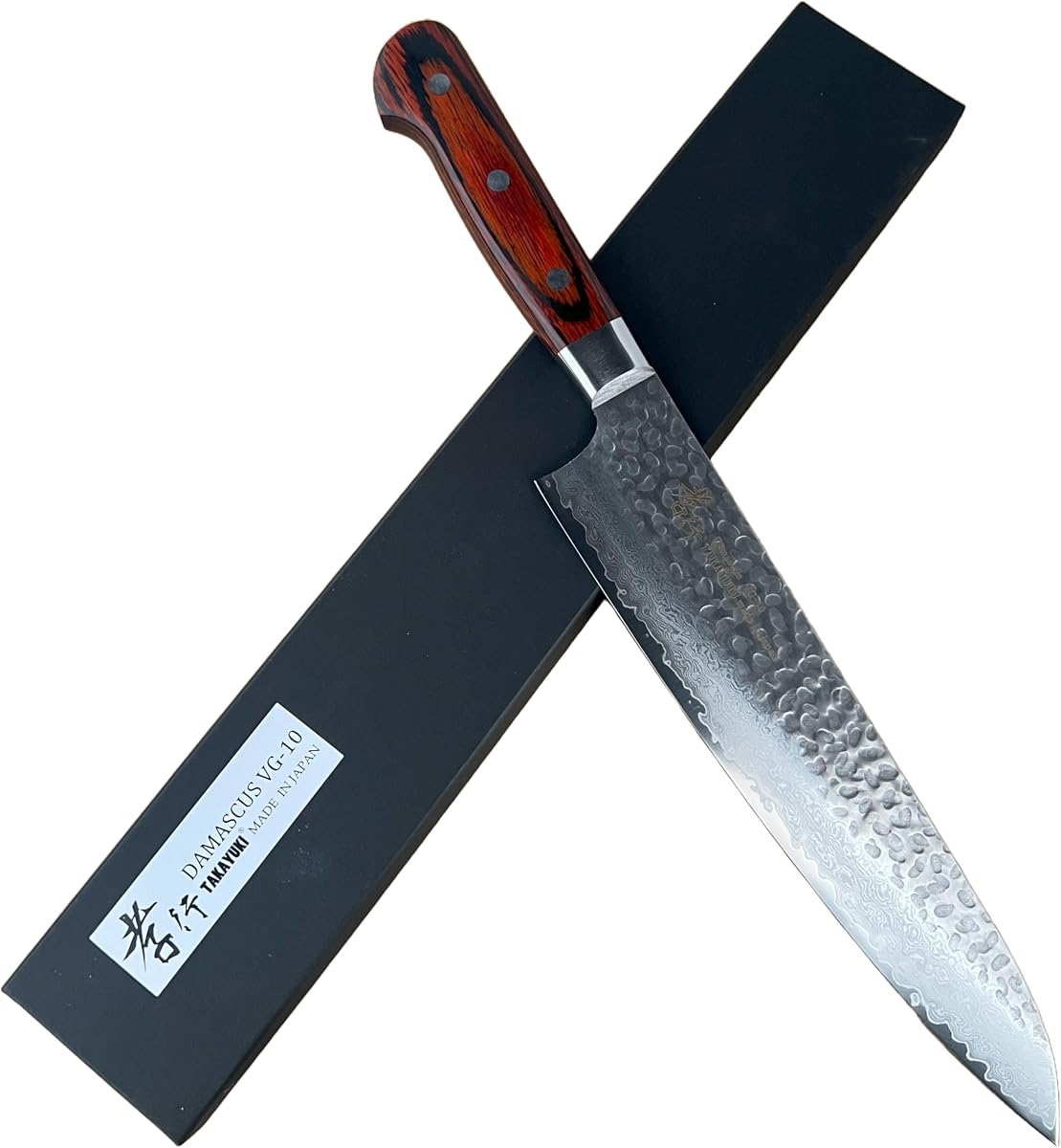
Mastering the Gyuto: Why the Sakai Takayuki 240mm Damascus Blade Stands Out
For serious home cooks and professionals, the Gyuto knife is the workhorse of the kitchen, blending the best of Western and Japanese blade design. The Sakai Takayuki Hammered Damascus 33 Layer Vg-10 Gyuto 240mm offers a specific combination of high-carbon VG-10 steel core and a 33-layer Damascus cladding, promising both edge retention and aesthetic appeal. Understanding the nuances of this layered construction and its 240mm length is key to deciding if it fits your cutting style.
Key Considerations Before Buying
- Blade Steel and Edge Retention: The VG-10 core is a high-carbon stainless steel known for its hardness (typically around 60-61 HRC), which allows for a very sharp, durable edge. However, this hardness can also make the blade more brittle, so avoid prying or cutting through bones or frozen foods.
- Layered Damascus Construction: The 33-layer Damascus cladding not only creates a visually striking hammered pattern (tsuchime) but also helps protect the core steel and reduces food sticking to the blade. This finish requires gentle hand washing and immediate drying to prevent any moisture-related issues.
- Length and Balance: A 240mm (9.4-inch) blade is ideal for those with larger cutting boards or who frequently slice through large proteins or vegetables. It offers a longer, smoother stroke but may feel unwieldy for cooks with smaller hands or limited counter space.
What Our Analysts Recommend
When evaluating a Damascus Gyuto like this Sakai Takayuki, inspect the grind consistency—a well-executed convex or flat grind ensures smooth cutting and food release. Also, examine the handle fit and finish; a seamless handle-to-tang transition (often a full tang or hidden tang) indicates quality craftsmanship. Finally, the weight and balance point should feel natural in your pinch grip, typically around the bolster or slightly forward.
Gyutou Knives Market Context
Market Overview
The Gyuto knife market has seen a surge in demand for layered Damascus blades, as enthusiasts seek both performance and artistry. Japanese makers like Sakai Takayuki, with their heritage in Sakai city (a historic cutlery hub), compete with both traditional and modern brands, often differentiating through specific steel types and forging techniques. Prices for a quality 240mm VG-10 Damascus Gyuto typically range from $150 to $300, placing this knife in the mid-to-premium segment.
Common Issues
A frequent concern with layered VG-10 knives is the potential for chipping along the edge if misused, due to the steel's hardness. Some users also report issues with the Damascus pattern fading or becoming less defined if the knife is improperly sharpened or cleaned with abrasive pads. Additionally, the 'hammered' finish can sometimes trap food particles if not rinsed promptly.
Quality Indicators
Key indicators of a well-made Gyuto include a symmetrical blade grind, a consistent edge bevel, and a polished spine and choil (the area where the blade meets the handle) that are rounded for comfort. The handle material (often pakkawood or magnolia) should be sealed and free of cracks, and the blade's center of gravity should feel balanced. A reputable maker like Sakai Takayuki also typically provides clear markings on the blade.
Review Authenticity Insights
Grade B Interpretation
The 'B' grade and estimated 10% fake review rate suggest that while the vast majority of reviews are authentic, there is a small but notable portion that may be unreliable. This is a relatively low risk, but it means you should still approach the 55 reviews with some caution—focus on those that mention specific usage experiences (e.g., cutting vegetables, slicing fish) rather than generic praise.
Trust Recommendation
Given the 0.00/5 rating (likely due to a lack of visible reviews or recent changes), you cannot rely on the average score alone. Instead, read through the available reviews for consistent feedback on edge retention, handle comfort, and the Damascus pattern's durability. The verified purchase badges on all reviews are a strong positive signal, so trust those accounts over any unverified ones.
Tips for Reading Reviews
For a technical product like this Gyuto, prioritize reviews that describe the knife's performance in specific tasks—like how it handles a julienne cut or a tomato slice. Look for comments on the 'out-of-box' sharpness and how the edge holds up after a few weeks of use. Be skeptical of any review that uses overly promotional language or lacks personal details about the user's cooking habits.
Expert Perspective
The Sakai Takayuki Hammered Damascus Gyuto 240mm represents a solid entry in the premium Japanese knife category, offering a classic VG-10 core with an attractive, functional Damascus finish. The 33-layer construction and hammered texture are not just cosmetic—they enhance food release and blade durability. However, the 0.00 rating and high review count without a visible score suggest potential listing or data issues, so you should verify the product's availability and condition before purchasing. Based on the analysis, the knife itself likely performs well for its intended use, but the current online representation is incomplete.
Purchase Considerations
Weigh the knife's specific strengths (edge retention, aesthetic, food release) against your own cutting habits—if you frequently cut hard or frozen foods, a softer steel might be more forgiving. Also, consider whether you prefer the 240mm length for larger tasks or if a 210mm would be more versatile for daily use. The price point is competitive for a handcrafted Damascus knife, but confirm the handle material and warranty from the seller.
Comparing Alternatives
Shoppers should compare this model with other VG-10 Damascus Gyutos from makers like Shun or Miyabi, which offer similar core steels but different handle ergonomics and blade geometries. Additionally, consider whether you want a stainless-clad blade versus a fully reactive carbon steel for a different cutting feel.


