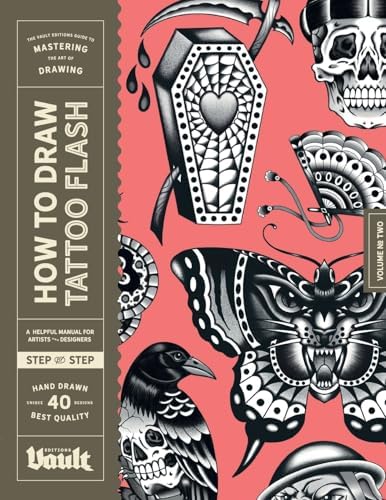
Choosing the Right Tattoo Flash Guide: What Beginner and Experienced Artists Need
When selecting a tattoo flash drawing guide, artists should prioritize books that bridge traditional technique with practical application. This Vault Editions guide specifically targets traditional American tattoo flash—a distinct style requiring particular line work, shading, and color theory approaches. Understanding whether a book teaches foundational construction or merely showcases finished designs is crucial for skill development.
Key Considerations Before Buying
- Assess the progression structure: This book's step-by-step format should logically build from basic shapes to complex traditional designs like swallows, roses, and nautical stars.
- Evaluate the balance between theory and practice: A quality guide should explain the 'why' behind traditional tattoo conventions (like bold outlines and limited color palettes) alongside the 'how'.
- Consider the target audience scope: This title claims suitability for both beginners and experienced artists, so check if advanced content offers genuine value beyond basic instruction.
What Our Analysts Recommend
High-quality tattoo art books feature clear, high-resolution illustrations where every line weight and shading technique is visible. Look for guides that deconstruct complex designs into their fundamental geometric components, as this is essential for mastering traditional flash. The paper quality should also accommodate light sketching or tracing directly in the book.
Figure Drawing Market Context
Market Overview
The tattoo instruction book market is saturated with titles ranging from generic drawing manuals to niche style-specific guides. Traditional American flash, with its rich history and strict stylistic rules, represents a specialized but popular segment. Publishers like Vault Editions have carved a niche by focusing on authentic, historically-informed instructional content.
Common Issues
Many drawing guides provide beautiful finished artwork but fail to offer actionable, sequential instruction. Others focus too heavily on digital methods, neglecting the pen-and-paper fundamentals crucial for traditional tattoo design. Some books also present hybrid or modernized styles as 'traditional,' which can mislead artists seeking authentic technique.
Quality Indicators
Superior guides demonstrate a clear pedagogical approach, often showing the underlying skeletal structure of designs before adding detail. They reference historical flash artists (like Sailor Jerry or Bert Grimm) and explain the symbolism behind classic motifs. Quality is also evident in the specificity of instructions regarding line consistency, whip-shading technique, and color saturation for tattoo application.
Review Authenticity Insights
Grade B Interpretation
A Grade B authenticity rating with an estimated 15% fake review rate suggests the majority of feedback is reliable, but shoppers should maintain healthy skepticism. The high adjusted rating of 4.40/5 (down from 4.78/5) indicates genuine satisfaction, though the raw score is slightly inflated.
Trust Recommendation
Focus on the 73 verified purchase reviews, as these carry significantly more weight. Pay particular attention to reviews that mention specific design lessons (e.g., 'learning to draw eagles' or 'improving line weight') rather than generic praise, as these demonstrate actual product use.
Tips for Reading Reviews
For instructional art books, prioritize reviews that detail skill progression or cite specific chapters. Be wary of overly emotional language that doesn't reference the book's technical content. Look for patterns in feedback about the book's physical quality, step difficulty, and applicability to actual tattoo transfer.
Expert Perspective
The data suggests this is a well-received, legitimate instructional resource within its niche. The strong adjusted rating from verified purchasers indicates it delivers on its core promise for most buyers. The 'beginner to experienced' claim is ambitious; true beginners may find the traditional style challenging, while seasoned artists will likely value it as a technical reference. The step-by-step structure, if executed well, addresses a common gap in art instruction where the intermediate steps are often omitted.
Purchase Considerations
Weigh your current skill level against the book's stated range—true novices to figure drawing might need supplemental fundamentals. Consider if your goal is to create authentic, transfer-ready flash or simply to appreciate the art style. The physical book format is ideal for studio reference but lacks the zoom functionality of digital alternatives.
Comparing Alternatives
Shoppers should compare this Vault Editions title with other traditional flash books, such as those from Dover Publications or specific artist monographs, to assess teaching methodology and artistic voice.