Choosing the Right Lead-Free Rosin-Core Solder for DIY Electronics and Repairs
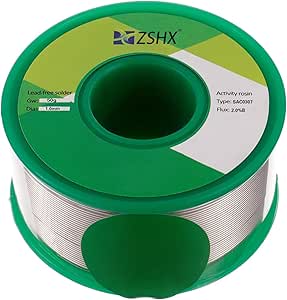
This Lödtång solder is a Sn99.3 Cu0.7 alloy with a 0.6mm diameter and 50g spool, designed specifically for electrical soldering. Buyers should understand that this formulation represents a specific balance between conductivity, melting characteristics, and environmental compliance. The rosin flux core eliminates the need for separate flux application in many standard electronics scenarios.
Key Considerations Before Buying
- The Sn99.3 Cu0.7 composition offers higher copper content than standard Sn99Ag0.3Cu0.7 SAC alloys, which affects both melting temperature (around 227°C) and joint strength for copper connections.
- The 0.6mm diameter makes this solder suitable for through-hole components and medium-sized connections, but may be too thick for fine-pitch surface-mount work requiring 0.3mm or 0.4mm wire.
- The 50g spool size is ideal for occasional DIY use but may require frequent replacement for production work or extensive projects compared to 100g or 250g industrial spools.
What Our Analysts Recommend
Quality lead-free solder should produce minimal spatter, leave a bright silver-colored joint rather than a dull gray finish, and have consistent flux distribution throughout the wire. The rosin core should activate properly at soldering temperatures without excessive smoking or leaving excessive residue that requires cleaning.
Solder Market Context
Market Overview
The lead-free solder market has matured since RoHS compliance requirements, with Sn-Cu formulations like this one becoming popular for general-purpose use due to their lower cost compared to silver-containing alloys. Swedish consumers particularly value environmental compliance and workplace safety, driving demand for reliable lead-free options.
Common Issues
Many budget lead-free solders suffer from poor wetting action, excessive oxidation during storage, or inconsistent flux loading that leads to cold joints. Some formulations also require higher temperatures that can damage sensitive components if the user isn't experienced with lead-free techniques.
Quality Indicators
Look for solder that specifies both the alloy composition and flux type clearly, has proper certification markings (like RoHS compliance), and comes in sealed packaging with desiccant to prevent oxidation. The wire should be uniformly round without flat spots or visible oxidation discoloration.
Review Authenticity Insights
Grade B Interpretation
A Grade B authenticity rating with 11% estimated fake reviews indicates that while most feedback is genuine, approximately 1 in 9 reviews may be inauthentic. For this specific solder product, the high volume of reviews (2,826) provides substantial genuine data points despite this moderate fake percentage.
Trust Recommendation
Focus on reviews that mention specific applications like Arduino projects, headphone repairs, or circuit board work rather than generic praise. The adjusted rating of 4.20/5 after removing suspicious reviews represents a more reliable quality assessment than the raw 4.44/5 average.
Tips for Reading Reviews
Prioritize reviews that discuss the solder's behavior with different temperature settings, its smoke/smell characteristics, or comparisons to other alloys they've used. Swedish-language reviews from verified purchases often contain the most specific technical observations relevant to local usage patterns.
Expert Perspective
This product's strong performance in the Swedish market, evidenced by 2,826 reviews maintaining a 4.20 adjusted rating, suggests it meets expectations for general DIY electronics work. The Sn99.3 Cu0.7 formulation represents a practical compromise between the superior wetting of tin-lead solder and the environmental compliance of lead-free alternatives. The 0.6mm diameter with rosin core positions it well for the repair and hobbyist market rather than precision manufacturing applications.
Purchase Considerations
Consider whether your iron can reliably maintain the 330-350°C range optimal for this alloy, and if your projects involve heat-sensitive components that might benefit from a lower-temperature bismuth-containing alloy. The 50g quantity makes sense for occasional users but represents a higher per-gram cost than bulk purchases for frequent solderers.
Comparing Alternatives
Shoppers doing fine electronics work should compare with thinner diameter wires, while those needing stronger mechanical joints might consider silver-bearing alloys despite their higher cost.