
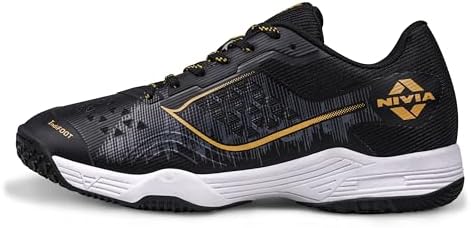
Court Shoe Selection: Balancing Grip, Cushioning, and Lateral Support
When evaluating the Nivia HY-Court 3.0, focus on its suitability for multi-court sports requiring rapid lateral movements. This shoe's rubber sole and upper mesh design target sports like badminton and squash where non-marking traction and breathability are critical. Buyers should assess whether its construction matches their specific court sport demands.
Key Considerations Before Buying
- Non-marking rubber compound quality directly affects court grip and durability; inferior compounds wear quickly on abrasive surfaces.
- Upper mesh breathability must be balanced with structural support to prevent foot roll during sharp side-to-side movements.
- Midsole cushioning should absorb impact from jumps and lunges without compromising ground feel for quick directional changes.
What Our Analysts Recommend
Examine the sole's herringbone or hexagonal pattern depth, which indicates grip design for multi-directional play. Quality court shoes feature reinforced zones at the toe drag area and medial side where badminton players experience most abrasion. The heel counter should be rigid enough for stability during landing but not cause discomfort.
Badminton Shoes Market Context
Market Overview
The Indian court shoe market features intense competition between established sports brands and value-focused manufacturers like Nivia. Products in this segment often prioritize affordability while attempting to deliver specialized features for sports requiring indoor court traction.
Common Issues
Budget court shoes frequently compromise on lateral support structures or use less durable rubber that hardens over time, reducing grip. Mesh uppers may lack sufficient reinforcement, leading to premature tearing in high-stress areas during aggressive play.
Quality Indicators
Superior court shoes integrate TPU or thermoplastic supports in the midfoot, use multi-density midsoles for targeted cushioning, and feature abrasion-resistant materials in high-wear zones. The bonding between sole and upper should show clean, consistent application without visible glue marks.
Review Authenticity Insights
Grade C Interpretation
A Grade C authenticity rating with 28% estimated fake reviews suggests significant manipulation of the Nivia HY-Court 3.0's rating profile. This means the displayed 3.86/5 average likely overstates actual user satisfaction, with the adjusted 3.30/5 being more representative of genuine experiences.
Trust Recommendation
Prioritize reviews discussing specific performance aspects like sole wear patterns, mesh durability after weeks of play, or fit consistency across different foot widths. Be particularly skeptical of generic 5-star reviews lacking sport-specific usage details.
Tips for Reading Reviews
Focus on reviews mentioning actual court sports usage (badminton, squash) rather than general walking. Look for detailed comments about lateral support during lunges or sole grip on dusty courts—these indicate authentic playing experience rather than promotional content.
Expert Perspective
The Nivia HY-Court 3.0 presents as an entry-level multi-court shoe with concerning authenticity metrics. While its mesh upper and non-marking sole target essential badminton requirements, the significant fake review percentage suggests the manufacturer may be artificially boosting perceived value. The 1.2-star gap between displayed and adjusted ratings indicates genuine user experiences are less positive than initially apparent. This shoe likely serves casual players adequately but may disappoint serious athletes expecting durable performance construction.
Purchase Considerations
Weigh the affordable pricing against the authenticity concerns and the shoe's suitability for your specific sport intensity. For occasional recreational play, it may suffice, but regular badminton or squash players should consider verified performance characteristics more carefully. The multi-sport designation sometimes indicates compromised specialization.
Comparing Alternatives
Compare the HY-Court 3.0's specific features—like its rubber compound and mesh reinforcement—against similarly priced court shoes from brands with more transparent review histories.


