
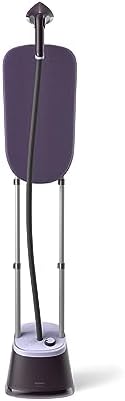
Choosing a Standing Garment Steamer: Power, Steam Output, and Board Design Matter
When evaluating the Philips STE3160/30 standing garment steamer, focus on its 2000-watt heating system and 40 g/min steam output—these specifications directly impact wrinkle removal efficiency. The unique tilting style board is a distinctive feature that affects how you interact with garments versus traditional flat boards.
Key Considerations Before Buying
- Steam output rate (40 g/min here) determines how quickly you can process garments; higher rates handle thicker fabrics better but consume more water.
- The tilting board design requires different handling techniques than vertical-only steamers—consider your preferred workflow for dresses, suits, or curtains.
- With 3 steam settings, assess whether preset modes (likely light/medium/heavy) match your fabric mix or if you need more granular control.
What Our Analysts Recommend
For standing steamers, check water tank capacity relative to steam output—a 40 g/min rate empties a standard 1.8L tank in under 45 minutes of continuous use. Build quality indicators include sturdy pole construction (no wobble) and secure hose attachments that withstand frequent tilting motion.
Vertical Steamers Market Context
Market Overview
The vertical steamer market in India increasingly features 2000+ watt models competing on steam output and specialized features like tilting boards, moving beyond basic wrinkle removal. Consumers now expect faster heat-up times and versatility for diverse fabrics from cotton sarees to formal wear.
Common Issues
Users frequently report inconsistent steam flow after months of use, often due to mineral buildup in the boiler—a critical concern with India's hard water. Another common complaint involves unstable bases or wobbly poles that compromise the steaming experience.
Quality Indicators
Look for boilers with anti-calc systems or easy descaling access, crucial for longevity in hard water regions. Quality steamers maintain consistent pressure throughout the session, not just initial bursts, and feature intuitive controls placed for easy access during operation.
Review Authenticity Insights
Grade B Interpretation
A Grade B authenticity rating with 15% estimated fake reviews suggests generally reliable feedback, though approximately 1 in 7 reviews may be artificially positive or negative. The adjusted 3.40 rating (from 3.63) indicates some review inflation affecting the overall score.
Trust Recommendation
Prioritize reviews discussing long-term performance (3+ months) and specific fabric results, as these are harder to fake. Be skeptical of reviews focusing solely on unboxing or first-use impressions without mentioning the tilting mechanism's practical use.
Tips for Reading Reviews
For this product, seek reviews mentioning the tilting board's stability at different angles and steam consistency across all three settings. Authentic reviews often compare heat-up time against claims or describe descaling frequency with regular use.
Expert Perspective
The Philips STE3160/30 presents a compelling mid-range option with its 2000W/40g/min specifications suitable for regular household use. The 3.40 adjusted rating reflects realistic performance expectations—competent but not exceptional—while the tilting board offers ergonomic benefits for full-length garments. The authenticity analysis suggests most feedback genuinely reflects user experiences, though the 15% fake rate warrants careful review scrutiny.
Purchase Considerations
Weigh the tilting board's convenience against potential stability trade-offs, especially if steaming heavier items like coats. Consider your water quality since descaling maintenance will impact long-term satisfaction with this boiler-based system.
Comparing Alternatives
Compare steam output consistency and warranty terms with similar 2000W models from brands like Nova or Morphy Richards before deciding.


