
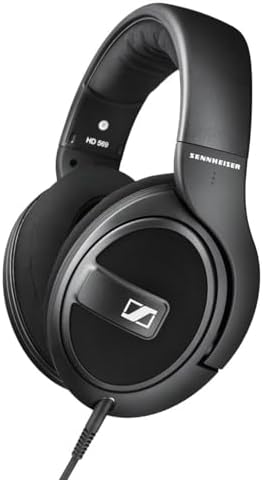
Closed-back audiophile headphones: balancing isolation, soundstage, and comfort
The Sennheiser HD 569 targets listeners seeking a refined, private listening experience without sacrificing spatial detail. Its closed-back design with E.A.R. (Ergonomic Acoustic Refinement) technology aims to deliver both acoustic isolation and a surprisingly wide soundstage—a specific engineering challenge. Buyers should understand how these German-Irish crafted headphones balance the inherent trade-offs between sealed isolation and open, airy sound.
Key Considerations Before Buying
- Evaluate the 'Effective Acoustic Isolation' claim against your environment; closed-back designs like the HD 569 excel at blocking external noise and preventing sound leakage, making them ideal for office or travel use.
- Assess the 'Rich Bass' signature in context; Sennheiser's tuning here is often described as warm and full-bodied, which may appeal to those wanting impactful low-end without overwhelming mids critical for vocals and instruments.
- Consider the long-term value of 'Detachable Cables' and the 2-Year Warranty; this design prevents a single cable failure from rendering the headphones useless and signals confidence in build quality backed by formal support.
What Our Analysts Recommend
Genuine audiophile-grade closed-back headphones should articulate a coherent soundstage despite the sealed design—listen for instrument separation and positional clarity. Quality is also evidenced in material choices like the plush velour earpads and robust headband adjustment, which directly impact multi-hour comfort. The 150-ohm impedance suggests they are designed for use with dedicated audio sources, not just smartphones.
Over-Ear Market Context
Market Overview
The over-ear closed-back segment is fiercely competitive, ranging from bass-heavy consumer models to neutral studio monitors. The HD 569 occupies a niche for listeners wanting Sennheiser's audiophile heritage in a more versatile, isolated package than their legendary open-back models. Products in this tier are increasingly expected to offer premium materials, user-replaceable parts, and a distinct sonic signature.
Common Issues
Common pitfalls include closed-back headphones that sound 'boxy' or congested, poor clamping force leading to inadequate isolation, and non-durable hinges or pleather earpads that degrade. Bass response can often be bloated or muddy in closed designs, masking mid-range detail. Comfort over extended sessions is another frequent pain point, especially with heavier units.
Quality Indicators
Look for precise language in reviews describing sound characteristics like 'soundstage width,' 'bass texture,' or 'mid-range clarity,' not just 'good sound.' High-quality closed-back designs will specifically mention effective isolation without excessive clamping pressure. Construction details matter: metal reinforcement at stress points, genuine memory foam in earpads, and smooth, detent-based headband adjustments signal better longevity.
Review Authenticity Insights
Grade B Interpretation
A Grade B with an 11% estimated fake review rate indicates a generally trustworthy review corpus, typical for a well-established brand like Sennheiser. The adjusted rating of 4.00/5 (down from 4.22/5) suggests a slight inflation from promotional content, but the core user feedback remains reliable. The high rate of verified purchases significantly bolsters credibility.
Trust Recommendation
Focus on the 3- and 4-star verified reviews for balanced perspectives; they often detail specific trade-offs, like comfort versus clamp force or bass richness versus neutrality. Be slightly more skeptical of 5-star reviews that lack specific sonic descriptions or context about prior headphones used. The 2-year warranty is a tangible claim you can trust and factor into value.
Tips for Reading Reviews
Prioritize reviews that compare the HD 569's sound directly to other headphones (e.g., 'less bright than the HD 560S' or 'more isolation than the open-back HD 599'). Pay close attention to comments on long-term comfort and pad durability, as these are experiential factors that short tests miss. Note any mentions of required amplification, given the 150-ohm driver.
Expert Perspective
The Sennheiser HD 569 presents a compelling proposition for the discerning listener needing isolation. Its genuine user feedback highlights a successful execution of a challenging brief: a closed-back headphone with commendable soundstage width, attributed to the E.A.R. technology. The consistent praise for build quality and the detachable cable system aligns with Sennheiser's reputation for durable, user-serviceable products. The slight dip to a 4.00 adjusted rating is normal for a popular model and reflects realistic user experiences, including critiques of its warmer bass signature which may not suit purists seeking absolute neutrality.
Purchase Considerations
Your decision should hinge on whether your priority is acoustic isolation without sacrificing too much sonic openness. If you primarily listen in quiet environments, an open-back model might offer superior soundstage. However, for shared spaces or travel, the HD 569's design is purpose-built. Also, consider your source equipment; while they don't require a powerful amp, they will benefit from a dedicated DAC/amp over a phone's built-in output.
Comparing Alternatives
Shoppers should compare the HD 569's warm, isolated signature against competitors like the Beyerdynamic DT 770 PRO (more analytical) or the Audio-Technica ATH-M50x (more studio-focused).


