
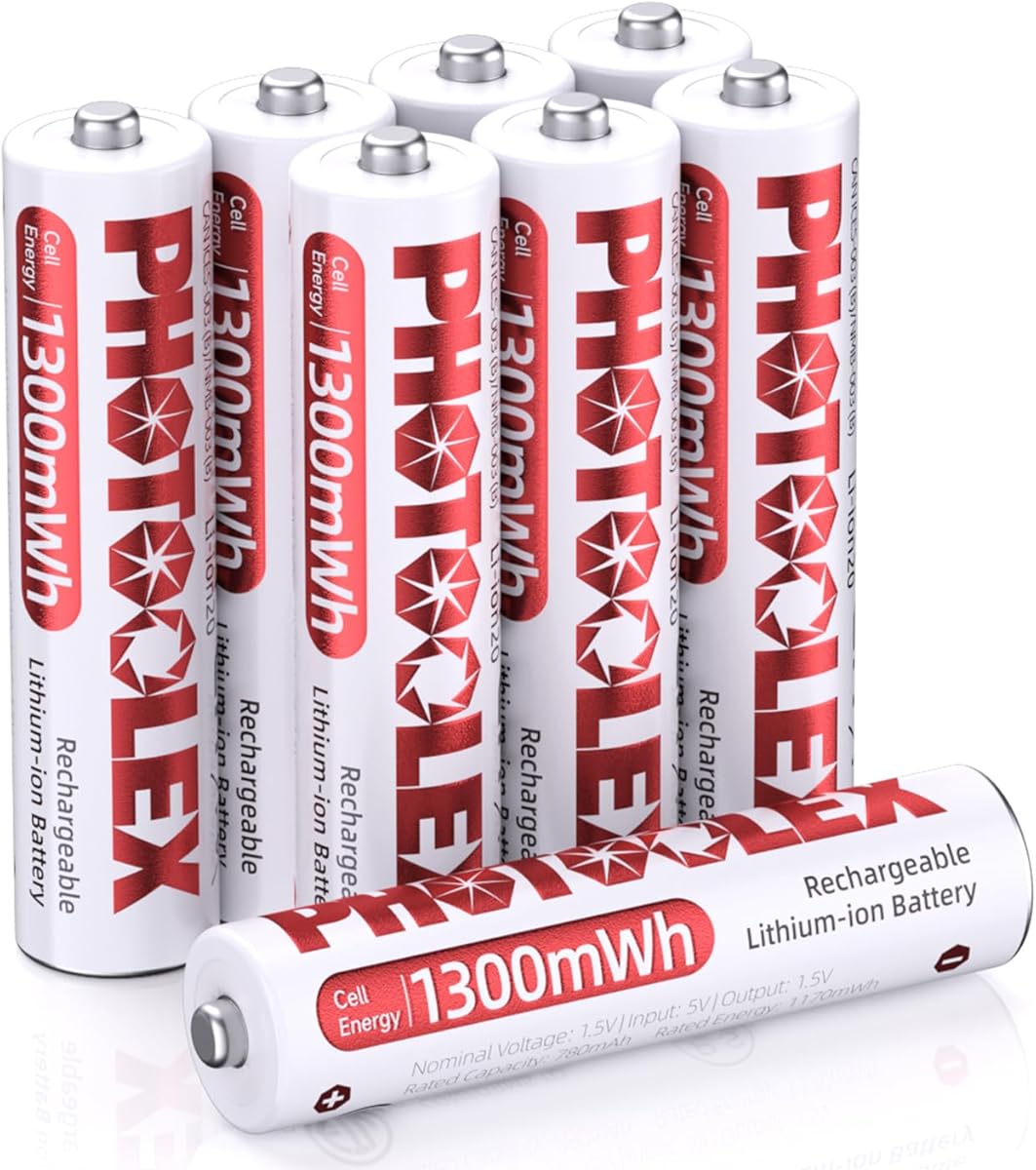
Evaluating Lithium AAA Rechargeables: Capacity, Voltage Stability, and Cycle Life
When considering PHOTOOLEX's lithium AAA rechargeables, focus on their 1300mWh energy rating rather than traditional mAh, as this reflects actual work capacity at 1.5V. These batteries promise 1600+ charge cycles, which is ambitious for lithium-ion AAA cells and requires scrutiny of real-world longevity reports. The consistent 1.5V output is particularly valuable for devices sensitive to voltage drops like digital thermometers or wireless peripherals.
Key Considerations Before Buying
- The 1300mWh rating translates to approximately 867mAh at 1.5V—compare this directly with NiMH alternatives typically ranging 750-1000mAh for AAA cells.
- Lithium rechargeables maintain near-constant voltage until depletion, unlike NiMH batteries that gradually decline, making them superior for power-hungry devices.
- With no charger included, factor in compatibility with existing lithium-ion chargers or budget for a suitable 1.5V lithium battery charger.
What Our Analysts Recommend
Genuine lithium AAA cells should demonstrate minimal self-discharge (less than 2% monthly) and maintain consistent performance across temperature variations. Check for protection circuits against over-discharge, crucial for devices left unused for extended periods. Quality indicators include clear cycle life documentation and proper venting mechanisms for safety.
Rechargeable Batteries Market Context
Market Overview
The rechargeable AAA market has shifted toward lithium-ion chemistry competing with established NiMH technology, offering higher energy density and stable voltage. Brands like PHOTOOLEX enter a space traditionally dominated by Panasonic Eneloop and AmazonBasics, with lithium variants commanding premium pricing for their performance characteristics.
Common Issues
Lithium AAA cells often face compatibility issues with chargers designed for NiMH chemistry, risking improper charging. Some cheaper lithium rechargeables suffer from capacity degradation after 300-500 cycles despite claiming 1000+ cycles. Voltage regulation circuits can fail, causing devices to malfunction or batteries to become unstable.
Quality Indicators
Premium lithium AAA batteries feature built-in protection against overcharge, short-circuit, and temperature extremes. Look for cells with consistent batch coding and clear origin labeling—quality manufacturers provide detailed specifications including internal resistance measurements. Genuine high-cycle batteries maintain above 80% capacity through at least 500 documented cycles.
Review Authenticity Insights
Grade B Interpretation
A Grade B authenticity rating with 11% estimated fake reviews suggests generally reliable feedback with some promotional padding. The adjusted 4.00/5 rating (down from 4.22) indicates genuine satisfaction sits slightly below the surface rating, typical for electronics accessories where manufacturers sometimes incentivize early reviews.
Trust Recommendation
Focus on verified purchase reviews discussing specific usage scenarios like gaming controllers or security cameras over multiple months. The 1553-review sample provides substantial data—look for patterns in mid-range (3-4 star) reviews that often contain the most balanced assessments of real-world performance versus marketing claims.
Tips for Reading Reviews
Prioritize reviews mentioning actual capacity measurements or cycle counts over vague praise. Search for terms like 'second year,' 'replacement,' or 'compared to' which indicate longitudinal use and comparative evaluation. Be skeptical of reviews claiming miraculous performance without device-specific context.
Expert Perspective
PHOTOOLEX's offering enters a competitive segment with respectable specifications—the 1300mWh capacity positions it well against premium NiMH alternatives, while the 1600-cycle claim pushes industry norms. The 4.00 adjusted rating from substantial verified feedback suggests reliable performance, though the lithium chemistry demands proper charger compatibility. The absence of a charger reduces upfront cost but requires users to verify existing charger suitability for 1.5V lithium cells, a common oversight that leads to premature failure.
Purchase Considerations
Evaluate whether your devices benefit from lithium's flat discharge curve—high-drain electronics like gaming accessories or photography gear gain most advantage. Consider total cost of ownership: at 1600 claimed cycles, these should outlast 4-5 sets of quality NiMH batteries if specifications hold true. Ensure you have or budget for a compatible lithium-ion charger with proper 1.5V output regulation.
Comparing Alternatives
Compare PHOTOOLEX's mWh rating and cycle claims directly against established brands like EBL Lithium or Tenavolts to assess value proposition in the lithium AAA niche.


