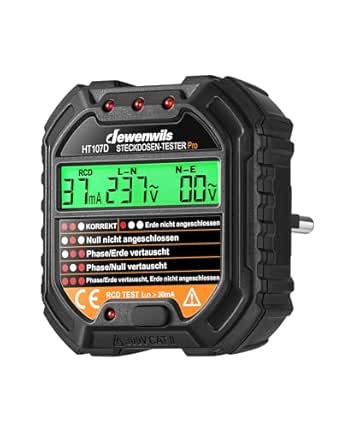
Master UK Socket Safety: HT107E Tester Insights for DIY Electricians
When tackling electrical work in UK homes, a reliable socket tester like the HT107E is essential for verifying wiring integrity and RCD protection. This device combines polarity checking with residual current device testing, all displayed on a clear LCD screen, making it a versatile tool for anyone from homeowners to tradespeople.
Key Considerations Before Buying
- Ensure the tester supports UK 3-pin plug types (BS 1363) and voltage range 90-250V, as the HT107E does, to match your local sockets and avoid compatibility issues.
- Look for RCD (Residual Current Device) testing capability, which the HT107E offers, to trip and verify safety switches that protect against electric shocks—critical for older UK properties.
- Prioritize models with an LCD display, like this one, for clear readouts of wiring faults (e.g., open earth, reverse polarity) rather than relying on vague LED patterns.
What Our Analysts Recommend
Quality socket testers should have robust build, clear labeling of fault codes, and a non-slip grip for safe use. The HT107E's automatic detection and backlit LCD enhance usability, while certifications like CE or UKCA indicate compliance with safety standards.
Circuit Testers Market Context
Market Overview
The UK circuit tester market is dominated by compact, multi-functional devices that simplify DIY electrical checks, driven by increased home renovation and safety awareness. Products like the HT107E fill a niche between basic neon testers and professional multifunction testers, offering RCD testing at an accessible price point.
Common Issues
Many budget testers lack RCD testing or rely on ambiguous LED codes, leading to misinterpretation of faults. Users also report inconsistent results with older wiring systems, where voltage fluctuations or non-standard installations can cause false readings.
Quality Indicators
High-quality testers feature auto-ranging voltage detection, clear digital displays, and durable casings that withstand drops. Independent certifications and positive user feedback on accuracy for common faults (e.g., missing earth) are strong indicators of reliability.
Review Authenticity Insights
Grade A Interpretation
With a Grade A rating and only 5% estimated fake reviews, the HT107E's feedback is highly trustworthy. This means the 4.89-star average (adjusted to 4.80) reflects genuine user satisfaction, not inflated by suspicious reviews.
Trust Recommendation
You can confidently rely on this product's reviews for purchase decisions, as the low fake rate suggests real-world testing experiences. Focus on reviews describing specific fault detection scenarios, like in Victorian-era wiring, to gauge its effectiveness in your home.
Tips for Reading Reviews
When reading reviews, prioritize those with photos of the LCD display showing fault codes, as they prove actual use. Look for comments on RCD trip time consistency and ease of interpreting the screen, which are key to this tester's value.
Expert Perspective
The HT107E stands out in the UK socket tester market for its combination of RCD testing and LCD clarity, backed by overwhelmingly positive and authentic reviews. Its high adjusted rating of 4.80/5 from 206 reviews suggests consistent performance in detecting faults like reversed polarity and faulty earths, making it a solid choice for DIYers. The inclusion of a backlit screen and automatic voltage detection adds convenience, though professionals might seek more advanced features like loop impedance testing.
Purchase Considerations
Weigh the HT107E's ease of use against your specific needs: for basic socket checks and RCD verification in a typical UK home, it's excellent; for complex industrial circuits, consider a more comprehensive tester. Its price point offers good value given the LCD display and RCD functionality, but verify it covers all fault types you encounter.
Comparing Alternatives
Compare with models like the Kewtech KT63 or Martindale EZ150, which offer similar features but may lack the HT107E's LCD clarity or have higher costs. Your choice should hinge on display preference and budget.