
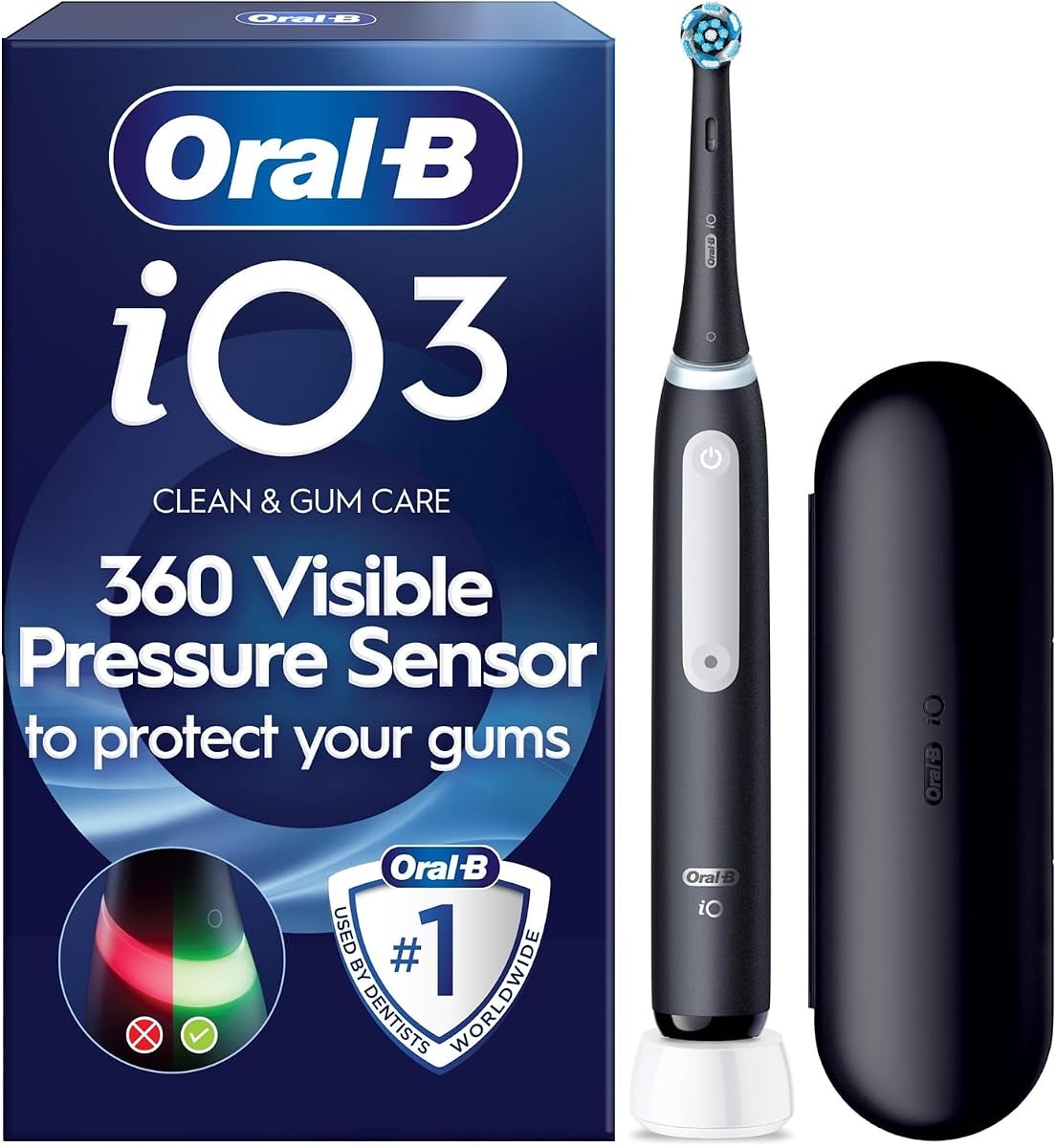
Oral-B iO3: Smart Pressure Control Meets Entry-Level iO Innovation
The Oral-B iO3 marks the entry point into Oral-B's premium iO series, combining the brand's signature rotating-oscillating brush head with a linear magnetic drive for a quieter, more refined clean. For UK shoppers moving from a basic electric toothbrush, the iO3 offers a taste of the iO range's key benefits—like the interactive pressure sensor and a companion app—without the premium price tag of the iO5 or iO9.
Key Considerations Before Buying
- Brush head compatibility: The iO3 uses the new iO-specific brush heads, not the classic Oral-B heads. This means you'll need to source iO replacement heads, which are more expensive and less widely available in UK supermarkets than the standard Oral-B heads.
- Battery life and charging: The iO3 offers up to 12 hours of use from a single charge (about 2 weeks of typical brushing). It charges via a magnetic charging stand, but it lacks the travel case charging capability of higher iO models, so frequent travellers should consider this.
- App connectivity: The iO3 pairs with the Oral-B app via Bluetooth, but you lose the smart display found on iO5 and above. The app provides real-time guidance and progress tracking, but some users find the app's setup fiddly, so weigh how much you value app-driven brushing.
What Our Analysts Recommend
When evaluating the iO3, look for the interactive pressure ring—it glows red when you brush too hard, a crucial feature for preventing gum recession. Also, check that the brush comes with a 2-minute timer with 30-second intervals, and verify the handle's water resistance (IPX7) to ensure it can handle bathroom splashes. Finally, consider the availability of iO heads in your local pharmacy or online, as convenience matters for long-term use.
Rotating Market Context
Market Overview
The electric toothbrush market in the UK is dominated by two main technologies: rotating-oscillating (Oral-B) and sonic (Philips Sonicare). The iO series represents Oral-B's attempt to merge its oscillating action with micro-vibrations, creating a hybrid that aims to dislodge more plaque. This segment is increasingly competitive, with brands like Philips and Colgate offering smart brushes at similar price points, making the iO3 a strategic entry-level option.
Common Issues
A frequent issue across electric toothbrushes, including the iO3, is battery degradation over time—users report diminished battery life after 12-18 months. Another common complaint is the cost and availability of replacement heads, which can be up to four times more expensive than manual brush heads. Additionally, some users find the app's data syncing unreliable, leading to frustration with the 'smart' features.
Quality Indicators
High-quality electric toothbrushes typically feature a robust build (no creaking or loose parts), a consistent brushing action (no stuttering), and a battery that holds a charge as advertised. For the iO3, the magnetic drive should deliver a smooth, quiet operation—if you hear grinding or excessive noise, that's a red flag. Also, the pressure sensor should respond immediately and reset properly, as this is a core safety feature.
Review Authenticity Insights
Grade B Interpretation
With a review authenticity grade of B and an estimated 12% fake reviews, this product's review ecosystem is moderately trustworthy. The 12% figure suggests that while a minority of reviews may be incentivized or non-genuine, the majority reflect real user experiences. The adjusted rating of 3.80/5 (vs. 4.00/5) indicates that removing suspicious reviews lowers the score slightly, implying that some positive reviews may be overstated.
Trust Recommendation
Given the B grade, you can rely on the overall sentiment but should read individual reviews with a critical eye. Focus on verified purchase reviews with detailed narratives—they are more likely to be authentic. Be cautious of reviews that are overly glowing or vague, as they could be part of the 12% fake portion. Also, cross-check reviews across multiple platforms (e.g., Amazon UK, Boots, Currys) to get a balanced view.
Tips for Reading Reviews
For a product like this, pay attention to reviews that mention specific pros and cons, such as battery life, noise level, and head replacement cost. Look for patterns—if multiple reviewers mention the same issue (e.g., the handle becoming slippery when wet), it's likely a genuine problem. Also, check the date of reviews; recent reviews are more relevant if the product has undergone manufacturing changes. Finally, use the 'critical reviews' filter to see the most negative feedback—this often reveals the true weaknesses of the product.
Expert Perspective
The Oral-B iO3 is a solid entry point into the iO ecosystem, offering the core benefits of the series—effective cleaning, a pressure sensor, and app integration—at a more accessible price. However, the 3.80/5 adjusted rating suggests that while many users are satisfied, there are notable issues, likely around battery life, head costs, or app connectivity. As an expert, I see this as a good choice for those who want a high-tech brush without the premium features they may not use, but it's not the best value if you don't need the app or pressure feedback.
Purchase Considerations
Before buying, consider your long-term costs: iO replacement heads are pricier than classic Oral-B heads, and the brush itself is not compatible with older Oral-B heads. Also, think about whether you'll actually use the app—if you won't, you might save money with a simpler non-iO Oral-B model like the Vitality or Pro 2. If you do buy, watch for deals that include a spare brush head or a travel case, as these are often sold separately.
Comparing Alternatives
Shoppers should compare the iO3 with the Philips Sonicare ProtectiveClean 5100, which offers similar smart features and a different sonic cleaning action. Also, consider the Oral-B iO4 or iO5 if you want a longer battery life or a digital display, but be prepared to pay more. Ultimately, your choice should depend on your brushing style and budget.


