
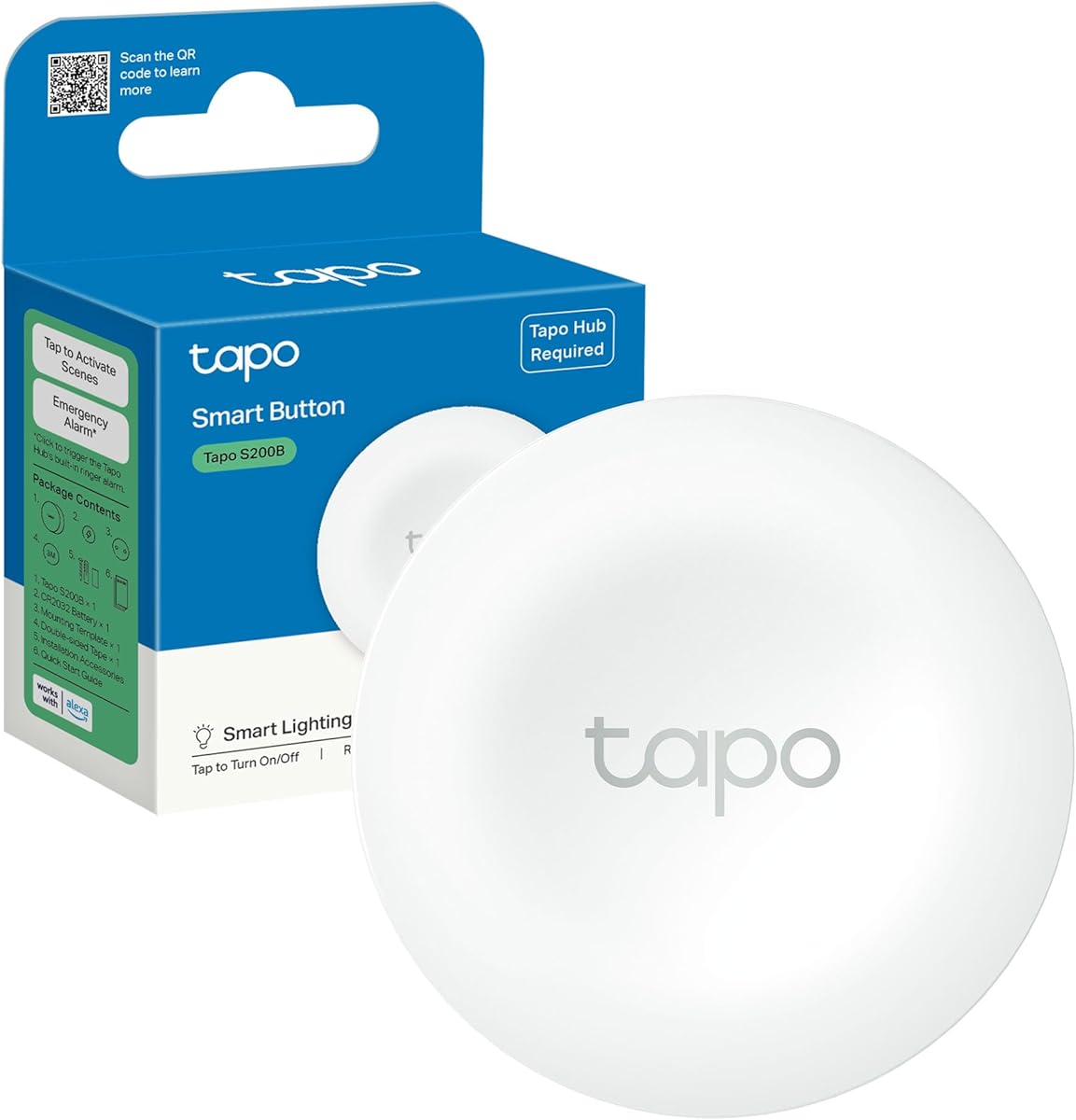
Evaluating the Tapo S200B: A Hub-Dependent Smart Button for Custom Home Control
The Tapo S200B Smart Button represents a specific type of smart home accessory: a programmable physical trigger that requires a dedicated Tapo Hub to function. Unlike standalone Bluetooth buttons, this device operates within TP-Link's Tapo ecosystem, enabling one-click control over lights, alarms, and custom routines. Buyers must understand this hub requirement is non-negotiable for operation.
Key Considerations Before Buying
- The mandatory Tapo Hub adds to the total system cost and setup complexity; this isn't a standalone plug-and-play device.
- Its magnetic mounting and battery-powered design offer placement flexibility, but consider battery life for frequently used actions.
- The 'One-Click Alarm' and 'Smart Doorbell' functions position it as a multi-use security and convenience tool, not just a light switch.
What Our Analysts Recommend
For hub-dependent buttons like the S200B, assess the responsiveness and reliability of the hub connection in reviews. Quality indicators include consistent performance of customized actions, secure magnetic mounting, and a battery life that aligns with your intended usage frequency, as noted in long-term user feedback.
Market Context
Market Overview
The market for smart buttons is segmented between proprietary ecosystem devices (like the Tapo S200B) and universal standards like Zigbee or Z-Wave. Tapo's strategy locks users into their hub but offers a streamlined, app-controlled experience. These devices are moving beyond simple lighting control to become triggers for complex security and automation scenes.
Common Issues
Common pitfalls include hub connectivity dropouts, lag between button press and action execution, and limited customization depth within the brand's app. Battery life can be inconsistent if the button is used for high-frequency tasks, and magnetic mounts may not adhere to all surfaces securely.
Quality Indicators
Look for products with a high percentage of verified purchase reviews discussing reliable day-to-day performance. Consistent praise for low-latency response, a robust companion app for creating 'Customized Actions,' and a physical design that feels durable are key markers of a well-executed smart button.
Review Authenticity Insights
Grade B Interpretation
A Grade B with an estimated 10% fake review rate suggests the feedback is generally reliable but requires careful reading. For the S200B, this means the overwhelming 4.5-star rating is likely inflated slightly, but the core positive sentiment from verified purchasers (100% 'U' status) is a strong trust signal.
Trust Recommendation
Focus on the verified reviews that detail specific use cases like 'lighting control' setups or 'smart doorbell' implementations. The single 3-star review is particularly valuable for balanced insight, as it likely highlights a genuine limitation not mentioned in overly positive feedback.
Tips for Reading Reviews
Prioritize reviews that mention the Tapo Hub integration experience, battery life over months of use, and the real-world reliability of 'Customized Actions.' Be skeptical of overly vague praise and look for details on setup difficulty and magnetic mounting strength on different materials.
Expert Perspective
The analysis data paints a picture of a well-received, ecosystem-specific product. The adjusted 4.3 rating from a high volume of verified reviews indicates solid performance within its designed parameters. The strong showing suggests the S200B delivers reliably on its core promises: easy installation, flexible mounting, and useful programmable control for those already invested in or willing to adopt the Tapo ecosystem. The near-absence of low-star reviews implies few encounter catastrophic failures.
Purchase Considerations
Your decision hinges entirely on your willingness to adopt the Tapo Hub as your smart home gateway. If you seek a simple, expandable system from one brand, this is a compelling accessory. If you prefer a multi-brand setup using universal standards, this button is not compatible. Weigh the cost of the required hub against the convenience offered.
Comparing Alternatives
Shoppers should compare the total cost (button + hub) and feature set against other ecosystem buttons (like Philips Hue) or universal Zigbee/Z-Wave options which may offer broader compatibility.


