
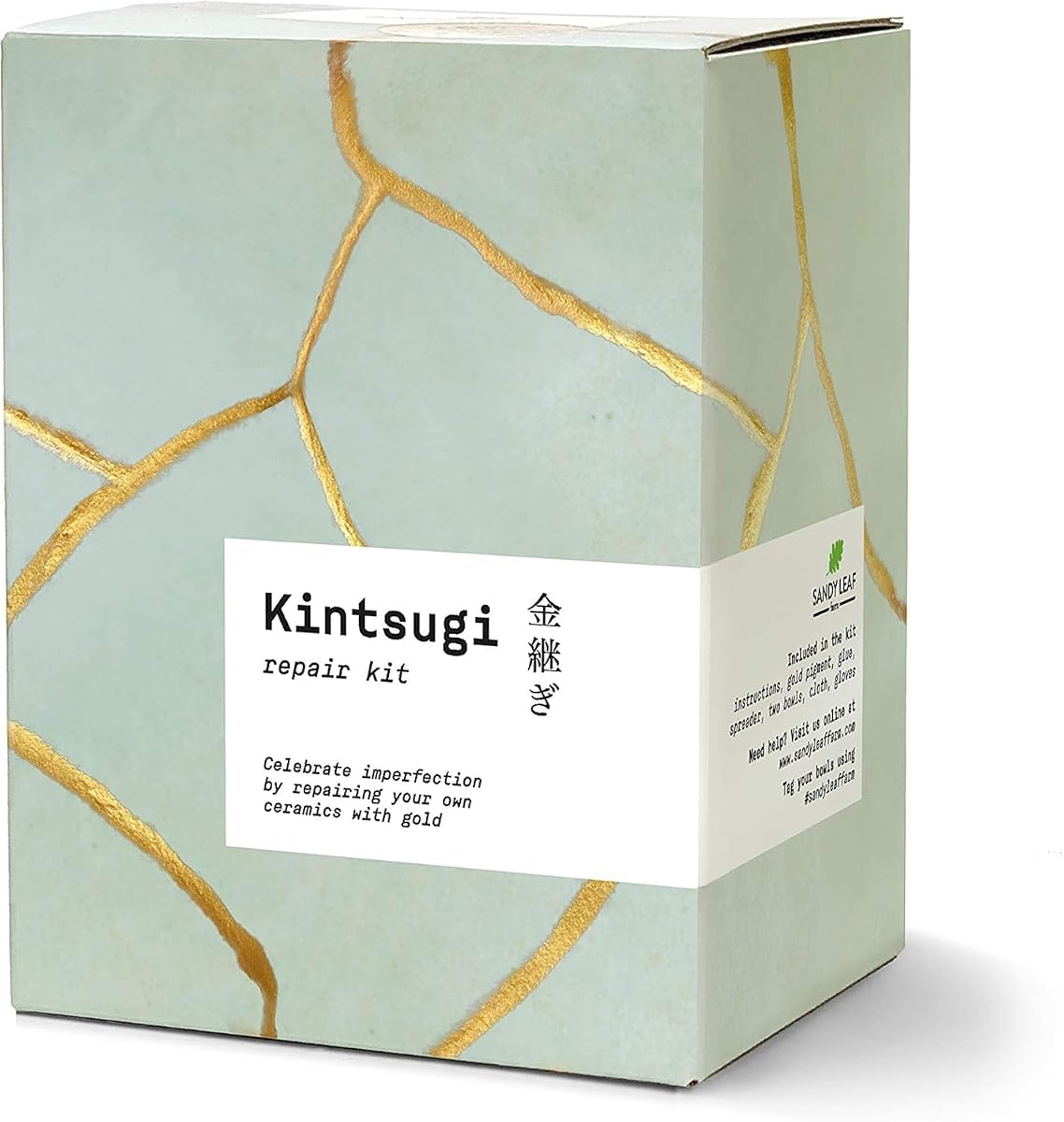
What to Know Before Buying a Gold Kintsugi Repair Kit
Kintsugi kits let you mend broken ceramics with visible gold seams, turning damage into decoration rather than hiding it. The Sandy Leaf Farm kit is a beginner-oriented two-bowl set, so the key questions are whether the included materials suit your skill level and whether the finish will hold up on pieces you actually use.
Key Considerations Before Buying
- Check exactly what the kit includes before ordering. This two-bowl set is designed as a complete starter package, but the number of bowls, the type of gold finish (real gold powder versus a gold-tone pigment), and whether tools like sandpaper, mixing sticks, or gloves are supplied all affect how much extra you need to buy.
- Decide whether your repaired pieces will be decorative or food-safe. Traditional urushi lacquer requires careful curing and is not a casual food-contact material, so confirm the adhesive and finish type in this kit and follow the maker's guidance on which repaired items are safe for everyday use.
- Plan for drying and curing time, not just application time. Kintsugi is a patient craft: pieces typically need to be held or taped while the adhesive sets, and the gold layer needs its own cure before handling, so budget several days per repair rather than an evening.
What Our Analysts Recommend
Quality shows in the small components: a gold powder that mixes smoothly without clumping, an adhesive that bonds cleanly to glazed and unglazed surfaces, and clear step-by-step instructions with realistic curing times. A kit that supplies enough mixing cups and applicators for multiple repairs, plus a practice piece or spare bowl, is usually a better value than one that skimps on consumables.
Ceramic & Pottery Tools Market Context
Market Overview
Kintsugi kits have moved from niche craft suppliers into mainstream arts-and-crafts retail as interest in visible repair and slow crafting has grown. Most consumer kits now substitute modern epoxies and gold-tone powders for traditional urushi lacquer, which lowers the barrier to entry but also means quality varies widely between brands.
Common Issues
The most frequent complaints in this category are gold finishes that look brassy or dull rather than metallic, adhesives that fail after a few months on items that are handled or washed, and instructions that gloss over curing times. Beginners also underestimate how fiddly the gold application stage is, which is where most disappointing results originate.
Quality Indicators
Look for kits that name their adhesive type and give explicit cure times, supply genuine metallic powder rather than a painted-on gold effect, and include enough consumables for more than one attempt. Clear, illustrated instructions and a practice surface are strong signals that the maker expects beginners and has designed for their mistakes.
Review Authenticity Insights
Grade A Interpretation
A Grade A authenticity rating with an estimated 5% fake review rate is strong for a craft kit, and the adjusted rating of 4.10/5 against a 4.22/5 headline figure suggests only a modest inflation effect. With 1,751 reviews, the sample is large enough that the adjusted score is a reasonably stable signal of real buyer satisfaction.
Trust Recommendation
You can treat the review base as broadly trustworthy, but still weight the adjusted 4.10 rating over the headline 4.22 when comparing this kit to rivals. Read the verified-purchase reviews that describe multi-week or multi-month outcomes, since durability of the gold finish is the claim most worth verifying.
Tips for Reading Reviews
For kintsugi kits, prioritise reviews that mention how the gold looked after curing, whether the adhesive held on washed or handled items, and whether the reviewer had prior craft experience. Reviews that only praise the packaging or describe unboxing tell you little about the two things that matter: finish quality and bond strength.
Expert Perspective
The Sandy Leaf Farm two-bowl kit sits in the beginner-friendly end of the kintsugi market, and its review profile is unusually clean for the category: all verified purchases, highly specific content, and a 5% estimated fake rate that is low for arts-and-crafts listings. The gap between the 4.22 headline and 4.10 adjusted rating is small, which suggests the score reflects genuine buyer experience rather than review manipulation. For a first kintsugi project, that transparency is a meaningful advantage.
Purchase Considerations
Weigh the kit against your intended use: if you want to repair sentimental but non-food items, a two-bowl starter set is a sensible low-risk entry point, but if you plan to repair everyday tableware you should confirm the adhesive's suitability for food-adjacent use first. Also factor in whether you will need to buy extra gold powder or bowls once the included supplies run out.
Comparing Alternatives
Compare this kit with other beginner kintsugi sets on consumable quantities, adhesive type, and whether real metallic powder is included, since those differences drive both results and long-term cost.


