Choosing a Potato Ricer: Why Material and Plate Design Dictate Your Mash Quality
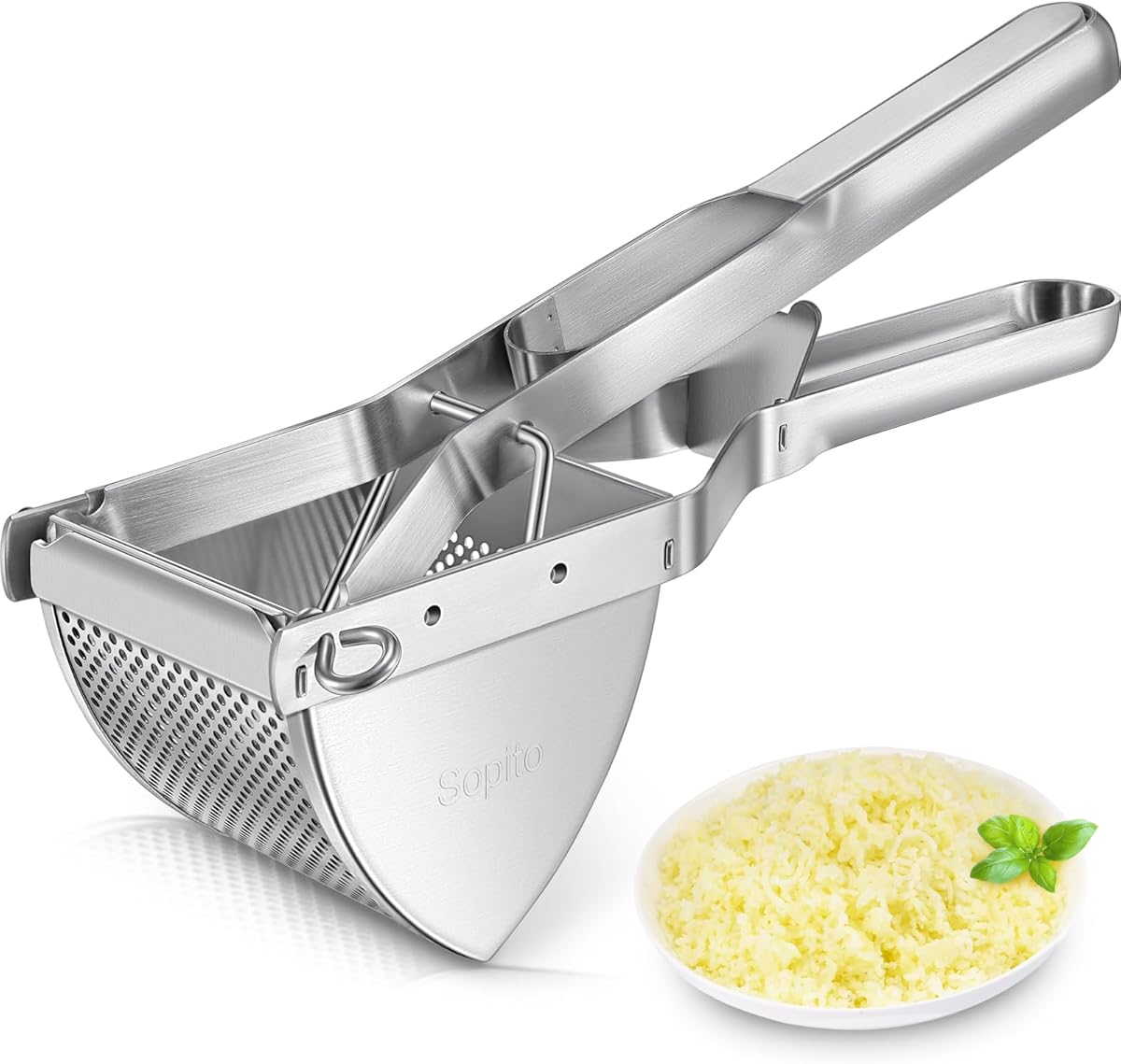
The Sopito Stainless Steel Potato Ricer represents a specific design approach in the ricer category, featuring a dual-plate system with different hole sizes. Unlike single-function mashers, this tool's effectiveness hinges on its ability to process both starchy potatoes and fibrous vegetables without clogging. Buyers should understand that the promised 'multifunctional' capability depends heavily on the interchangeability of these plates and the leverage provided by the long handles.
Key Considerations Before Buying
- Plate Interchangeability: The included fine and coarse plates are central to its multifunctional claim; ensure the locking mechanism is robust to prevent plates from detaching mid-use, a common failure point in cheaper models.
- Handle Ergonomics and Force: With a 4.40 adjusted rating, many genuine reviews praise its ease of use, which is directly tied to the handle length and pivot point design that reduces the force needed for dense vegetables.
- Material Integrity: The advertised 'stainless steel' construction must be verified for the main chamber and plates; some budget ricers use plated or lower-grade steel that can warp or rust, compromising food safety and smooth operation.
What Our Analysts Recommend
High-quality ricers like the Sopito should have seamless, polished interiors within the pressing chamber to prevent food from sticking and to ease cleaning. Examine the hinge mechanism; it should be solid with minimal lateral play to ensure consistent pressure. The plates should sit flush within the chamber without gaps that allow unprocessed food to squeeze past.
Ricers Market Context
Market Overview
The potato ricer market is currently segmented between basic, single-plate models and premium multifunctional units like this Sopito, which aim to replace standalone food mills for small tasks. There's a growing consumer preference for tools that promise restaurant-quality, lump-free mash while also handling tasks like making baby food or squeezing moisture from spinach.
Common Issues
Common failures include handles bending under pressure, hinge pins shearing, and the fine-holed plates becoming perpetually clogged with potato starch. Another frequent complaint is difficulty in cleaning the chamber interior and the small plate holes, which can trap food particles.
Quality Indicators
Look for a ricer with a robust, one-piece cast or forged stainless steel chamber—not a stamped and welded one. The best models feature ergonomic, non-slip handles with a comfortable grip span and use durable, food-grade stainless steel (often 304 grade) for all food-contact parts to resist pitting and corrosion.
Review Authenticity Insights
Grade B Interpretation
A Grade B with an 11% estimated fake review rate indicates a generally trustworthy review pool, but advises a degree of scrutiny. For this Sopito ricer, it suggests the overwhelmingly positive sentiment (4.40 adjusted rating) is reliable, but a small portion of reviews may be artificially amplifying certain features like 'multifunctional' use.
Trust Recommendation
Focus on verified purchase reviews that detail long-term use over several months, specifically mentioning durability of the hinge and plate-lock. Be slightly more critical of reviews that only praise the product in vague, marketing-like terms without describing a specific cooking experience or comparing it to other tools.
Tips for Reading Reviews
Prioritise reviews that mention using both plates for different tasks (e.g., fine for potatoes, coarse for cooked apples) and that comment on clean-up. Look for critical reviews that pinpoint exact failure points, such as 'the hinge loosened after 3 months' or 'the coarse plate doesn't lock securely,' as these provide concrete data on potential weaknesses.
Expert Perspective
The analysis data paints a picture of a well-received, competent tool. The high adjusted rating of 4.40, derived from a largely authentic review pool, strongly suggests the Sopito ricer delivers on its core promise of creating smooth, fluffy mashed potatoes. The consistency in reviews praising its sturdiness and dual-plate system indicates a design that meets user expectations in a crowded market. The 'B' authenticity grade reinforces that while not perfect, the feedback is substantive enough to inform a purchase decision.
Purchase Considerations
Weigh the multifunctional claim against your actual needs; if you only make mashed potatoes occasionally, a simpler ricer may suffice. Consider the size of the chamber—this model's capacity will determine how many potatoes you can process per batch, a key factor for family cooking. The stainless steel construction justifies a higher price point if you prioritise longevity and ease of sanitation over cheaper aluminium alternatives.
Comparing Alternatives
Shoppers should compare the Sopito's handle design, plate interchangeability system, and exact material specifications against similar-priced models from brands like OXO or Progressive to find the best ergonomic and functional fit.