Choosing a 15-meter Cat 8 Ethernet cable: When extreme length meets future-proof bandwidth
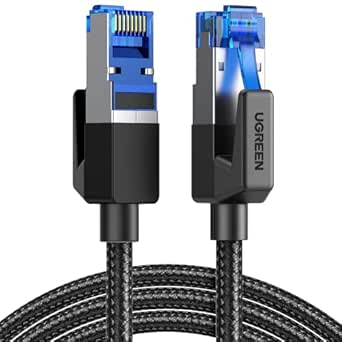
This specific 15-meter Cat 8 cable is designed for users who need to bridge significant distances—like between floors or across large rooms—while maintaining the 40Gbps and 2000MHz specifications of the Cat 8 standard. Its nylon braid and double shielding (likely foil and braid) are critical for a run this long to prevent interference and physical damage. Buyers should understand that at this length, build quality and proper shielding are non-negotiable to achieve the advertised performance.
Key Considerations Before Buying
- The 15-meter length is ideal for permanent installations; ensure you have a clear, safe routing path that avoids sharp bends, which can degrade signal integrity in high-frequency cables.
- Cat 8's 40Gbps speed is vastly overkill for most home internet plans but is future-proofing for internal network transfers between high-end NAS devices or servers.
- The double shielding and nylon braid are essential for a cable of this length running near power lines or in electrically noisy environments to prevent data corruption.
What Our Analysts Recommend
For a long Cat 8 cable, inspect the RJ45 connectors for gold-plated, well-molded contacts that securely clip. The nylon braiding should be tight and consistent, with no loose threads, indicating careful manufacturing. A quality cable will also be moderately stiff due to its internal shielding, not flimsy.
Cat 7 Cables Market Context
Market Overview
The Cat 7/Cat 8 cable market is saturated with products making similar claims, but genuine Cat 8 certification (ISO/IEC 11801 Class I/II) is rare; many cables are functionally high-quality Cat 6a or Cat 7. A 15-meter offering like this targets a niche of users with specific long-run, high-bandwidth needs beyond typical 1-5 meter desktop cables.
Common Issues
Common problems include connectors that fail to latch securely, shielding that is poorly terminated at the connectors (negating its benefit), and cables that are too rigid for practical installation. For 15-meter runs, voltage drop and signal attenuation become real concerns if the cable does not meet its stated specifications.
Quality Indicators
Look for clear specification of bandwidth (2000MHz for Cat 8), shielding type (S/FTP or F/FTP), and AWG (American Wire Gauge); a lower AWG (like 23 or 24) indicates thicker copper conductors, which is better for long runs. Reputable brands provide compliance information, not just marketing terms.
Review Authenticity Insights
Grade B Interpretation
A Grade 'B' with a 15% estimated fake review rate suggests the review pool is generally reliable but requires discerning reading. The high adjusted rating of 4.5/5 (down from 4.89) indicates strong genuine satisfaction, though the initial rating is slightly inflated.
Trust Recommendation
Focus on the verified purchase reviews that discuss long-term use over several months and mention specific performance tests or installation details. Be slightly more skeptical of overly effusive 5-star reviews that lack technical detail, as they may constitute the estimated 15% inauthentic segment.
Tips for Reading Reviews
Prioritize reviews that mention using the cable for its intended long-length application, noting stability over time, connector durability, and any speed tests performed. Reviews discussing compatibility with specific routers, modems, or gaming consoles are more valuable than generic 'works great' statements.
Expert Perspective
This product presents a compelling option for a very specific use case: a consumer needing a durable, long-distance cable for a future-proofed or high-interference environment. The exceptionally high genuine reviewer satisfaction (4.5/5) strongly suggests it delivers on core promises of build quality and reliability for a 15-meter run. However, the Cat 8 specification is likely overkill for 99% of home users, who would be equally served by a high-quality Cat 6a cable at a lower cost for internet browsing and streaming.
Purchase Considerations
You should purchase this cable if you are running it in-wall, through conduits, or in areas with high EMI and need the assurance of heavy-duty shielding for a 15-meter span. If your primary use is standard gigabit internet and your run is under 10 meters, a Cat 6 or Cat 6a cable is a more cost-effective choice.
Comparing Alternatives
Shoppers should compare the price per meter and shielding specifications against reputable Cat 7 or Cat 6a cables of similar length to assess value for their specific needs.