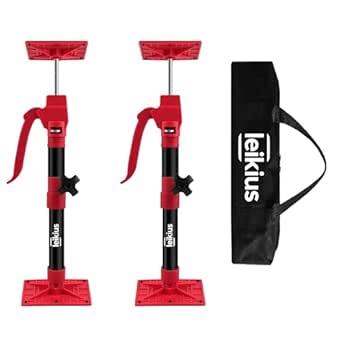
Choosing the Right Manual Lifting Arm for Cabinet Doors and Wood Panels
This specific manual lifting arm is designed for precision height adjustment during cabinet door and wood panel installation, not for heavy drywall sheets. Unlike traditional drywall lifts with wider frames, this compact French tool focuses on controlled micro-adjustments for joinery work, making it essential to understand its specialized application versus general material handling equipment.
Key Considerations Before Buying
- Assess your primary use: This tool excels at fine-tuning door alignment and supporting panels during hinge installation, but lacks the capacity and stability for full drywall sheets.
- Evaluate workspace constraints: With its compact profile compared to full drywall lifts, this manual arm suits confined cabinet installation areas where larger equipment won't fit.
- Consider adjustment precision: The height regulator mechanism needs smooth, incremental control for proper door leveling—check reviews for feedback on gear smoothness and locking stability.
What Our Analysts Recommend
Quality indicators include a robust ratcheting or screw mechanism that holds position without slippage under load, and durable mounting hardware that won't mar finished wood surfaces. The connection points between the lifting arm and base should show solid welding or bolting, not thin-gauge spot welds common in inferior tools.
Drywall Lifts Market Context
Market Overview
The manual lifting tool market has expanded beyond traditional drywall applications to include specialized joinery aids like this cabinet door installer. French manufacturers in particular have developed compact solutions for woodworkers and cabinet installers seeking labor-saving precision tools for alignment tasks.
Common Issues
Users frequently report instability with lightweight bases when handling heavier solid wood doors, and imprecise height regulators that drift under load. Some tools marketed for both drywall and cabinetry compromise on the fine adjustment capabilities needed for door installation.
Quality Indicators
Superior tools feature dual locking mechanisms (primary lift and fine adjustment), non-marring contact points, and weight ratings that honestly reflect real-world use with various wood densities. Look for products specifying exact weight capacities rather than vague 'heavy-duty' claims.
Review Authenticity Insights
Grade B Interpretation
A Grade B with 11% estimated fake reviews indicates generally reliable feedback with some promotional content. For this specialized tool, the high 4.78/5 rating should be tempered by the adjusted 4.50/5 rating, suggesting some inflated praise but still strong genuine satisfaction.
Trust Recommendation
Focus on verified purchase reviews discussing specific installation scenarios like European-style hinge alignment or shaker panel mounting. The 148-review sample provides sufficient depth to identify consistent patterns about the regulator's precision in millimeter adjustments.
Tips for Reading Reviews
Prioritize reviews mentioning actual door weights and wood types (MDF vs. solid oak), as performance varies significantly. Look for detailed accounts of the height regulator's performance during final alignment phases, not just initial lifting.
Expert Perspective
This product occupies a valuable niche between full drywall lifts and basic workshop jacks, offering cabinet installers a specialized tool for door alignment. The strong adjusted rating of 4.50/5 from verified purchases suggests it delivers on its primary function despite the presence of some promotional content. The tool's design appears optimized for the specific challenge of holding doors at exact heights during hinge screw installation, a task where traditional methods often require multiple workers.
Purchase Considerations
Weigh this tool's compact advantage against its limited capacity—ideal for standard cabinet doors but potentially insufficient for oversized or solid hardwood entries. Consider whether your workflow involves frequent door installations that justify the specialized tool versus occasional use where improvised solutions might suffice.
Comparing Alternatives
Compare with similar manual lifting arms specifically designed for cabinetry, noting differences in base footprint, adjustment mechanisms, and protective features for finished surfaces.