
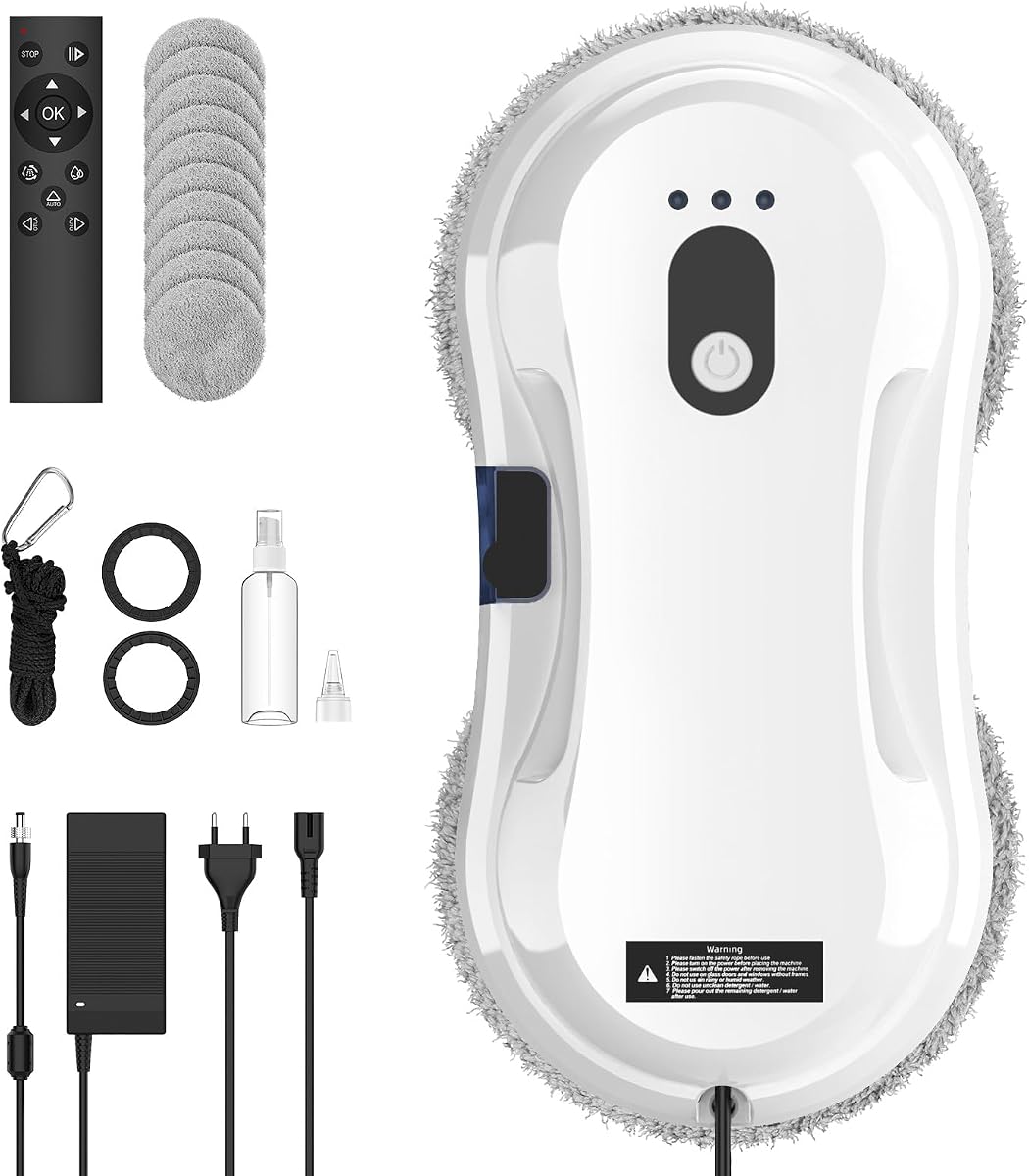
Window-Cleaning Robots: Spray Function and Cloth Quality Matter
A window-cleaning robot with a built-in spray function like this model promises to handle the wet-and-wipe cycle automatically, but the bundled 10 cleaning cloths and the robot's suction or adhesion system will largely determine whether it actually saves you time on German windows. Before buying, understand how spray coverage, cloth replacement, and safety features interact on multi-pane and tilt-and-turn windows.
Key Considerations Before Buying
- Check whether the spray function delivers an even mist across the full pad width; uneven spraying leaves streaks that you'll have to wipe manually, defeating the purpose of automation.
- Confirm the robot's adhesion method (vacuum suction vs. climbing belts) and its rated surface types—smooth glass, frosted glass, and framed windows behave very differently, and some robots struggle at frame edges.
- Consider consumable costs: 10 cloths sound generous, but microfiber pads wear out after repeated washings, so verify whether replacement pads are affordable and easy to source in Germany.
What Our Analysts Recommend
Prioritize models with a clearly stated suction or holding force (in Pa or kg), a water tank you can remove and rinse, and safety features like a backup battery or tether that prevent falls from upper-floor windows. A remote control or app with adjustable spray intensity is a plus, but robust edge detection and a reliable parking position matter more for daily use.
Window Cleaners Market Context
Market Overview
Window-cleaning robots remain a niche segment in Germany, with most buyers using them for large patio doors, conservatories, or hard-to-reach upper-floor windows rather than every pane in the house. The market is dominated by a few established brands plus lower-cost imports, and spray-function models are a newer evolution aimed at reducing manual pre-wetting.
Common Issues
Frequent complaints in this category include robots that lose suction on slightly dirty or humid glass, water tanks that leak or are hard to refill, and cloths that leave lint or streaks. Users also report that robots can't clean corners or narrow panes well, so manual touch-ups are often still needed.
Quality Indicators
A quality window robot has a strong, consistent vacuum seal, a spray nozzle that doesn't clog, and pads that are thick enough to trap dirt without scratching. Look for IP-rated water resistance, clear instructions in German, and a warranty that covers suction motor failures—the most common long-term fault.
Review Authenticity Insights
Grade B Interpretation
A Grade B authenticity rating with an estimated 15% fake review rate means most reviews are likely genuine, but a noticeable minority may be incentivized or exaggerated. The adjusted rating of 4.10/5 (down from 4.44/5) suggests that after filtering suspicious reviews, the product still performs reasonably well but with more mixed feedback than the headline score implies.
Trust Recommendation
Trust the adjusted rating more than the displayed 4.44, and read reviews that mention specific use cases—window type, number of panes, and long-term durability—rather than short five-star praises. Pay attention to critical reviews about suction loss or spray inconsistencies, as these are common failure points that fake reviews tend to omit.
Tips for Reading Reviews
For window robots, prioritize reviews with photos or videos of the robot in action on real windows, and look for mentions of how the spray function performs on vertical glass. Reviews that compare the product to other models or note after several months of use are especially valuable signals of authenticity.
Expert Perspective
This Fensterputzroboter with spray function and 10 cloths sits in the value-oriented end of the window-cleaning robot market, where the spray feature is a convenience but not a guarantee of streak-free results. The 4.10 adjusted rating suggests it works for many buyers, but the 15% suspicious review rate means you should weigh genuine negative feedback about suction and edge cleaning carefully. With 44 reviews, the sample is small, so treat the rating as directional rather than definitive.
Purchase Considerations
Weigh the cost of the robot against how many windows you actually need to clean automatically—if you have mostly small or divided windows, a manual squeegee may be faster. Also check the availability of replacement cloths and the water tank capacity, since frequent refills can make the spray function less useful on large glass surfaces.
Comparing Alternatives
Compare this model with established window-cleaning robots from brands with longer track records and more reviews, especially if you need reliable performance on large or upper-floor windows.


