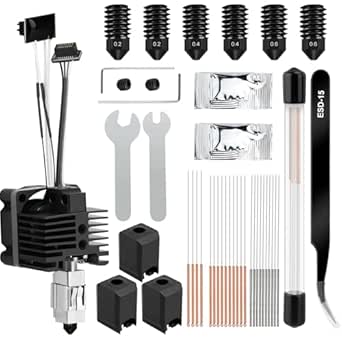
Upgrade Your Centauri Carbon 2: Hardened Steel Ceramic Hotend Essentials
For Centauri Carbon 2/CC2 owners seeking to print abrasive materials like carbon-fiber-filled nylon or glow-in-the-dark filaments, a hardened steel ceramic hotend is a critical upgrade. This 2-pack of 0.4mm nozzles offers a wear-resistant alternative to standard brass, promising longevity and consistent extrusion. Before you buy, consider these key factors to ensure you get the right performance for your printing needs.
Key Considerations Before Buying
- Compatibility is non-negotiable: This hotend is specifically designed for the Centauri Carbon 2/CC2. Verify your printer model and firmware version to ensure proper fit and thermal performance, as generic hotends may not align with the CC2's unique heat-break and sensor configuration.
- Hardened steel vs. brass: While hardened steel resists abrasive wear, it has lower thermal conductivity than brass. Expect to adjust your print temperature by 5-10°C higher and potentially reduce print speeds to maintain layer adhesion, especially with PETG or ABS.
- Ceramic heating element benefits: The ceramic core heats faster and maintains more stable temperatures, reducing temperature fluctuations that cause stringing or under-extrusion. This is particularly valuable for high-temp materials like polycarbonate, but ensure your printer's PID tuning is updated to avoid thermal runaway warnings.
What Our Analysts Recommend
Quality indicators include a smooth, polished nozzle orifice (no burrs), a robust ceramic heater with reinforced wiring, and a well-machined steel body that resists oxidation. Check that the included thermistor fits snugly and that the hotend's thread pitch matches your CC2's heat block. Also, look for clear documentation on max operating temperature and recommended retraction settings.
3D Printer Extruder Parts Market Context
Market Overview
The 3D printer extruder parts market is seeing a surge in demand for hardened nozzles and all-metal hotends as hobbyists and professionals push beyond standard PLA and ABS into composites and exotic filaments. Manufacturers are responding with multi-material hotends and rapid-swap designs, but compatibility with specific printer models like the Centauri Carbon series remains a common pain point.
Common Issues
Users frequently report mismatched thread tolerances, incorrect thermistor resistance (leading to erroneous temperature readings), and heat creep that causes jams. Additionally, some hardened steel nozzles have a rougher internal finish than brass, which can affect filament flow and lead to inconsistent extrusion if not polished properly.
Quality Indicators
Look for hotends with a mirror-polished bore, clear thermal barrier coating to prevent filament sticking, and a positive-lock connector for the heater and thermistor. Reputable brands often provide thermal performance charts and warranty coverage, which are signs of confidence in their product's durability.
Review Authenticity Insights
Grade B Interpretation
With a Grade B and an estimated 10% fake review rate, you can trust the majority of the 65 reviews, but a small fraction may be incentivized or unverified. The adjusted rating of 3.80 out of 5 suggests that while most users are satisfied, there are some genuine concerns about consistency or performance that are not artificially inflated.
Trust Recommendation
Given the low fake percentage, you can rely on the overall positive sentiment, but pay extra attention to reviews that mention specific print results, temperature settings, or installation issues. Cross-reference any negative feedback with your own expectations—if multiple reviewers report the same problem, it's likely a real flaw.
Tips for Reading Reviews
When reading reviews for hotends, focus on comments that include the exact filament type and print settings used, as this provides context for performance. Be wary of overly generic praise or reviews that lack detail about the Centauri Carbon 2 specifically. Also, check for photos or videos, which are harder to fake and offer visual proof of fit and finish.
Expert Perspective
This 2-pack of 0.4mm hardened steel ceramic hotends is a practical investment for Centauri Carbon 2/CC2 owners who want to experiment with abrasive filaments without frequently replacing nozzles. The 3.80 adjusted rating indicates that the product delivers on its core promise, though some users may find the need for temperature adjustments a minor inconvenience. The ceramic heating element is a standout feature for thermal stability, but the lower thermal conductivity of steel means you'll need to recalibrate your print profile for optimal results.
Purchase Considerations
If you primarily print standard PLA or PETG, this hotend may be overkill, but it future-proofs your machine for advanced materials. Consider the cost of the 2-pack versus buying a single hardened steel nozzle; the extra unit provides backup for when you eventually wear one out. Also, factor in the time needed to install and tune—expect a learning curve if you're new to hardened steel.
Comparing Alternatives
Before purchasing, compare this with other hotends that offer interchangeable nozzles or full metal heat-breaks, as they might provide more flexibility for different filament types. Also, check if the manufacturer offers a warranty or customer support specific to the Centauri Carbon series.