
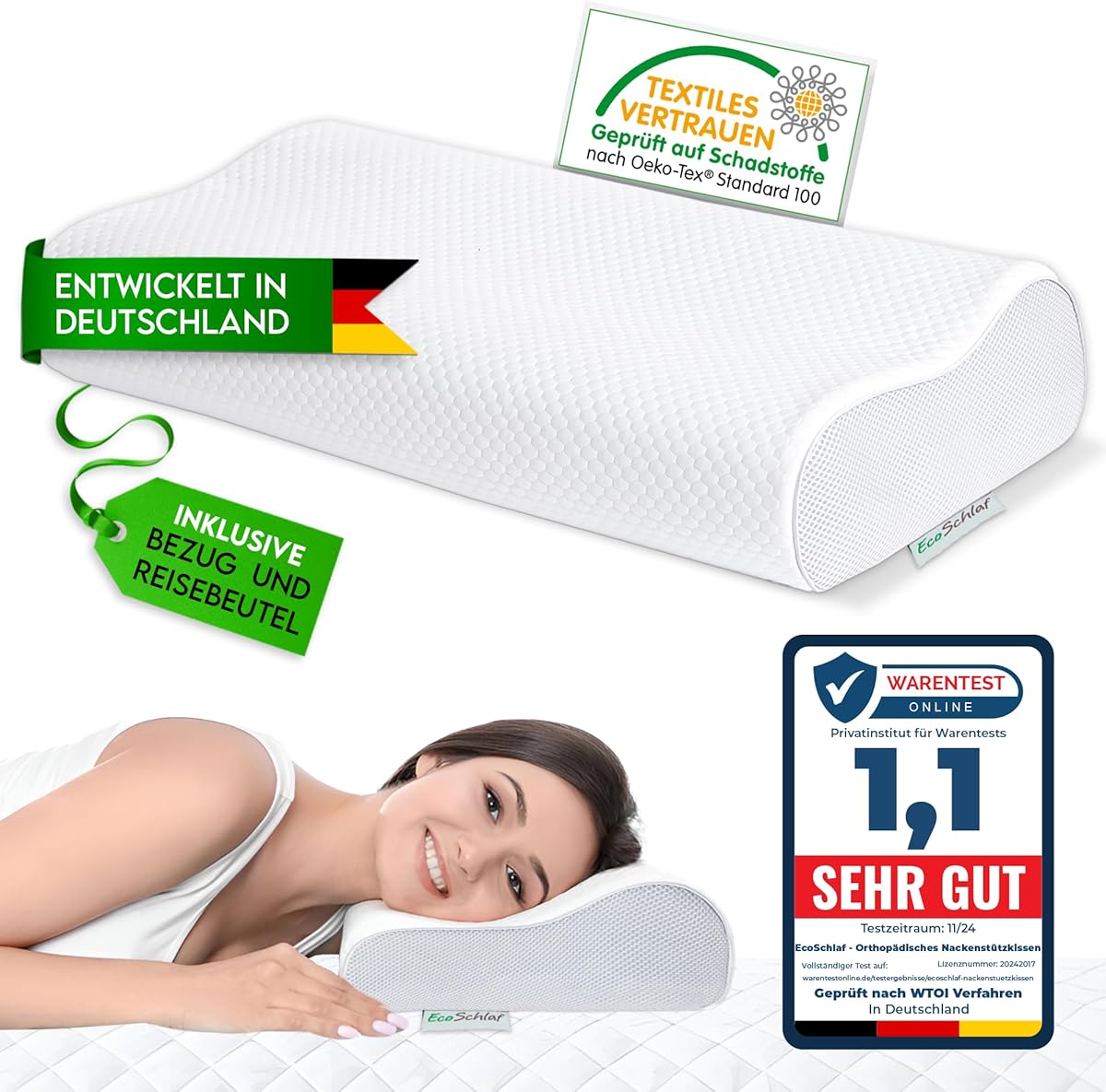
Choosing a Certified Memory Foam Pillow for Side Sleepers with Neck Pain
This specific orthopedic pillow combines soft memory foam with a contoured design certified for medical support. Unlike generic pillows, its ergonomic shape targets cervical alignment for side sleepers, which requires specific considerations regarding foam density and contour dimensions. The 'antischnarch' (anti-snoring) claim relates to improved airway alignment from proper neck positioning.
Key Considerations Before Buying
- The 'Soft Memory Foam' density is crucial—too soft won't provide adequate cervical support for side sleepers, while too firm can cause pressure points at the shoulder.
- Certification indicates tested ergonomic standards, but verify it's for orthopedic use and not just general safety, as this impacts its therapeutic claim for neck pain.
- As a dedicated side-sleeper pillow, its contoured edges and central cradle must match your shoulder width to maintain spinal alignment without tilting your head.
What Our Analysts Recommend
Quality in this category is shown by a slow-recovery memory foam that retains its shape without permanent compression. Examine the pillow's height profile: the lower contour for the neck should be approximately 10-12cm for average side sleepers to fill the space between head and mattress. A removable, breathable cover is essential for hygiene with memory foam.
Contoured Support Pillows Market Context
Market Overview
The German market for contoured orthopedic pillows is crowded, with many products making similar claims about neck pain and snoring. Premium positioning often hinges on certifications (like OEKO-TEX or orthopedic seals) and specific foam formulations, such as 'soft' versus 'firm' memory foam layers.
Common Issues
Common failures include foam that loses its supportive contour within months, contours that are too aggressive for average users, and covers that trap heat, making memory foam uncomfortable. Pillows marketed for 'all sleeping positions' often compromise effectiveness for side sleepers.
Quality Indicators
Look for detailed foam specifications (density in kg/m³ is ideal), a clearly stated intended sleeping position (here, side sleeping), and certification from recognized testing institutes. A 90-day adaptation period is standard for orthopedic pillows, as the body adjusts to proper alignment.
Review Authenticity Insights
Grade B Interpretation
A Grade B with an 11% estimated fake review rate suggests a generally trustworthy review pool with minor manipulation. For this pillow, the high 4.89/5 rating is slightly inflated; the adjusted 4.60/5 is a more realistic benchmark of genuine customer satisfaction.
Trust Recommendation
Prioritize reviews from verified purchasers discussing specific, long-term use (beyond 2-3 weeks) for neck pain or sleep quality. Be slightly skeptical of overly vague 5-star reviews, as they may constitute the estimated 11% inauthentic portion.
Tips for Reading Reviews
Focus on reviews that mention the pillow's break-in period, its feel for shoulder pressure, and any changes in morning neck stiffness. Reviews discussing the pillow's height and its fit for different body sizes offer more actionable insight than general comfort praise.
Expert Perspective
The data indicates a well-received product with strong genuine satisfaction, particularly for its target audience of side sleepers. The high rating, even when adjusted, and the prevalence of verified reviews suggest it delivers on core promises of neck support. The 'soft' memory foam specification is a key differentiator, likely aiming for comfort without sacrificing the necessary resistance for cervical support. The certification adds a layer of credibility to its medical claims.
Purchase Considerations
Weigh your commitment to side sleeping, as this pillow's design is specialized. If you frequently switch to your back, the pronounced contours may be uncomfortable. Consider your sensitivity to heat, as memory foam can retain warmth despite breathable covers.
Comparing Alternatives
Shoppers should compare this pillow's contour shape and foam firmness to other certified side-sleeper models, as subtle design differences significantly affect comfort.


