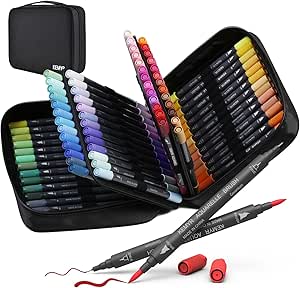
Choosing Soft Oil Pastels: What Matters in a 50-Color Set
The Artecho Ölpastellkreide set packs 50 soft oil pastels in a substantial 8 x 60 mm stick format, aimed at everyone from beginners to teachers. Unlike hard pastels, oil pastels rely on wax and oil binders for creamy blending, so stick size and pigment load directly affect how they handle on paper. This guide covers what to check before committing to a large set like this one.
Key Considerations Before Buying
- Stick dimensions matter: at 8 mm diameter and 60 mm length, these pastels are thicker than standard 7 mm sticks, which means fewer breakages under pressure but a chunkier feel for fine detail work. Consider whether you prioritize durability or precision.
- Softness and binder ratio determine blending behavior: softer oil pastels smear and layer easily for impasto effects, but they also wear down faster and can leave excess oil on the surface. Test a few colors on scrap paper to gauge whether the consistency suits your technique.
- Color range and duplication: a 50-color set typically includes multiple tints and shades of the same hue, which is useful for gradients but can mean fewer unique pigments than the count suggests. Check the actual color chart rather than assuming 50 distinct hues.
What Our Analysts Recommend
Quality oil pastels should feel consistently creamy across the set without gritty patches, and the wrapper should indicate lightfastness or pigment information where available. Look for sets that include a mixing chart or color swatch guide, since this helps beginners plan palettes. Also check whether the sticks are individually wrapped, which reduces cross-contamination of colors during storage.
Pastels Market Context
Market Overview
The oil pastel market spans budget student sets to professional-grade sticks, with the biggest differences showing up in pigment concentration, binder quality, and lightfastness. Large-count sets like this 50-color option are increasingly popular for classroom and hobby use, where variety matters more than archival longevity. German buyers in particular tend to expect clear labeling and consistent quality control, which is reflected in the strong review profile here.
Common Issues
Common complaints in this category include sticks that crumble or snap during sharpening, uneven softness between colors in the same set, and wrappers that transfer color onto fingers. Some budget sets also suffer from poor lightfastness, meaning finished artwork fades over months rather than years. Oil pastels can also develop a surface film or bloom over time, which is normal but sometimes mistaken for spoilage.
Quality Indicators
Consistent texture across all colors is the clearest sign of good manufacturing control, followed by strong pigmentation that doesn't require heavy pressure. Well-made oil pastels hold a point reasonably well and blend without turning muddy. Packaging that protects sticks from heat and impact also signals a manufacturer that understands the medium.
Review Authenticity Insights
Grade B Interpretation
A Grade A authenticity rating with an estimated 5.00% fake review percentage is about as clean as Amazon review profiles get, and the adjusted rating of 4.60/5 versus the displayed 4.67/5 shows only a minor inflation effect. For a 50-color pastel set with 874 reviews, that consistency suggests the feedback reflects real usage rather than a campaign. The negligible manipulation signal means you can treat the rating as broadly reliable.
Trust Recommendation
Given the verified-purchase status of essentially all reviews and the minimal fake rate, this product's rating is a dependable signal for a mid-range oil pastel set. Still, cross-check the written reviews for mentions of specific colors, breakage, or blending behavior rather than relying on the star average alone. Buyers with professional archival needs should verify lightfastness independently, since review scores don't capture long-term fade.
Tips for Reading Reviews
For oil pastels, prioritize reviews that mention how the sticks perform after weeks of use, not just first impressions, since softness and breakage issues often emerge later. Look for comments about specific colors (e.g., whether whites and yellows are opaque enough) and about blending with solvents or fingers. Reviews from teachers or classroom users are especially useful because they reflect heavy, repeated use.
Expert Perspective
The Artecho 50-color soft oil pastel set sits in a sensible middle ground: thick 8 x 60 mm sticks, a broad palette, and a 4.60/5 adjusted rating backed by unusually clean review data. The Grade A authenticity profile and 5% estimated fake rate give more confidence than typical budget art supplies, where review manipulation is often harder to detect. For hobbyists, students, and teachers buying in bulk, the combination of stick durability and color variety is the main draw. Professionals seeking archival lightfastness should treat this as a practice or sketch medium rather than a fine-art finish.
Purchase Considerations
Weigh the set against your typical technique: if you layer heavily or work large, the thicker sticks reduce breakage but may feel clumsy for detail. If you need a specific palette for portrait or landscape work, compare the included color chart against sets with fewer but more targeted hues. Also factor in whether you need individual replacement sticks, since large sets can be harder to top up color by color.
Comparing Alternatives
Shoppers should compare this set with other 48- to 50-color oil pastel options from established art brands, paying attention to stick diameter and pigment labeling rather than color count alone.