Choosing a 50:1 IR thermometer for industrial and culinary temperature extremes
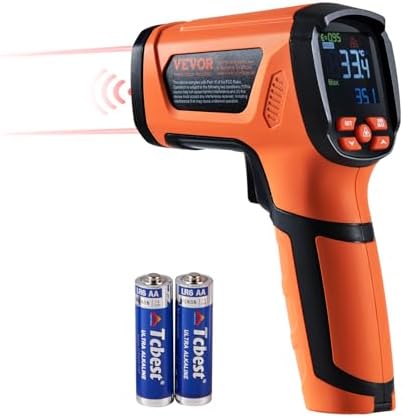
The VEVOR IR 50:1 pyrometer targets users needing to measure surface temperatures from cryogenic -40°C to intense 1500°C without contact. Its 50:1 distance-to-spot ratio means you can accurately measure small targets from farther away, crucial for industrial safety and precise cooking. This specific model's 180x120x60mm size indicates a handheld industrial tool, not a compact pocket device.
Key Considerations Before Buying
- The 50:1 D:S ratio is essential for measuring small components (like electrical connections or grill grates) from a safe distance, especially at its maximum 1500°C range.
- With a stated use for non-human body temperature, this device is calibrated for surfaces; its emissivity settings are vital for accurate readings on materials like shiny metal or painted surfaces.
- The -40°C to 1500°C range is unusually wide, spanning freezer checks to foundry work, so verify your most common use case falls comfortably in the middle of this range for best accuracy.
What Our Analysts Recommend
For a tool in this class, check for a clear specification of accuracy (typically ±1.5% or better) and repeatability. A robust housing like the stated 180x120x60mm size suggests durability, while features like a backlit display, data hold, and adjustable emissivity are practical indicators of a serious measurement instrument, not a basic toy.
Infrared Thermometers Market Context
Market Overview
The market for infrared thermometers is segmented between low-cost, low-ratio devices for home use and higher-specification industrial pyrometers like this VEVOR model. The 50:1 ratio places it in a professional tier, competing with brands like Fluke and Testo but often at a lower price point, appealing to tradespeople and serious hobbyists.
Common Issues
Users often misunderstand distance-to-spot ratio, measuring from too far away and getting inaccurate readings of an averaged area. Another frequent problem is neglecting emissivity settings, leading to significant errors on reflective surfaces common in industrial and kitchen settings.
Quality Indicators
Beyond specs, look for consistent performance across its range; a quality pyrometer maintains accuracy at both high and low extremes. Build quality—like button feel, lens clarity, and battery compartment design—often correlates with internal component reliability. Verified reviews mentioning long-term use in stated applications (e.g., BBQ, HVAC, automotive) are strong positive signals.
Review Authenticity Insights
Grade B Interpretation
A 'B' grade with an estimated 15% fake review rate suggests a mostly authentic review pool with some likely incentivized positive reviews. The adjusted rating of 4.20/5 (down from 4.56) is a more reliable indicator of genuine customer satisfaction, still representing a well-regarded product.
Trust Recommendation
Prioritize reviews that discuss specific, technical use cases (e.g., "measuring my pizza oven stone," "checking motor bearing temperatures") over vague praise. The fact all reviews are verified purchases significantly boosts credibility; focus on these detailed accounts from actual owners.
Tips for Reading Reviews
For technical tools, seek out reviews that mention calibration checks or compare readings with a trusted thermocouple. Be skeptical of reviews that only praise packaging or delivery speed. Reviews noting the laser's alignment or the menu system's usability provide concrete insights into daily use.
Expert Perspective
The VEVOR IR 50:1 presents a compelling value proposition for its specification sheet, offering a wide temperature range and high distance-to-spot ratio typically found in more expensive brands. The strong adjusted rating of 4.20 from verified purchasers indicates it generally delivers on its core promise of non-contact measurement. However, its performance in niche applications—like very low emissivity surfaces or sustained high-temperature environments—may vary compared to premium instruments. Its size explicitly positions it as a workshop, not a pocket, tool.
Purchase Considerations
Weigh the cost savings against potential needs for certified calibration, ruggedized IP ratings, or brand-specific customer support, which budget industrial brands may lack. If your primary use is within the -40°C to 500°C range for common tasks like automotive, cooking, or HVAC, this device likely suffices. For frequent use above 1000°C or in critical industrial processes, the investment in a higher-end pyrometer with proven long-term stability might be warranted.
Comparing Alternatives
Shoppers should compare the VEVOR's specs and price directly against similar 50:1 models from brands like Etekcity or Benetech, paying close attention to accuracy figures and warranty terms.