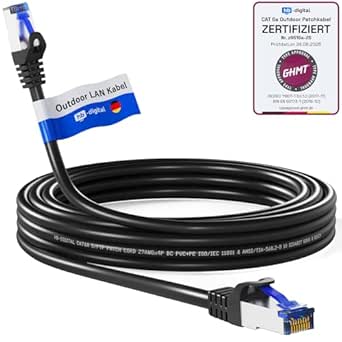
Cat 8 Flat Cable: 12-Meter Reach, 40Gbps Speed, Real-World Tradeoffs
When you're eyeing a 12-meter Cat 8 Ethernet cable like the BUSOHE, you're balancing high-speed specs against practical installation realities. This flat white cable promises 40Gbps, but your actual performance depends on your network gear, cable routing, and how carefully you handle the flat design—which can twist during unrolling.
Key Considerations Before Buying
- Length and routing: A 12-meter run is ideal for crossing a room or connecting a far desk, but measure your exact path (including corners and bends) before buying. Flat cables are easier to hide under carpets or along baseboards, but avoid sharp bends that can stress the internal pairs.
- Speed vs. reality: The 40Gbps rating is theoretical; your actual throughput is limited by your router, switch, and device ports (most home gear is 1Gbps or 2.5Gbps). Cat 8's real benefit here is superior shielding and future-proofing, not immediate speed gains.
- Flat cable quirks: Users note the flat design tends to twist when unrolling, so handle it gently and lay it flat to avoid kinks that could degrade performance. Also, ensure your wall plates or connectors accept a flat cable—some recessed jacks may not fit securely.
What Our Analysts Recommend
Check the cable's shielding (S/FTP or F/FTP) and copper purity (pure copper, not CCA) to ensure signal integrity over longer runs. Look for gold-plated connectors and a durable outer jacket (PVC or LSZH) that resists wear. Also, verify the cable's actual certification—Cat 8 should meet ISO/IEC 11801 standards, not just claim 'Cat 8' on the package.
Ethernet Cables Market Context
Market Overview
The Ethernet cable market is flooded with Cat 6, Cat 7, and Cat 8 options, each promising higher speeds and better shielding. Cat 8 is the latest standard, designed for 25/40Gbps in data centers, but home users often buy it for future-proofing or to reduce interference in dense environments. Flat cables are a popular subsegment for clean installations, but they require careful handling to maintain performance.
Common Issues
Common problems include counterfeit or mislabeled cables that don't meet the stated category, flat cables that twist or kink during installation, and connectors that break or don't click securely. Over long runs, poor shielding or thin copper can cause signal drops, especially near power lines or electrical devices.
Quality Indicators
Quality indicators include a clear category marking (e.g., 'Cat 8 S/FTP'), a manufacturer that specifies the cable's internal construction (e.g., 26AWG pure copper), and certifications like CE or RoHS. A robust, flexible jacket and snug connector boots also signal better build quality. Check for user photos showing the cable's thickness and connector design to gauge real-world durability.
Review Authenticity Insights
Grade B Interpretation
The Grade B and 15% estimated fake review percentage suggest that while most of the 27,661 reviews are genuine, a notable minority may be incentivized or fabricated. This is common for high-volume Amazon products, but it means you should weigh the aggregate rating (4.89) with slight caution—the adjusted rating of 4.50 is likely more accurate.
Trust Recommendation
Given the 15% fake rate, don't rely solely on the star rating. Focus on detailed, verified-purchase reviews that mention specific installation scenarios (like the 20-meter run) or issues (like twisting). Cross-check the product's review pattern over time—if there are sudden spikes or suspiciously similar reviews, treat them skeptically.
Tips for Reading Reviews
For Ethernet cables, read reviews that describe the cable's flexibility, connector quality, and actual speed test results. Look for photos of the cable in situ—they reveal whether the flat design lies flat and if the white color matches the description. Ignore one-liners like 'works great' without context; prioritize reviews that discuss installation challenges or long-term reliability.
Expert Perspective
The BUSOHE Cat 8 12Meter flat cable appears to be a solid performer, with a high volume of genuine positive feedback and a few noted quirks like twisting. The adjusted rating of 4.50 indicates good real-world satisfaction, though not flawless. For most home users, the 40Gbps rating is overkill, but the cable's shielding and construction may offer peace of mind for high-interference environments or future network upgrades.
Purchase Considerations
Weigh the 12-meter length against your actual needs—if you only need 5 meters, a shorter Cat 6A might be cheaper and easier to install. Also, consider the white color and flat profile: they're great for aesthetics, but ensure they fit your cable management. If you're on a budget, a quality Cat 6A cable may deliver 95% of the performance at half the price.
Comparing Alternatives
Before committing, compare with other Cat 8 flat cables from brands like Jadaol or Cable Matters, which also offer similar specs and have comparable review volumes. Check for updated models with reinforced connectors or thicker jackets that might address the twisting issue.