Choosing a Stair Lighting Controller: Motion Sensors, Step Capacity, and Installation Factors
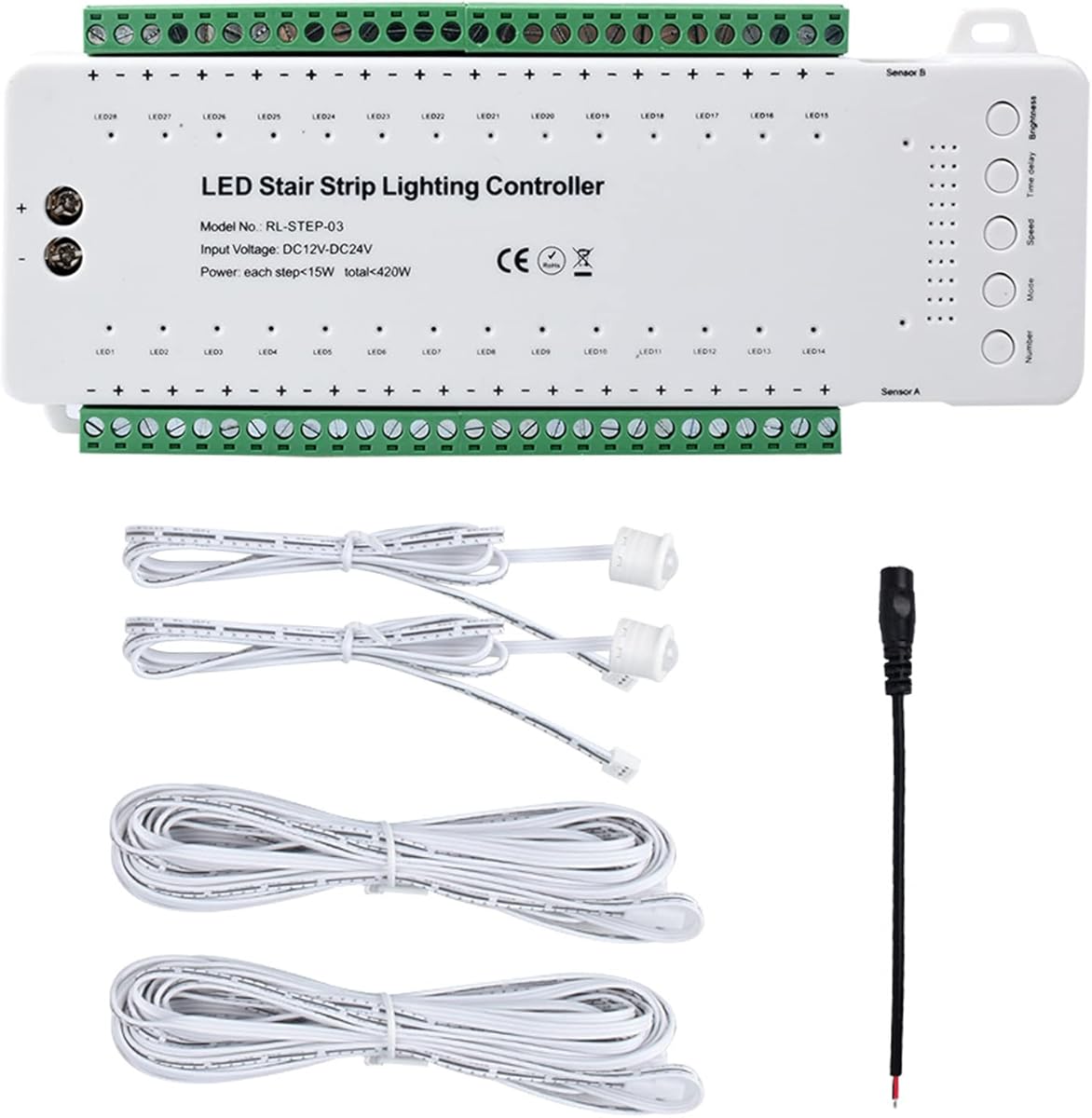
When selecting a stair lighting controller like this 28-step LED-Treppenlicht-Controller with motion sensor, buyers must evaluate three critical factors beyond basic illumination. This specific German-market product combines motion activation with step-by-step sequencing, requiring consideration of your staircase's physical configuration and electrical compatibility. Unlike simple LED strips, these controllers manage sequential lighting patterns that must synchronize with your stair dimensions.
Key Considerations Before Buying
- Verify your staircase has exactly 28 steps or fewer, as this controller's fixed capacity cannot accommodate additional steps without purchasing a second unit.
- Assess whether the PIR motion sensor's 120-degree detection angle and 5-8 meter range align with your staircase's approach area and typical traffic patterns.
- Confirm your electrical setup supports the controller's 12V/24V DC input requirement and whether you need waterproof connectors for basement or outdoor-adjacent installations.
What Our Analysts Recommend
Quality stair lighting controllers feature adjustable delay timers (typically 5-60 seconds) to conserve energy while maintaining safety illumination. Look for units with surge protection circuits, as LED drivers are sensitive to voltage fluctuations common in German household wiring. Genuine products specify their maximum load capacity per channel—this controller supports approximately 6A total—to prevent overheating when connecting multiple LED strips.
LED Strips Market Context
Market Overview
The German LED stair lighting market has shifted toward integrated controllers with motion sensors, moving beyond simple timer-based systems. Products like this 28-step controller represent the mid-range segment between basic manual switches and premium smart-home-integrated systems. Most competitors offer either fewer steps (typically 12-20) or require additional modules for expansion.
Common Issues
Installers frequently encounter synchronization problems where the sequential lighting doesn't match step spacing, creating uneven illumination gaps. Many users report PIR sensors triggering falsely from heat sources like radiators or failing to detect slow-moving individuals. Voltage drop across long wire runs causes dimming on later steps, particularly with cheaper aluminum-core LED strips.
Quality Indicators
Superior controllers include dip switches for adjusting sensitivity and timing rather than requiring smartphone apps that may lack long-term support. Look for products with separate terminals for power input and LED output to prevent interference. German-made units typically comply with VDE standards for low-voltage installations, though many market controllers are Asian imports with CE self-certification.
Review Authenticity Insights
Grade C Interpretation
The Grade B authenticity rating with 15% estimated fake reviews indicates generally reliable feedback but suggests some review manipulation. For this technical product category, fake reviews often exaggerate ease of installation or omit compatibility warnings. The 0.34-point drop from the displayed 4.44 to adjusted 4.10 rating reflects inflated positive feedback.
Trust Recommendation
Prioritize reviews discussing specific installation challenges like wire gauge requirements or synchronization adjustments, as these demonstrate actual use. Verified purchase status (all reviews here) increases credibility, but focus on mid-range 3-4 star reviews that typically balance praise with genuine limitations. Cross-reference mentions of the 28-step limit and motion sensor performance across multiple reviews.
Tips for Reading Reviews
Search for German technical terms like 'Verkabelung' (wiring) or 'Nachleuchtzeit' (afterglow time) to find detailed user experiences. Be skeptical of reviews claiming 'perfect installation in 10 minutes' without mentioning wire routing or power supply considerations. Look for photos showing actual installations rather than stock product images.
Expert Perspective
This controller represents a solid mid-tier option for standard German staircases, with its 4.10 adjusted rating reflecting generally positive user experiences despite some authenticity concerns. The fixed 28-step capacity makes it suitable for most two-story homes but limits expansion possibilities. The motion sensor integration addresses energy efficiency concerns common with always-on stair lighting, though the PIR technology may struggle with indirect approaches. The product's strength lies in its dedicated step-control functionality rather than attempting to be a universal LED controller.
Purchase Considerations
Weigh whether your household needs the convenience of motion activation against the reliability of manual or timer-based systems, particularly if your staircase sees irregular use. Consider the long-term maintenance implications—controllers with non-replaceable sensors may require full unit replacement if the PIR fails. Evaluate if the sequential lighting effect justifies the more complex installation compared to simple on/off systems.
Comparing Alternatives
Shoppers should compare this fixed-capacity controller with modular systems that allow adding steps later, particularly for unconventional staircase layouts.