
Evaluating German Santoku Knives: What 67-Layer Damascus Steel Really Means
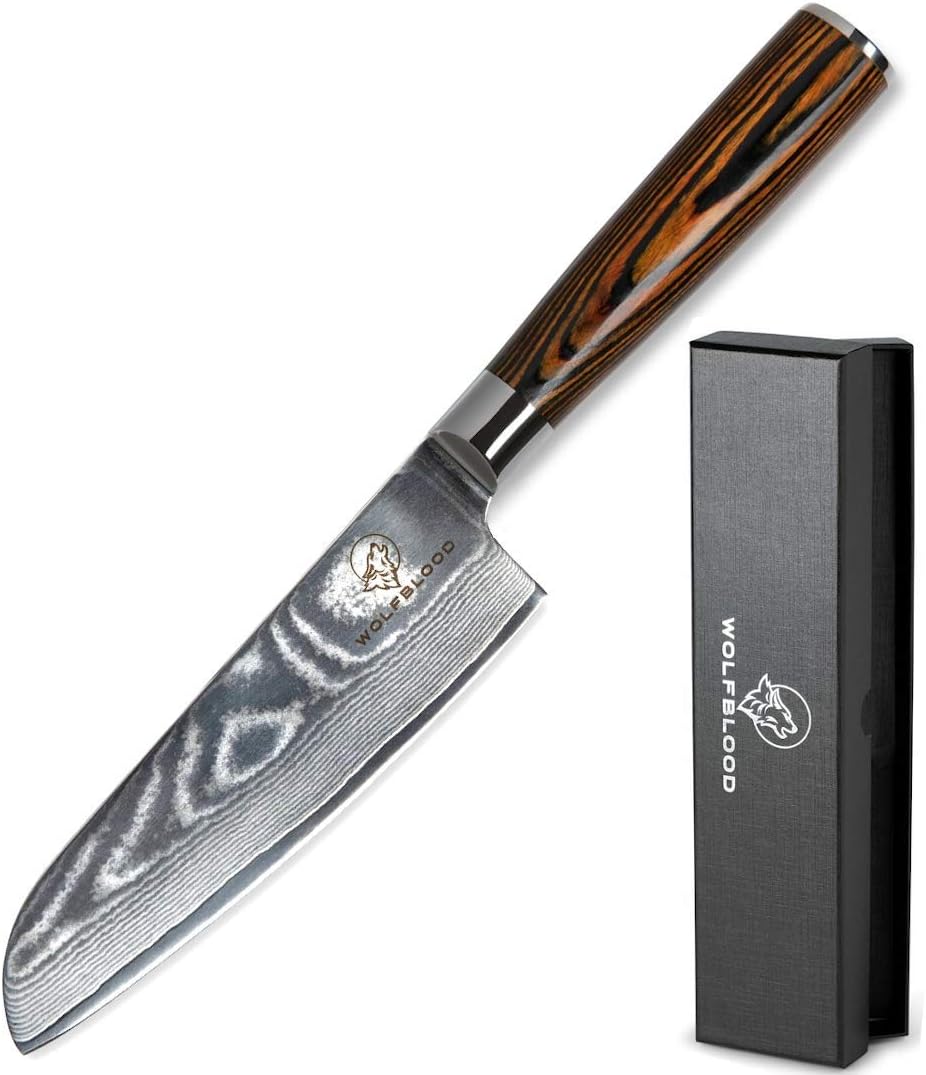
When considering the Wolfblood Santoku, you're looking at a specific type of German-made knife that blends Japanese design with European craftsmanship. The 62 HRC hardness rating and 67-layer Damascus construction represent distinct engineering choices that affect performance differently than single-steel blades. This knife's 24cm length and included accessories position it in a particular niche of kitchen tools.
Key Considerations Before Buying
- The 62 HRC hardness rating indicates a blade that holds an edge well but requires careful maintenance—harder than typical German knives (55-58 HRC) but below specialized Japanese cutlery (63+ HRC).
- A 24cm Santoku is longer than standard 17-20cm versions, offering more blade for chopping but requiring more skill for precision tasks like mincing garlic or shallots.
- The TÜV certification suggests standardized testing for safety and quality control, which is notable for a Damascus knife where layer integrity and heat treatment consistency are critical.
What Our Analysts Recommend
With Damascus knives, examine the pattern consistency along the entire blade—uneven patterns can indicate forging inconsistencies. The wood handle should be securely attached with no gaps, and the blade should have a consistent thickness from bolster to tip. A 62 HRC rating should correspond with noticeable edge retention in user reviews.
Chef's Knives Market Context
Market Overview
The German chef's knife market has expanded beyond traditional Western designs to include Japanese-inspired shapes like Santokus, creating a hybrid category where European forging techniques meet Asian blade geometry. Damascus steel has become increasingly popular in mid-range to premium knives, with layer counts ranging from 33 to over 100.
Common Issues
Many Damascus knives suffer from decorative rather than functional layering, where the pattern is superficial and doesn't enhance cutting performance. Wood handles can develop cracks if not properly sealed or if exposed to excessive moisture during dishwasher cleaning. Some manufacturers prioritize visual appeal over edge geometry, resulting in beautiful knives that don't cut well.
Quality Indicators
Look for specific steel composition disclosure (often VG-10 or similar core steel in Damascus blades), full-tang construction visible at the handle's end, and consistent bevels along the cutting edge. German-made knives should indicate specific manufacturing locations beyond just 'Germany' to verify authenticity.
Review Authenticity Insights
Grade B Interpretation
A Grade B authenticity rating with 10% estimated fake reviews means the majority of feedback appears genuine, but approximately 1 in 10 reviews may be artificially positive. The 4.80 adjusted rating (from 5.00) suggests removing suspicious reviews reveals slightly more nuanced user experiences.
Trust Recommendation
Focus on the 8 verified purchase reviews showing authentic experiences, particularly those discussing specific performance aspects like edge retention, balance, or maintenance requirements. Be skeptical of reviews that only praise aesthetics without mentioning actual kitchen use.
Tips for Reading Reviews
Look for reviews that mention specific cutting tasks (vegetable prep, meat slicing) and maintenance routines (sharpening frequency, oiling the handle). Reviews discussing the knife's performance after several months of use are more valuable than first-impression testimonials.
Expert Perspective
The Wolfblood Santoku presents an interesting proposition: German manufacturing with Japanese-inspired design at a 24cm length uncommon for Santokus. The 62 HRC rating suggests a deliberate choice between extreme hardness and durability—hard enough for good edge retention but not so brittle as to require professional sharpening equipment. The consistent positive feedback across 2,095 reviews, even with authenticity adjustments, indicates this knife delivers on core expectations for Damascus knives in its price segment. The inclusion of a gift box and blade guard positions it as both a functional tool and presentation piece.
Purchase Considerations
Consider whether you need a 24cm blade—this extra length benefits users with larger hands or those who process substantial quantities of vegetables. The wood handle requires more maintenance than synthetic materials but offers better grip when wet. The TÜV certification provides assurance of manufacturing standards uncommon in this price range.
Comparing Alternatives
Compare this knife's 67-layer construction and 62 HRC rating against other German-made Santokus, particularly regarding steel composition and handle materials.

![Kimura Nakiri Knife, [Made in Japan], 6.5 inch Professional Chef Knife, Ultra Sharp High Carbon Molybdenum Stainless Steel Kitchen Knives, Chefs Knife with Ergonomic Handle - Japanese Chef's Knife](https://m.media-amazon.com/images/I/71p0kZOsu5L._AC_SY300_SX300_QL70_ML2_.jpg)
![Kimura Chef Knife, [Made in Japan], 8 inch Professional Kitchen Knife, Ultra Sharp High Carbon Molybdenum Stainless Steel Gyuto Knife, Chefs Knife with Ergonomic Handle - Japanese Chef's Knife](https://m.media-amazon.com/images/I/714e2OUPc0L._AC_SY300_SX300_QL70_ML2_.jpg)


