
Evaluating German Damascus Steel Knife Sets: What 67 Layers and TÜV Certification Really Mean
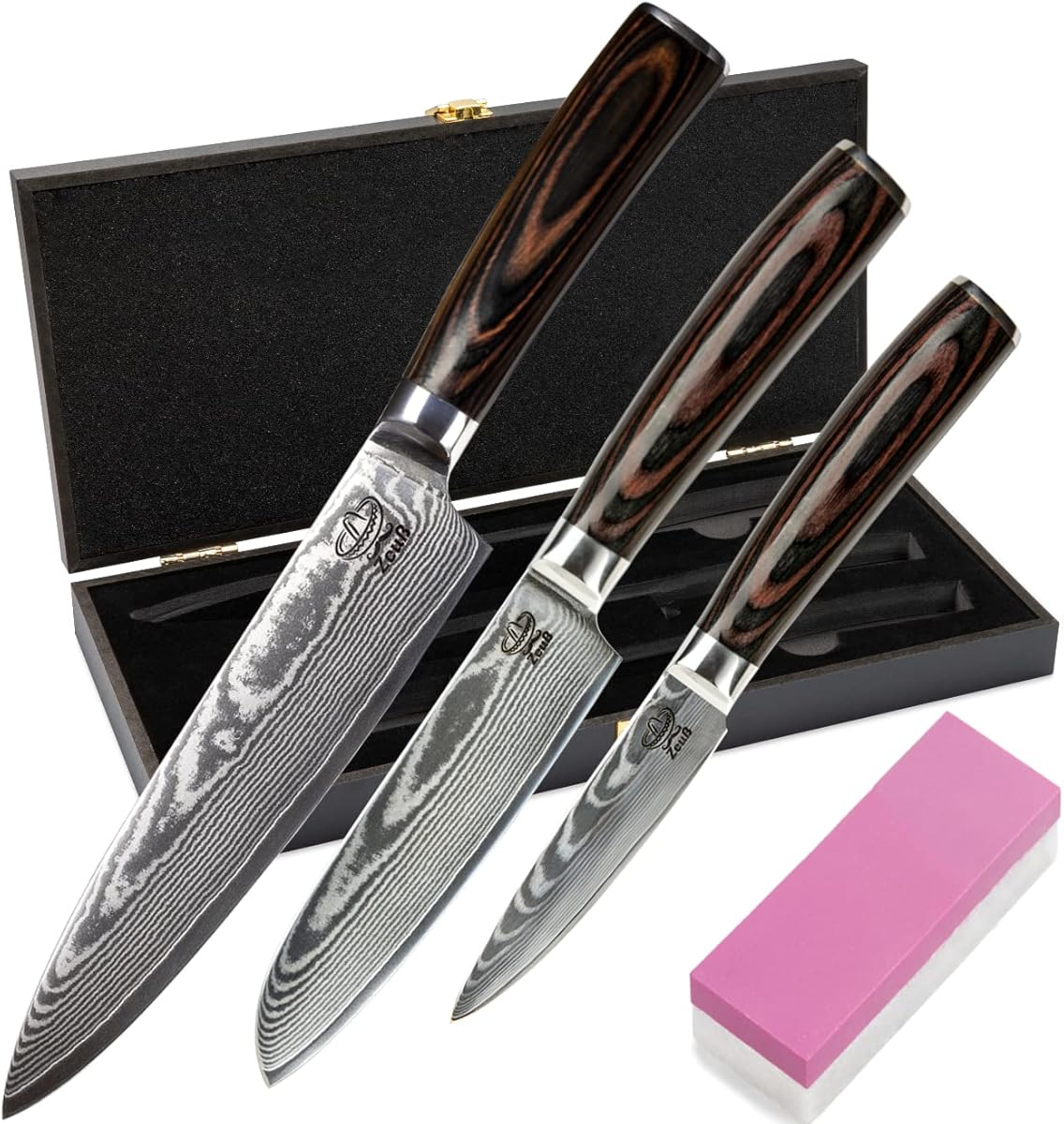
This specific Damastmesser set represents a particular tier of German kitchen cutlery that blends traditional Damascus patterning with modern steel treatment. With its 62 HRC hardness rating and 67-layer construction, this set occupies a middle ground between mass-produced stamped knives and artisanal forged blades. Buyers should understand how these specifications translate to real kitchen performance.
Key Considerations Before Buying
- The 62 HRC hardness indicates a steel that holds an edge well but requires careful maintenance; it's harder than typical German knives (55-58 HRC) but not as brittle as some Japanese blades reaching 64+ HRC.
- The included sharpening stone is essential for maintaining these knives, as their harder steel won't respond well to pull-through sharpeners that can damage the delicate Damascus layers.
- The 32cm chef's knife is unusually long for home use—consider whether your cutting board and technique can accommodate this length versus the more standard 20-24cm options in the set.
What Our Analysts Recommend
Genuine Damascus steel should show a distinct, wavy pattern along the entire blade, not just near the edge. The TÜV certification for the 62 HRC rating provides third-party verification of the steel hardness claim, which is particularly important given the prevalence of exaggerated specifications in this category. Check that the wood handle is securely attached with visible rivets or pins, not just adhesive.
Chef's Knives Market Context
Market Overview
The German Damascus knife market has expanded rapidly, with many sets now manufactured in Asia using German steel or techniques, creating confusion about authenticity. True German-made Damascus knives at this price point typically use imported steel blanks that are finished locally rather than being forged from scratch.
Common Issues
Many Damascus-patterned knives use etching rather than genuine pattern welding to create the visual effect, resulting in superficial patterns that wear off. Another concern is inconsistent heat treatment—the 62 HRC rating means little if the tempering process wasn't controlled properly, leading to brittle edges.
Quality Indicators
Look for consistent patterning throughout the blade, not just surface decoration. The transition between blade and handle should be seamless with no gaps. A proper full-tang construction should be visible at the handle's end, indicating the steel runs the knife's full length for better balance and durability.
Review Authenticity Insights
Grade B Interpretation
A Grade B authenticity rating with 15% estimated fake reviews suggests generally reliable feedback but warrants careful scrutiny. The drop from 4.89 to 4.50 adjusted rating indicates some inflation, but the remaining score still reflects strong genuine satisfaction.
Trust Recommendation
Focus on reviews that discuss specific performance details like edge retention after months of use, how the included sharpening stone performs, or how the unusual 32cm blade handles in practice. German-language reviews from European customers may offer more nuanced insights about the TÜV certification's practical value.
Tips for Reading Reviews
Look for reviews that mention the weight distribution between the three different blade lengths or how the wood handle feels during prolonged use. Be skeptical of reviews that only praise the visual appearance without discussing cutting performance or maintenance requirements.
Expert Perspective
This set presents an interesting value proposition: genuine 67-layer Damascus steel at a 62 HRC hardness with TÜV certification is uncommon at this price point. The inclusion of a sharpening stone and blade guards shows the manufacturer understands these knives require proper maintenance. The 4.50 adjusted rating from authentic reviews suggests users genuinely appreciate the performance, though the 32cm chef's knife may be overly ambitious for many home kitchens. The German origin and certification lend credibility often missing from similar-priced Damascus sets.
Purchase Considerations
Consider whether you'll actually use all three sizes—some cooks prefer investing in one exceptional chef's knife rather than a set. The maintenance commitment is real: Damascus steel requires careful hand washing and regular honing to prevent corrosion between the layers. The gift box presentation makes this particularly suitable for serious cooking enthusiasts who appreciate both form and function.
Comparing Alternatives
Shoppers should compare this set's specifications against individual German knives from established brands like Wüsthof or Zwilling, which may offer different steel compositions at similar price points.

![Kimura Nakiri Knife, [Made in Japan], 6.5 inch Professional Chef Knife, Ultra Sharp High Carbon Molybdenum Stainless Steel Kitchen Knives, Chefs Knife with Ergonomic Handle - Japanese Chef's Knife](https://m.media-amazon.com/images/I/71p0kZOsu5L._AC_SY300_SX300_QL70_ML2_.jpg)
![Kimura Chef Knife, [Made in Japan], 8 inch Professional Kitchen Knife, Ultra Sharp High Carbon Molybdenum Stainless Steel Gyuto Knife, Chefs Knife with Ergonomic Handle - Japanese Chef's Knife](https://m.media-amazon.com/images/I/714e2OUPc0L._AC_SY300_SX300_QL70_ML2_.jpg)


