
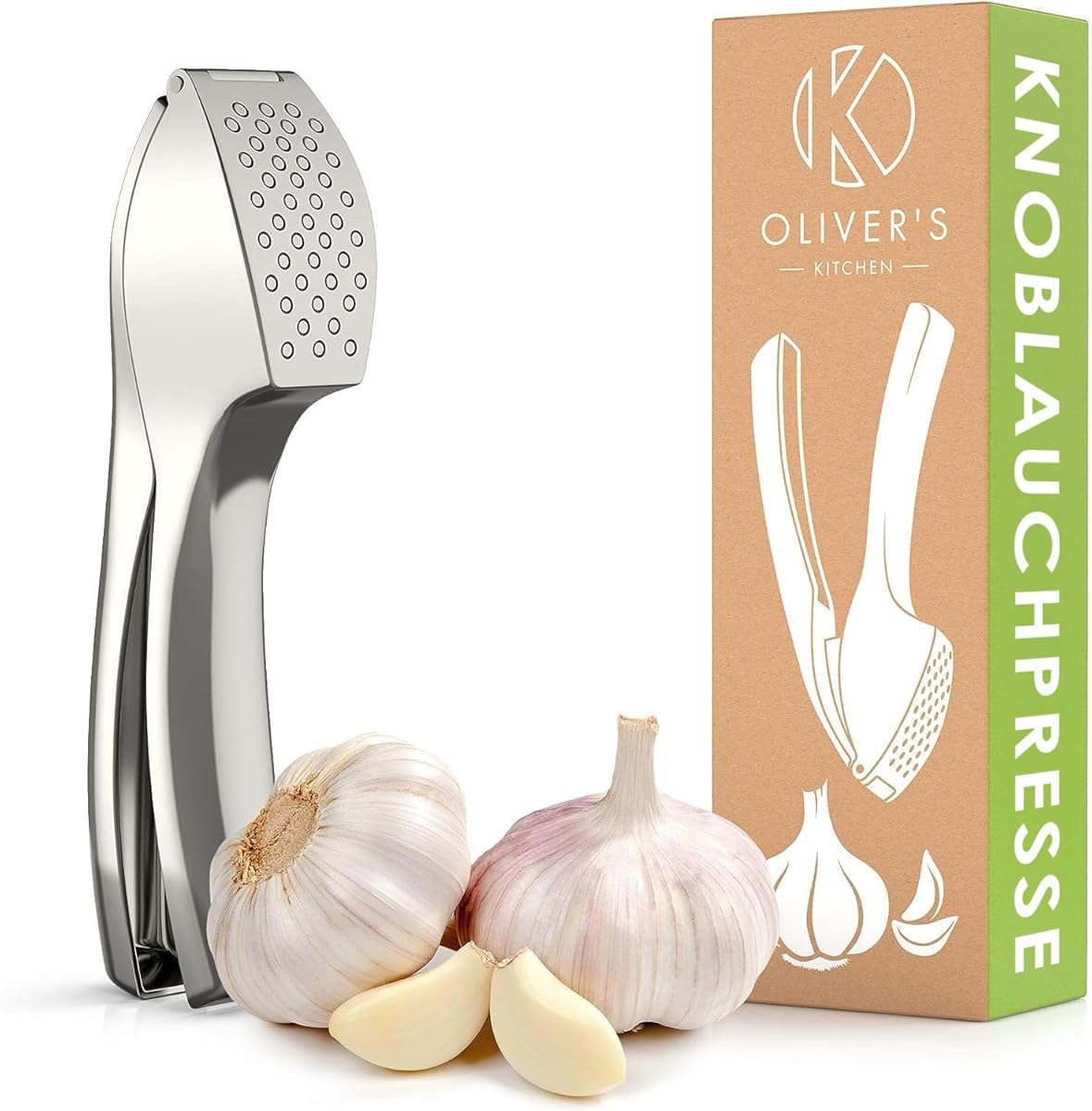
Choosing a German-engineered garlic press that handles unpeeled cloves effortlessly
When evaluating a premium garlic press like the Oliver's Kitchen model, focus on its unique claim of processing unpeeled garlic and ginger. This specific feature eliminates a tedious prep step, but requires exceptional build quality to avoid clogging. German manufacturing in this category typically signals robust cast construction and precise machining.
Key Considerations Before Buying
- Assess the leverage and handle design; a press claiming 'extra stark' strength should have ergonomic handles that generate high pressure without straining your hand.
- Verify cleaning mechanisms; 'leicht zu reinigen' (easy to clean) often means a self-cleaning plunger or dishwasher-safe construction, crucial for sticky garlic residue.
- Consider multifunctionality; this press specifically mentions ginger, so check if the chamber size and hole pattern are suitable for fibrous ginger root without breaking.
What Our Analysts Recommend
High-quality presses feature a single-piece, die-cast zinc or stainless steel body to withstand the torque of crushing unpeeled cloves. Examine the hinge and pressure plate; they should be solid with no plastic components that could flex or snap. A fine, consistent grid pattern yields a finer mince than large, punched holes.
Garlic Presses Market Context
Market Overview
The garlic press market is saturated with low-cost, thin-metal imports that often bend or fail under pressure, making German-engineered tools like Oliver's Kitchen stand out for durability. Recent trends favor multifunction gadgets that process ginger, nuts, or herbs alongside garlic.
Common Issues
Cheap presses suffer from bent levers, clogged mesh that's impossible to clean, and handles that pinch fingers. Many struggle with unpeeled garlic, leaving papery skin mixed into the paste, which defeats the core convenience promise.
Quality Indicators
Look for a one-piece cast construction, a robust hinge pin, and a perforated plate made of thick, polished metal. A generous pulp chamber that accepts large, unpeeled cloves without pre-cutting is a hallmark of a well-designed press.
Review Authenticity Insights
Grade B Interpretation
A 'B' grade with a 15% estimated fake review rate suggests the overwhelmingly positive 4.89/5 rating should be viewed cautiously. While 85% of reviews are likely authentic, the adjusted 4.50/5 rating is a more reliable benchmark, still indicating very strong user satisfaction.
Trust Recommendation
Prioritize reviews that detail long-term use (6+ months) and specifically mention crushing unpeeled garlic or ginger, as these validate the product's core claims. Be skeptical of overly vague, repetitive praise about 'strength' or 'quality' without specific context.
Tips for Reading Reviews
Focus on verified purchase reviews that describe the cleaning process or include photos of the minced result. Authentic feedback often mentions the heft of the tool, the force required to operate it, or minor design quirks, not just general approval.
Expert Perspective
The Oliver's Kitchen press presents a compelling case with its German origin, high adjusted rating of 4.5/5 from authentic reviews, and specific design for unpeeled cloves. The exceptional volume of reviews (over 11,500) provides substantial data, and the 'B' authenticity grade, while not perfect, indicates a foundation of real user experiences. Its success likely hinges on the execution of its 'no peeling' feature, which, if effective, justifies a premium position.
Purchase Considerations
Weigh the convenience of skipping the peeling step against the potential need for slightly more force to crush skin-on cloves. If your primary use is for small amounts of garlic, a simpler press may suffice, but for frequent cooks or those using ginger regularly, this multifunctional design offers tangible efficiency.
Comparing Alternatives
Shoppers should compare the mechanism and cleaning features with other German brands like Zyliss or Kuhn Rikon to assess value.


